
Bachelor of Engineering (Honours) (Mechanical Engineering)
Available from 2 institutes


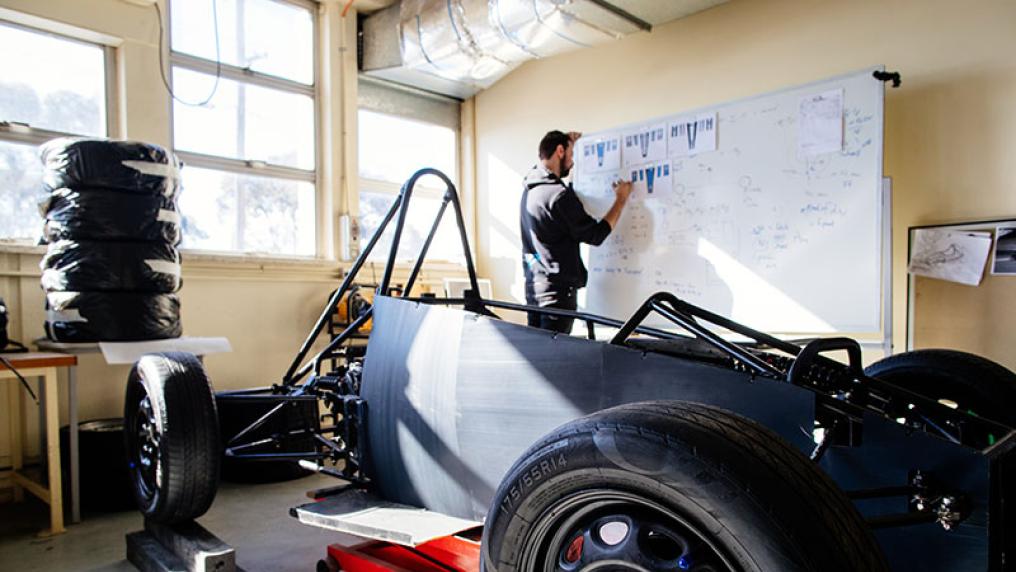

Course Overview
Mechanical Engineering is one of Australia's oldest, broadest, and most versatile engineering disciplines, covering the design, analysis, manufacturing, and maintenance of mechanical systems — from industrial machinery and energy infrastructure to robotics, aerospace components, and medical devices. Australian undergraduate programs are typically offered as a four-year Bachelor of Engineering (Honours), accredited by Engineers Australia (EA) and recognised internationally under the Washington Accord, meaning graduates qualify for professional membership and meet global engineering standards. The degree combines in-depth study of physical sciences and mathematics with applied design and systems thinking, preparing graduates to solve complex, real-world engineering challenges across a wide range of industries.
The course is designed for students who enjoy problem-solving at the intersection of physics, mathematics, and creative design. Students explore core areas such as thermodynamics, fluid mechanics, structural analysis, control systems, robotics, and advanced manufacturing, while gaining hands-on experience through laboratory work, industry placements, and capstone design projects. Postgraduate options — including Master of Mechanical Engineering programs — are available for those who hold an undergraduate degree and wish to specialise further or accelerate into leadership roles.
Major employers of mechanical engineering graduates in Australia span an enormous range of sectors, including mining and resources (BHP, Rio Tinto), defence and aerospace (Boeing Australia, BAE Systems), advanced manufacturing and automotive, renewable energy and infrastructure, HVAC and building services, and the fast-growing fields of robotics and automation. Graduate engineers work in everything from remote mine sites in Western Australia to cutting-edge biomedical research facilities in Melbourne, reflecting the true breadth of the discipline.
Why Study This Course?
Australia faces a well-documented skills shortage in mechanical engineering, with the profession listed on the Priority Migration Skilled Occupation List (PMSOL) — a clear signal of sustained, government-recognised demand for qualified engineers. Industries including renewable energy, mining, defence, advanced manufacturing, and infrastructure are all growing rapidly, and each relies on mechanical engineers to design, maintain, and optimise the systems that underpin them. With over 2,000 job postings nationwide at any given time and employment opportunities spread across every state and territory, graduates of this discipline enjoy strong job security and genuine career mobility.
The financial rewards are equally compelling. Starting salaries for graduate mechanical engineers in Australia typically sit between AUD $65,000 and $80,000, climbing quickly with experience to well over $100,000 at mid-level, and exceeding $155,000 for senior and specialised roles. The discipline also opens doors to global careers, since Australian accreditation through Engineers Australia is recognised in over 20 countries through the Washington Accord. For students who want a career with real-world impact, long-term job stability, competitive pay, and the flexibility to work across multiple industries, mechanical engineering is one of Australia's most rewarding study choices.
What You'll Learn
Skills You'll Develop
Common Course Names in Australia
- Bachelor of Engineering (Honours) (Mechanical Engineering)
- Bachelor of Mechanical Engineering (Honours)
- Bachelor of Engineering (Honours) — Mechanical Major
- Master of Mechanical Engineering
- Master of Engineering (Mechanical)
- Bachelor of Engineering (Mechanical and Mechatronic) (Honours)
- Associate Degree in Engineering (Mechanical Pathway)
- Graduate Certificate in Mechanical Engineering
Typical Subjects
Entry Requirements
For domestic students applying to an undergraduate Bachelor of Engineering (Honours) in Mechanical Engineering, the typical entry pathway is through Year 12 completion with a competitive ATAR. Entry ATARs vary between institutions and can range from around 70 to 95+, with selective programs at research-intensive universities at the higher end. Most programs require prerequisite HSC or equivalent subjects including Mathematics (at an advanced or methods level) and at least one science subject such as Physics or Chemistry. Some providers set a minimum scaled score in Mathematics Methods ATAR and recommend Physics, Chemistry, or Mathematics Specialist. Students who do not meet direct ATAR requirements may enter through pathway programs, foundation courses, TAFElink diplomas, or associate degrees that provide credit into the engineering degree.
For postgraduate entry into a Master of Mechanical Engineering or similar programs, applicants typically need a recognised bachelor's degree in engineering or a closely related discipline. Some programs accept applicants from other STEM backgrounds with bridging requirements. English language proficiency is required for all students from non-English-speaking backgrounds, with most universities requiring a minimum IELTS overall score of 6.5 (with no individual band below 6.0), or equivalent scores in TOEFL or PTE Academic.
Professional experience is not typically required for undergraduate entry, though it is highly valued for postgraduate programs. All bachelor's programs accredited by Engineers Australia require students to complete a minimum period of supervised industry experience — often referred to as 'work integrated learning' or 'professional practice placement' — as a condition of graduation. Applicants from overseas may also need to provide certified transcripts, proof of relevant secondary or tertiary qualifications, and evidence of English proficiency as part of their application.
Mode of Study
This course may be offered in different study modes depending on the university, campus location, course structure and student type. Students should check the available delivery mode before applying, as not every study option is available at every institution.
On-Campus Study
On-campus study is the traditional mode of delivery where students attend classes, lectures, tutorials, workshops or seminars at the university campus. This option may suit students who prefer face-to-face learning, access to campus facilities, networking with classmates, practical workshops, group projects and direct engagement with academic staff.
Online Study
Some universities may offer programs fully online or with online subject options. Online study can be attractive for students who need flexibility due to work, family, location or other commitments. Online study may suit domestic students, working professionals or students who want to study from outside Australia.
Hybrid or Blended Study
Hybrid or blended study usually combines online learning with some on-campus classes, workshops, intensive sessions or practical components. This mode may suit students who want flexibility but still want some face-to-face interaction. The exact structure varies between institutions.
Intake Information
Programs in Australia may have different intake structures depending on the university. The most common intake systems are semester, trimester and block mode.
Semester Intakes
Many Australian universities follow a two-semester academic calendar. The main intakes are commonly Semester 1 (around February or March) and Semester 2 (around July). Semester-based study usually allows students to complete a set number of subjects over approximately 12 to 14 weeks.
Trimester Intakes
Some universities use a trimester system, which generally provides three study periods a year — around February/March, June/July and October/November. Trimester study may provide more flexibility and may help some students complete their course faster.
Block Mode
Some institutions may offer selected subjects or programs in block mode, where students focus on one subject at a time over a shorter, more intensive teaching period. Block mode may suit students who prefer concentrated learning or working professionals managing study around employment.
Flexible or Rolling Intakes
Some online or professionally focused programs may offer more frequent start dates or flexible entry points throughout the year. Students should not assume that every course has monthly or multiple intakes — availability depends on the institution, course structure and student type.
Assessment & Practical Learning
Assessment Methods
- Written examinations (closed and open book) testing theory and problem-solving
- Laboratory reports documenting experimental findings and analysis
- Design assignments and engineering drawings submitted individually or in groups
- CAD modelling and simulation assignments using industry software
- Research essays and technical literature reviews
- Group design projects requiring a full engineering design cycle
- Oral presentations and design reviews to academic and industry panels
- Capstone thesis or major design project report
- Case study analysis applying engineering principles to real industry scenarios
- Online quizzes and in-semester tests for continuous assessment
- Peer review and self-assessment within team-based projects
- Work-integrated learning (WIL) assessment and employer-evaluated placement reports
- Portfolio development documenting skills, projects, and professional development
- Reflective journals tracking learning outcomes during industry placement
Practical Components
- Industry placement or professional practice program (typically a minimum of 60 days of supervised work experience)
- Engineering laboratories with hands-on experimentation in thermodynamics, fluid mechanics, and materials testing
- CAD and simulation labs using software such as SolidWorks, AutoCAD, ANSYS, and MATLAB
- Capstone engineering design project completed in teams, often with an industry partner
- Workshop-based manufacturing and machining sessions
- Robotics and mechatronics build-and-test activities
- Site visits to engineering firms, manufacturing plants, or infrastructure projects
- Prototyping and 3D printing projects in university makerspaces or fabrication labs
- Field trips to energy facilities, mining operations, or aerospace sites
- Guest lectures and seminars delivered by practicing engineers and industry leaders
- Engineers Australia student chapter activities and professional development events
- International study tours or exchange programs at partner universities
Career Opportunities
Mechanical engineering graduates in Australia enjoy one of the broadest career landscapes of any engineering discipline, with opportunities spanning the public and private sectors across dozens of industries. Graduates can pursue careers in mining and resources, defence and aerospace, renewable energy, manufacturing and automation, HVAC and building services, robotics, infrastructure, medical devices, and agricultural technology. Leading employers include major resource companies, engineering consultancies, government defence agencies, infrastructure firms, and technology innovators. The profession is listed on Australia's Priority Migration Skilled Occupation List and Medium and Long-term Strategic Skills List, reflecting robust and sustained national demand.
Possible Job Roles
Career Ladder
Entry Level
Graduate Engineer
Graduate Mechanical Engineer, Junior Design Engineer, Engineering Graduate (Manufacturing), Mechanical Engineering Technician, Graduate Project Engineer
Early Career
Engineer / Associate Engineer
Mechanical Engineer, Design Engineer, Process Engineer, HVAC Engineer, Manufacturing Engineer, Maintenance Engineer, Reliability Engineer
Mid-Level
Senior Engineer / Specialist
Senior Mechanical Engineer, Lead Design Engineer, Senior Project Engineer, Structural Engineer, Robotics Engineer, Renewable Energy Engineer, Control Systems Engineer
Senior Level
Principal Engineer / Engineering Manager
Principal Mechanical Engineer, Engineering Manager, Project Engineering Manager, Chief Mechanical Engineer, Technical Lead, Asset Management Engineer
Leadership
Director / Head of Engineering
Director of Engineering, Head of Mechanical Engineering, General Manager Engineering, Chief Engineer, Engineering Director, VP Engineering
Average Salary in Australia
Mechanical engineering salaries in Australia are competitive and grow significantly with experience, specialisation, and industry sector.
Study Options Across Australia
Melbourne
Melbourne is widely regarded as Australia's engineering and manufacturing hub, offering strong demand for mechanical engineers in advanced manufacturing, automotive, aerospace, and infrastructure sectors, with major employers and a thriving biomedical engineering scene. The city's diverse economy and lower cost of living relative to Sydney make it an attractive base for engineering graduates and industry professionals alike.
Sydney
Sydney offers Australia's highest volume of engineering job opportunities and some of the strongest salaries in the country, with demand spanning energy, technology, infrastructure, and defence sectors. As Australia's largest city, it hosts the headquarters of major engineering consultancies, government agencies, and multinational companies actively recruiting mechanical engineers.
Brisbane
Brisbane is experiencing sustained growth in mechanical engineering demand, driven by construction, energy, and aerospace industries, as well as major infrastructure investment associated with the 2032 Olympic Games. The city's proximity to Queensland's mining regions also creates additional opportunities in resources and heavy industry for mechanical engineering graduates.
Perth
Perth is one of Australia's highest-paying cities for mechanical engineers thanks to its position at the heart of the nation's mining and resources sector, with major employers including global resource companies and engineering contractors regularly recruiting for both Perth-based and FIFO (fly-in-fly-out) roles. The city also offers a growing renewable energy sector and a lower cost of living than Sydney or Melbourne.
Adelaide
Adelaide is an emerging centre for defence industry and renewable energy engineering, with South Australia's significant investment in defence shipbuilding, space, and clean energy creating growing demand for mechanical engineers with specialised skills. The city offers a highly affordable lifestyle and strong connections between universities and government-funded engineering projects.
Canberra
Canberra provides unique opportunities for mechanical engineers interested in defence, government, and research-focused careers, with proximity to federal agencies, the Australian Defence Force, and internationally recognised research institutions. Engineering roles in Canberra often offer stable government employment conditions and access to cutting-edge defence technology programs.
Who Should Study This Course?
- Students who excelled in high school Mathematics and Physics and enjoy applying these subjects to real-world problems
- People with a passion for how things work — from machines and engines to energy systems and robotics
- Those who enjoy creative problem-solving and want to design and build practical solutions
- Students interested in a broad engineering foundation that opens doors to many different industries
- People who want a career with strong job security, competitive salaries, and genuine global mobility
- Those interested in sustainability and want to contribute to Australia's transition to renewable energy
- Students who enjoy both hands-on laboratory and workshop work as well as analytical and computer-based design tasks
- People who want to work on large-scale, high-impact projects in sectors like mining, defence, aerospace, or infrastructure
- Students who aspire to eventually become chartered professional engineers (CPEng) or move into engineering management
- Those considering postgraduate study or research in advanced fields such as robotics, biomechanics, or advanced manufacturing
Things to Consider Before Applying
Before choosing a course, students should compare:
Additional Information for International Students
International students who want to study in Australia should also consider additional requirements before applying.
Start Your Journey
Join successful graduates
2,000+
Students Helped
$200+
Application Processed
350+
Listed Universities
10,000+
Listed Courses