Start building today!
Experience the Find the courses and unlock the true potential
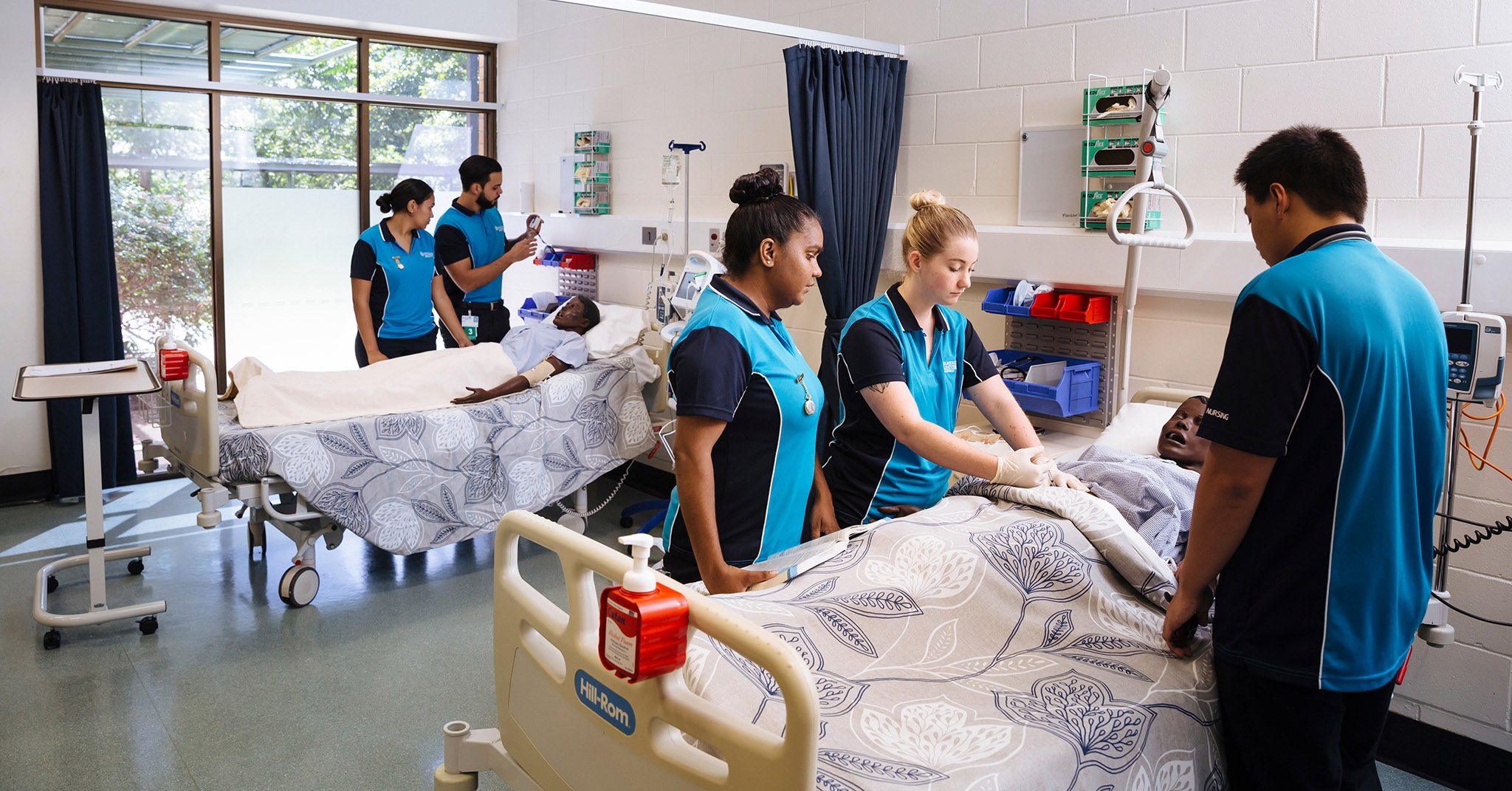
Nursing in Australia is a nationally accredited, professionally regulated health qualification that trains graduates to deliver safe, person-centred care across a wide spectrum of healthcare settings. The course is available at multiple levels — the Diploma of Nursing (producing Enrolled Nurses), the Bachelor of Nursing (producing Registered Nurses), and postgraduate pathways including Master of Nursing Science (Graduate Entry) for those who already hold a non-nursing bachelor's degree. Bachelor programs typically span three years full-time, while postgraduate graduate-entry programs are generally two years. The curriculum blends biomedical science, professional nursing theory, pharmacology, ethical practice, and mental health care, and is underpinned by large volumes of clinical placement in real healthcare environments.
Nursing courses in Australia are designed for students who are compassionate, resilient, and committed to improving people's lives through hands-on healthcare delivery. Whether students are school leavers entering directly from Year 12, mature-aged students seeking a career change, or internationally trained nurses seeking Australian registration, there are clearly defined pathways for all. All programs leading to Registered Nurse (RN) status must be accredited by the Australian Nursing and Midwifery Accreditation Council (ANMAC) and approved by the Nursing and Midwifery Board of Australia (NMBA), ensuring graduates meet the national standard required to register with the Australian Health Practitioner Regulation Agency (AHPRA).
Graduates of Australian nursing programs are employed across the public and private healthcare sectors by employers including public hospitals, private hospital groups, aged care providers, community health centres, general practice clinics, disability support organisations, mental health services, correctional health services, defence health, and remote and Indigenous health services. Australia's nursing workforce is the largest clinical workforce in the country, with over 400,000 registered nurses and midwives currently employed — and demand is accelerating due to an ageing population and rapidly expanding healthcare needs.
Australia is facing a critical shortage of nurses, with the Department of Health and Aged Care projecting a deficit of more than 70,000 nurses by 2035. This nationwide skills gap means nursing graduates enjoy extraordinary job security, competitive salaries, and access to diverse employment opportunities in metropolitan, regional, and remote settings. The federal government has invested heavily in healthcare, injecting $146.1 billion into health and aged care from 2024 through 2025, driving sustained demand for a qualified nursing workforce across public hospitals, aged care, primary care, and mental health services. Registered nurses are among the top professions for projected employment growth, with an anticipated 13.9% job growth over the next five years — making it one of the most future-proof career choices available to Australian students today.
Beyond job security, nursing offers unparalleled career diversity. Graduates can specialise in areas including intensive care, emergency, mental health, paediatrics, oncology, perioperative care, aged care, and community health — or pursue leadership, education, and research pathways. Australia's internationally recognised nursing education system also opens doors globally, with Australian-trained nurses highly sought after in the United Kingdom, Canada, New Zealand, the United States, and the Middle East. For students seeking a career that combines scientific knowledge, human connection, professional responsibility, and lifelong learning, nursing in Australia offers one of the most meaningful and well-supported pathways available.
For the Bachelor of Nursing, the most common entry pathway for school leavers is via an Australian Tertiary Admission Rank (ATAR), which typically ranges from the low 50s to the low 90s depending on the institution and location, with more competitive programs and double degrees often requiring scores in the 80s or higher. Most programs recommend or require completion of Year 12 science subjects such as Biology, Chemistry, or Physics, and English is generally a mandatory prerequisite. Mature-age applicants may be considered based on work experience, a portfolio, or completion of a preparatory bridging or pathway program. Enrolled Nurse (EN) graduates who hold a Diploma of Nursing completed within the last 10 years and maintain current NMBA registration as an Enrolled Nurse may be eligible for advanced standing or credit towards the Bachelor of Nursing, reducing the time required to complete the degree.
For postgraduate graduate-entry nursing programs (Master of Nursing), applicants are required to hold a completed bachelor's degree from a recognised university, typically in a relevant science or health-related discipline such as biology, chemistry, or a health science. Some programs additionally require a minimum of one to two years of relevant healthcare work experience, a current curriculum vitae, academic transcripts, and a personal statement or supplementary information form. Regardless of the entry pathway, all students must satisfy English language proficiency requirements set by both their institution and ANMAC. For international applicants or those from non-English speaking backgrounds, a minimum IELTS Academic score of 7.0 overall (with no band below 7.0) is typically required for university entry, though ANMAC and NMBA may impose additional or different standards that must be met separately before clinical placement commences.
All nursing students — domestic and international — must meet mandatory pre-placement requirements before attending any clinical environment. These typically include a current National Police Check, Working with Children Check, NDIS Worker Screening, relevant immunisations (including Hepatitis B, varicella, influenza, and COVID-19), first aid certification, and completion of mandatory online modules such as cultural safety training and manual handling. Students should plan well in advance for these requirements, as obtaining all necessary documents and checks can take up to five months and may cost several hundred dollars.
This course may be offered in different study modes depending on the university, campus location, course structure and student type. Students should check the available delivery mode before applying, as not every study option is available at every institution.
On-campus study is the traditional mode of delivery where students attend classes, lectures, tutorials, workshops or seminars at the university campus. This option may suit students who prefer face-to-face learning, access to campus facilities, networking with classmates, practical workshops, group projects and direct engagement with academic staff.
Some universities may offer programs fully online or with online subject options. Online study can be attractive for students who need flexibility due to work, family, location or other commitments. Online study may suit domestic students, working professionals or students who want to study from outside Australia.
Hybrid or blended study usually combines online learning with some on-campus classes, workshops, intensive sessions or practical components. This mode may suit students who want flexibility but still want some face-to-face interaction. The exact structure varies between institutions.
Programs in Australia may have different intake structures depending on the university. The most common intake systems are semester, trimester and block mode.
Many Australian universities follow a two-semester academic calendar. The main intakes are commonly Semester 1 (around February or March) and Semester 2 (around July). Semester-based study usually allows students to complete a set number of subjects over approximately 12 to 14 weeks.
Some universities use a trimester system, which generally provides three study periods a year — around February/March, June/July and October/November. Trimester study may provide more flexibility and may help some students complete their course faster.
Some institutions may offer selected subjects or programs in block mode, where students focus on one subject at a time over a shorter, more intensive teaching period. Block mode may suit students who prefer concentrated learning or working professionals managing study around employment.
Some online or professionally focused programs may offer more frequent start dates or flexible entry points throughout the year. Students should not assume that every course has monthly or multiple intakes — availability depends on the institution, course structure and student type.
Nursing graduates in Australia enter one of the most diverse and in-demand professional workforces in the country. With over 400,000 registered nurses and midwives currently employed, the nursing profession spans acute hospital care, aged care, mental health, community health, education, research, and defence — providing graduates with extraordinary breadth of career choice. Demand is particularly strong in aged care, intensive care, emergency, mental health, and primary healthcare, and regional and rural areas frequently offer enhanced salary packages, relocation allowances, and accelerated career progression to attract qualified nurses. Advanced practice nurses such as Nurse Practitioners are increasingly taking on clinical roles traditionally held by doctors, especially in underserved communities.
Entry Level
Graduate / Enrolled Nurse
Graduate Registered Nurse, Enrolled Nurse, Graduate Transition Program Participant, Assistant in Nursing (AIN)
Early Career
Registered Nurse
Registered Nurse (General Medical/Surgical), Emergency Nurse, Mental Health Nurse, Aged Care Registered Nurse, Community Health Nurse, Perioperative Nurse
Mid-Level
Clinical Nurse Specialist / Consultant
Clinical Nurse Specialist, Clinical Nurse Consultant, Practice Nurse, Paediatric Nurse Specialist, ICU / Critical Care Nurse, Oncology Nurse Specialist, Nurse Educator
Senior Level
Nurse Unit Manager / Senior Consultant
Nurse Unit Manager, Senior Clinical Nurse Consultant, Director of Nursing (ward level), Nurse Educator (senior), Infection Control Coordinator, Quality and Safety Nurse
Leadership
Nurse Practitioner / Director of Nursing
Nurse Practitioner, Director of Nursing, Executive Director of Nursing and Midwifery, Chief Nursing Officer, Nursing Research Lead, Head of Nursing Education
Nursing salaries in Australia vary by level of experience, specialisation, state, and sector (public vs private), but across the board represent competitive and growing remuneration.
Melbourne
Melbourne is home to some of Australia's largest public hospital networks, world-class research institutes, and a thriving aged care and community health sector, offering nursing students access to extensive and diverse clinical placement opportunities across metropolitan and suburban settings. The city's strong multicultural population also provides invaluable exposure to culturally diverse patient care, a key competency for modern nursing practice.
Sydney
As Australia's most populous city, Sydney hosts major tertiary referral hospitals, leading private hospital groups, and a rapidly growing aged care sector, giving nursing students unparalleled exposure to complex, high-acuity clinical environments. Graduate nurses in Sydney benefit from some of the highest registered nurse salary rates in the country, with NSW registered nurses typically earning between AUD $80,000 and $95,000 annually.
Brisbane
Brisbane and Southeast Queensland offer nursing students a dynamic and growing healthcare market, with significant investment in hospital infrastructure and a strong focus on mental health, aged care, and community nursing driven by Queensland's rapidly expanding population. Queensland also offers some of the most competitive entry-level nursing salaries in Australia, making it an attractive destination for graduate nurses seeking excellent starting remuneration.
Perth
Perth's nursing students benefit from a high-demand healthcare market supported by Western Australia's significant mining and resource workforce health needs, as well as a growing metropolitan population and strong aged care sector. Remote and rural nursing opportunities abound across WA, with additional financial incentives, relocation support, and accelerated career progression for graduates willing to work outside the metropolitan area.
Adelaide
Adelaide offers nursing students a well-connected and accessible healthcare network, including major public hospitals and a large aged care sector, in a city renowned for its affordability and liveability. South Australia's investment in healthcare infrastructure and aged care reform means strong graduate employment prospects, and the city's smaller scale makes it easier for students to build professional networks and secure clinical placements.
Canberra
Canberra provides a unique environment for nursing students, with proximity to major federal government health agencies, the ACT's well-funded public health system, and strong community health and mental health services. As the national capital, Canberra also offers opportunities in defence health, government health policy, and nursing research, making it particularly well-suited to students with an interest in health leadership or public sector careers.
Before choosing a course, students should compare:
International students who want to study in Australia should also consider additional requirements before applying.
Join successful graduates
Students Helped
Application Processed
Listed Universities
Listed Courses