Start building today!
Experience the Find the courses and unlock the true potential
The Bachelor of Orthoptics (Honours) is a specialised allied health degree that trains students to detect, diagnose, and manage a wide range of vision and eye disorders in both children and adults. Students study the anatomy and physiology of the eye and visual system, the principles of optics, and the clinical assessment and management of conditions such as strabismus (eye turns), amblyopia (lazy eye), binocular vision anomalies, low vision, and neuro-ophthalmological disorders. Graduates emerge as orthoptists — highly skilled eye health professionals who work at the intersection of ophthalmology, paediatric care, and rehabilitation. The degree is classified at Australian Qualifications Framework (AQF) Level 8 — Bachelor Degree Honours — reflecting its rigorous academic and clinical standards.
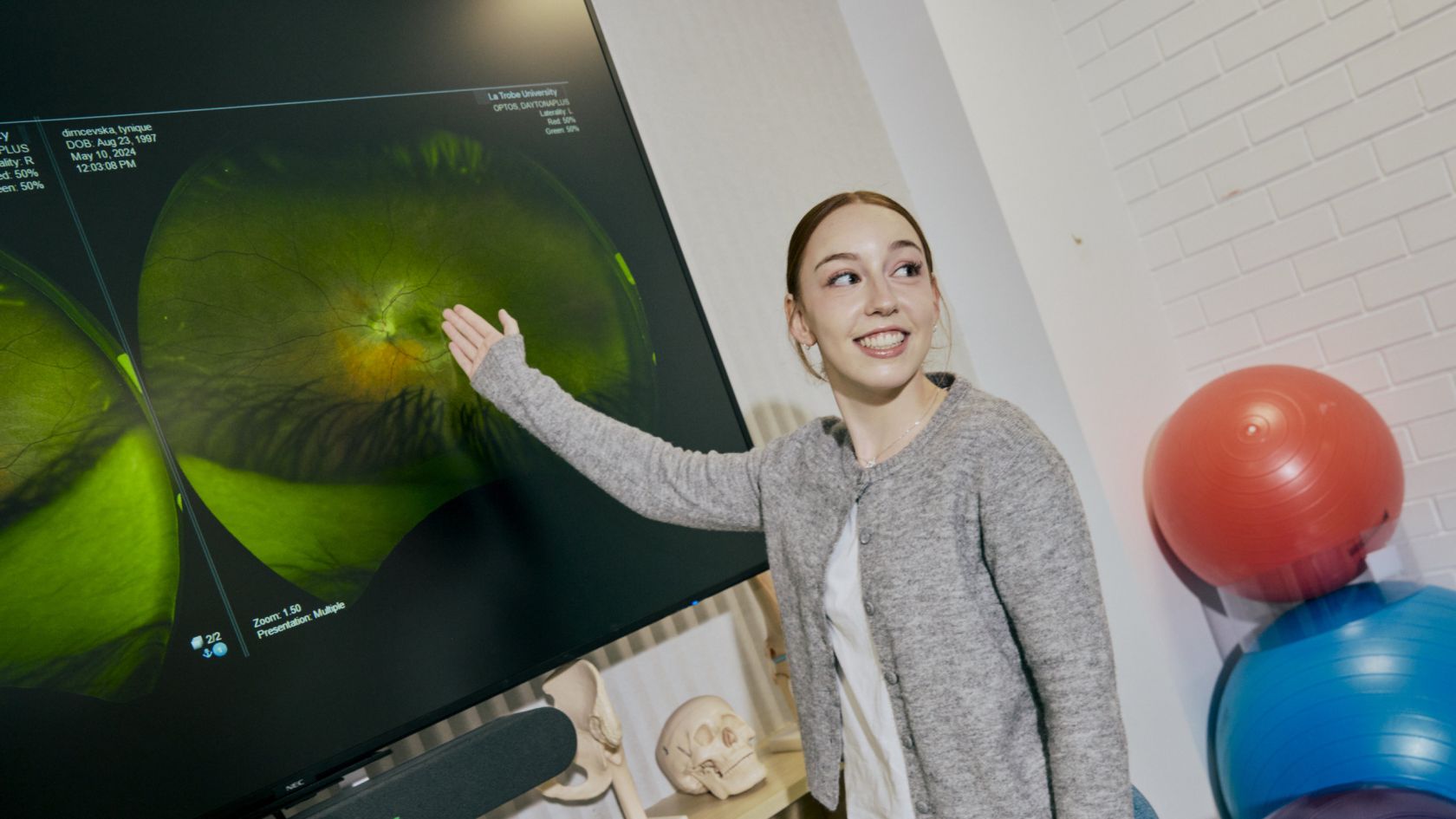
The course is designed for students with a strong interest in health sciences, a passion for helping people of all ages, and an aptitude for clinical problem-solving. It blends theoretical study with substantial hands-on clinical experience, including placements in hospital eye clinics, private ophthalmology practices, low vision rehabilitation organisations, and community health settings. Students also learn to use specialised diagnostic technology such as retinal cameras, optical coherence tomography (OCT) equipment, ultrasonography machines, visual field analysers, and ophthalmic photography systems.
Graduates are eligible for registration with the Australian Orthoptic Board (AOB) and membership with Orthoptics Australia, and are recognised internationally as qualified orthoptists. Key employers include public hospitals with dedicated eye clinics, private ophthalmology and optometry practices, low vision agencies such as Vision Australia, children's hospitals, community health centres, eye research institutes, universities, and rural and remote health services. Orthoptists work closely alongside ophthalmologists, optometrists, neurologists, paediatricians, and other allied health professionals as part of multidisciplinary healthcare teams.
Orthoptics offers one of the most focused and rewarding career pathways in the Australian allied health sector. There is strong and consistent demand for orthoptists across Australia, with graduates readily gaining employment in hospitals, private practice, low vision agencies, universities, and eye research centres. The 2024 Jobs and Skills Australia Occupation Shortage List identified orthoptist workforce shortages in New South Wales, Western Australia, and regional Victoria, reflecting the genuine need for trained professionals across the country. Australia's ageing population, rising rates of chronic eye disease (such as diabetic retinopathy, glaucoma, and macular degeneration), and growing public awareness of childhood vision problems all point to sustained and growing demand for orthoptic services. The profession also attracts students seeking a career with meaningful patient impact, clear career progression, and opportunities in research, education, and management.
With only two approved training institutions in Australia, the supply of orthoptists remains limited relative to demand, making graduates highly employable and competitive in the job market. The profession offers diverse career settings — from busy metropolitan paediatric hospitals to rural community outreach programs and international development placements — providing real variety throughout a graduate's career. The honours-level qualification also opens pathways into postgraduate research, clinical education, and leadership roles within the eye health sector, positioning orthoptics as a future-proof, high-impact career choice.
For the undergraduate Bachelor of Orthoptics (Honours), applicants typically require successful completion of Year 12 (or equivalent) with a competitive ATAR. Prerequisites commonly include English and one or more science subjects such as Biology, Chemistry, or Physics. Some institutions require a minimum study score in English (for example, at least 25 in English or 30 in English as an Additional Language). Entry is competitive, and applicants should consult the relevant institution's admissions office for current ATAR cut-offs, which can vary from year to year.
For the postgraduate Master of Orthoptics pathway, applicants must hold a completed Australian bachelor's degree (or overseas equivalent) at a minimum GPA — typically around 4.0/7.0 or higher. Selected applicants are generally required to undertake a panel interview, during which they are assessed on communication skills, interpersonal abilities, demonstrated interest in eye health, and genuine commitment to orthoptics as a career. There is no requirement for prior clinical experience, although exposure to healthcare settings or work with children is looked upon favourably.
International applicants must meet English language proficiency requirements. Typical benchmarks include an Academic IELTS score of at least 6.5 to 7.0 overall (with no band below 6.0), or equivalent scores in TOEFL, PTE Academic, or Cambridge C1 Advanced. All graduates must register with the Australian Orthoptic Board (AOB) upon completion before practising independently in Australia.
This course may be offered in different study modes depending on the university, campus location, course structure and student type. Students should check the available delivery mode before applying, as not every study option is available at every institution.
On-campus study is the traditional mode of delivery where students attend classes, lectures, tutorials, workshops or seminars at the university campus. This option may suit students who prefer face-to-face learning, access to campus facilities, networking with classmates, practical workshops, group projects and direct engagement with academic staff.
Some universities may offer programs fully online or with online subject options. Online study can be attractive for students who need flexibility due to work, family, location or other commitments. Online study may suit domestic students, working professionals or students who want to study from outside Australia.
Hybrid or blended study usually combines online learning with some on-campus classes, workshops, intensive sessions or practical components. This mode may suit students who want flexibility but still want some face-to-face interaction. The exact structure varies between institutions.
Programs in Australia may have different intake structures depending on the university. The most common intake systems are semester, trimester and block mode.
Many Australian universities follow a two-semester academic calendar. The main intakes are commonly Semester 1 (around February or March) and Semester 2 (around July). Semester-based study usually allows students to complete a set number of subjects over approximately 12 to 14 weeks.
Some universities use a trimester system, which generally provides three study periods a year — around February/March, June/July and October/November. Trimester study may provide more flexibility and may help some students complete their course faster.
Some institutions may offer selected subjects or programs in block mode, where students focus on one subject at a time over a shorter, more intensive teaching period. Block mode may suit students who prefer concentrated learning or working professionals managing study around employment.
Some online or professionally focused programs may offer more frequent start dates or flexible entry points throughout the year. Students should not assume that every course has monthly or multiple intakes — availability depends on the institution, course structure and student type.
Orthoptics graduates in Australia enjoy a diverse and in-demand career landscape, with strong employment prospects across public hospitals, private eye clinics, rehabilitation services, research institutions, and community health. Orthoptists work as integral members of eye care and allied health teams, and with shortages identified in multiple states and regions, graduates can expect strong job market conditions on completion of their degree. Beyond direct clinical roles, experienced orthoptists can pursue careers in clinical education, research, public health advocacy, health service management, and international development — making it a career with both depth and longevity.
Entry Level
Graduate Orthoptist
Graduate Orthoptist, Junior Clinical Orthoptist, Ophthalmic Technician (entry)
Early Career
Clinical Orthoptist
Clinical Orthoptist, Paediatric Orthoptist, Hospital Orthoptist, Community Vision Screener
Mid-Level
Senior Orthoptist / Specialist
Senior Orthoptist, Low Vision Rehabilitation Specialist, Neuro-Orthoptist, Clinical Educator, Research Officer
Senior Level
Lead Orthoptist / Manager
Lead Orthoptist, Team Leader, Health Service Manager, University Lecturer, Private Practice Principal
Leadership
Director / Head / Principal
Director of Allied Health, Head of Orthoptics Department, Associate Professor, Orthoptics Program Director, Eye Health Policy Adviser
Orthoptist salaries in Australia vary by experience, sector (public vs private), and location, with the following ranges reflecting current market conditions.
Melbourne
Melbourne is the primary hub for orthoptics education in Australia, home to one of only two approved training programs in the country. The city offers an exceptional range of clinical placement sites including major public hospitals with dedicated eye departments, children's hospitals, and specialist low vision agencies, making it the ideal location to begin an orthoptics career.
Sydney
Sydney is home to Australia's only postgraduate orthoptics training program, delivered through a state-of-the-art Graduate School of Health facility. The city's large network of public and private hospitals, ophthalmology specialists, and eye research centres creates excellent employment and career development opportunities for orthoptics graduates.
Brisbane
Brisbane's rapidly growing population and expanding healthcare infrastructure create strong demand for allied health professionals, including orthoptists. Graduates can find opportunities across Queensland Health's hospital network, children's eye clinics, and private ophthalmology practices, with regional Queensland offering additional placements in underserved communities.
Perth
Perth has been identified as experiencing orthoptist workforce shortages, making it a highly attractive destination for graduates. Western Australia's major public hospitals, private eye clinics, and a significant rural and remote health sector all present strong career opportunities, often with competitive remuneration to attract professionals to the region.
Adelaide
Adelaide offers a tightly connected healthcare community with strong opportunities at major public hospitals, including paediatric eye health services at the Women's and Children's Hospital. The city's collaborative allied health environment and lower cost of living make it an appealing choice for orthoptics graduates entering the workforce.
Canberra
Canberra's healthcare sector, anchored by Canberra Hospital and associated specialist services, provides orthoptics graduates with solid employment prospects in both public health and private practice settings. The ACT's proximity to regional NSW communities also creates opportunities for outreach and community vision screening work.
Before choosing a course, students should compare:
International students who want to study in Australia should also consider additional requirements before applying.
Join successful graduates
Students Helped
Application Processed
Listed Universities
Listed Courses