Start building today!
Experience the Find the courses and unlock the true potential
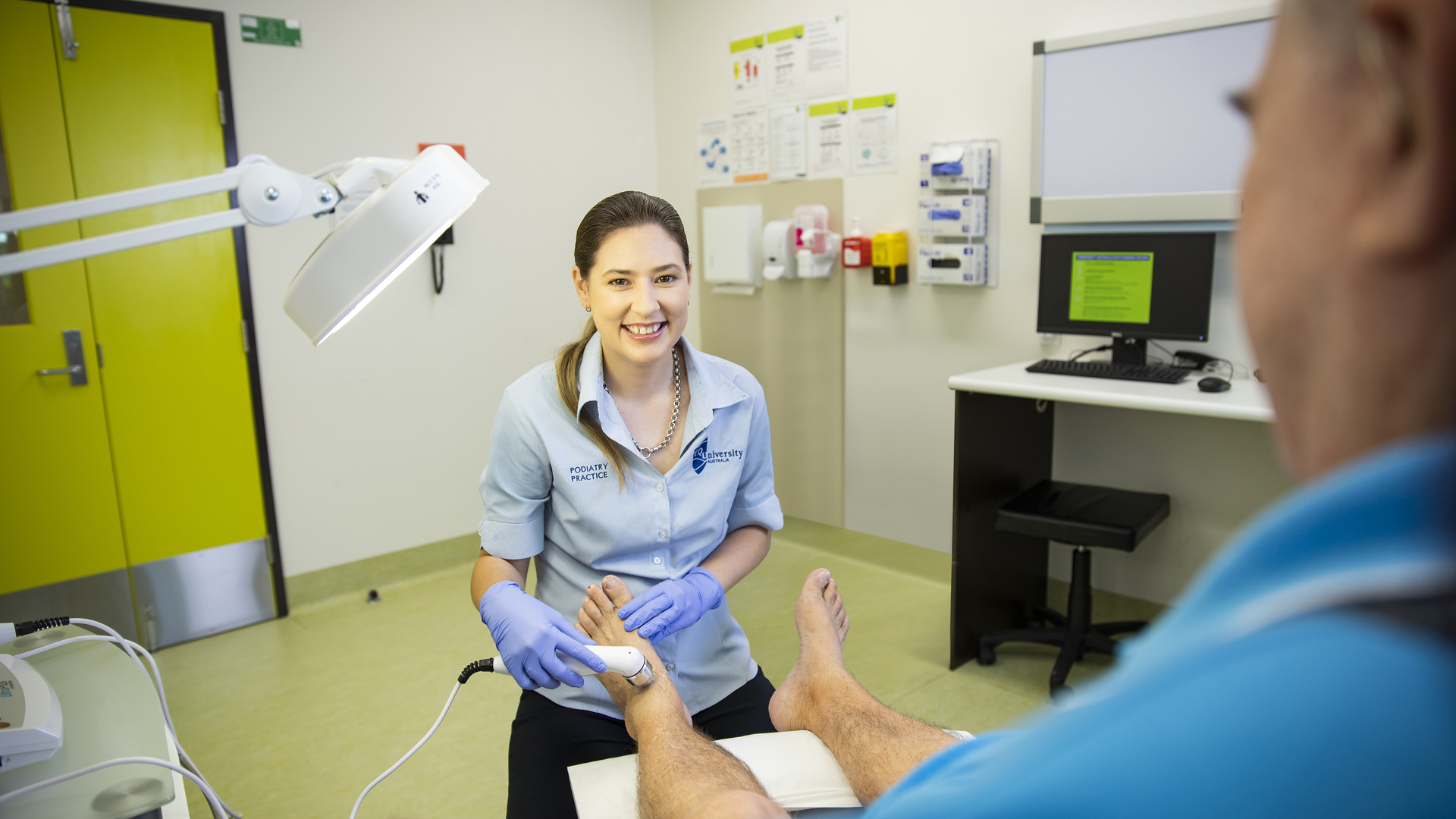
The Bachelor of Podiatry Practice (Honours) is an accredited four-year undergraduate degree that prepares students to become registered podiatrists — allied health professionals who prevent, diagnose, treat, and rehabilitate medical and surgical conditions of the feet, ankles, and lower limbs. The degree is accredited by the Podiatry Accreditation Committee and approved by the Podiatry Board of Australia (PodBA), meaning graduates are eligible to apply for full professional registration upon completion. The curriculum is structured to move from foundational biomedical sciences in the early years through to advanced clinical practice, surgical skills, and research in the later years. The Honours component adds a research thesis or capstone project that distinguishes graduates and opens pathways to postgraduate study and clinical specialisation.
Podiatry is among Australia's most in-demand allied health professions, consistently listed on the national skills shortage list. Demand for podiatry services is forecast to increase well into the 2050s, driven by Australia's ageing population — with older Australians projected to make up over 20% of the total population by 2066 — and a rising burden of chronic disease including diabetes, cardiovascular conditions, and arthritis. Both the public and private healthcare sectors are actively recruiting, and workforce supply has not kept pace with growth, particularly in regional, rural, and outer-metropolitan areas. For graduates, this translates into strong employment prospects, competitive salaries, flexible career pathways, and genuine opportunities to make a difference in patients' quality of life and mobility across every stage of life.
For school leavers, entry into a Bachelor of Podiatry Practice (Honours) typically requires successful completion of Year 12 (or equivalent), such as the ATAR in most states, with a competitive selection rank. Prerequisite subjects commonly include Biology and/or Chemistry, though requirements vary by institution. Some providers also consider mature-age applicants, those with TAFE qualifications at Diploma level (AQF Level 5) or above, and those with prior higher education study in a health-related field. A graduate-entry pathway also exists at some institutions for applicants who have completed a recognised Australian bachelor degree in biomedical science, health science, nursing, or human movement, typically requiring a strong GPA (such as 4.0 or higher on a 7-point scale) from a degree completed within the past 10 years.
This course may be offered in different study modes depending on the university, campus location, course structure and student type. Students should check the available delivery mode before applying, as not every study option is available at every institution.
On-campus study is the traditional mode of delivery where students attend classes, lectures, tutorials, workshops or seminars at the university campus. This option may suit students who prefer face-to-face learning, access to campus facilities, networking with classmates, practical workshops, group projects and direct engagement with academic staff.
Some universities may offer programs fully online or with online subject options. Online study can be attractive for students who need flexibility due to work, family, location or other commitments. Online study may suit domestic students, working professionals or students who want to study from outside Australia.
Hybrid or blended study usually combines online learning with some on-campus classes, workshops, intensive sessions or practical components. This mode may suit students who want flexibility but still want some face-to-face interaction. The exact structure varies between institutions.
Programs in Australia may have different intake structures depending on the university. The most common intake systems are semester, trimester and block mode.
Many Australian universities follow a two-semester academic calendar. The main intakes are commonly Semester 1 (around February or March) and Semester 2 (around July). Semester-based study usually allows students to complete a set number of subjects over approximately 12 to 14 weeks.
Some universities use a trimester system, which generally provides three study periods a year — around February/March, June/July and October/November. Trimester study may provide more flexibility and may help some students complete their course faster.
Some institutions may offer selected subjects or programs in block mode, where students focus on one subject at a time over a shorter, more intensive teaching period. Block mode may suit students who prefer concentrated learning or working professionals managing study around employment.
Some online or professionally focused programs may offer more frequent start dates or flexible entry points throughout the year. Students should not assume that every course has monthly or multiple intakes — availability depends on the institution, course structure and student type.
Graduates of the Bachelor of Podiatry Practice (Honours) are eligible to register with the Podiatry Board of Australia and enter a broad and growing employment market. Career opportunities span private practice, public hospitals, community health, aged care, sports medicine, paediatrics, disability services, and research. The profession is listed on Australia's national skills shortage list, meaning graduates enjoy strong job security and flexible employment options across metropolitan, regional, and rural settings. With experience, podiatrists can specialise, move into practice ownership, take on academic or research roles, or pursue further endorsement to prescribe scheduled medicines or train as a podiatric surgeon.
Entry Level
Graduate Podiatrist
Graduate Podiatrist, Junior Podiatrist, New Registrant Podiatrist, Community Health Podiatrist (Grade 1)
Early Career
Podiatrist
Registered Podiatrist, Sports Podiatrist, Paediatric Podiatrist, Aged Care Podiatrist, Private Practice Podiatrist
Mid-Level
Senior Podiatrist / Specialist
Senior Podiatrist, High-Risk Foot Specialist, Diabetic Foot Podiatrist, Wound Care Podiatrist, NDIS Podiatrist
Senior Level
Principal Podiatrist / Clinic Manager
Principal Podiatrist, Podiatry Clinic Manager, Allied Health Team Leader, Podiatry Department Head, Practice Owner
Leadership
Director / Academic / Surgeon
Director of Podiatry Services, Podiatric Surgeon, University Lecturer / Senior Lecturer, Clinical Research Lead, Allied Health Director
Podiatrist salaries in Australia vary based on experience, sector (public vs. private), location, and specialisation, with strong earning potential across all career stages.
Melbourne
Melbourne is home to a large and well-established allied health sector, with major public hospitals, aged care networks, sports clubs, and community health services all employing podiatrists. The city's diverse and ageing population, combined with strong sports culture and access to multidisciplinary health clinics, creates excellent clinical placement and employment opportunities for graduates.
Sydney
Sydney offers one of Australia's largest podiatry job markets, with opportunities across major teaching hospitals, private practices, community health services, and NDIS providers spanning the metropolitan and outer-suburban areas. The city's high population density and significant rates of chronic disease and aged care need make it an ideal environment for podiatry graduates seeking varied clinical experience.
Brisbane
Brisbane and the broader South-East Queensland region have seen rapid population growth and an expanding allied health sector, with strong demand for podiatrists across private clinics, hospitals, and community settings. Queensland's warm climate, active lifestyle population, and growing proportion of older residents make sports podiatry and chronic disease management particularly prominent career paths here.
Perth
Perth has a well-documented shortage of allied health professionals, and podiatrists are actively sought across both metropolitan and regional Western Australia. Strong public health infrastructure, a growing older population, and significant Aboriginal and Torres Strait Islander health needs create meaningful, impactful career opportunities for podiatry graduates willing to work in diverse community settings.
Adelaide
Adelaide is a hub for health and medical education in South Australia, with strong connections between universities, public hospitals, and community health networks. The city's older demographic profile and significant rates of chronic conditions including diabetes drive consistent demand for podiatry services, and graduates benefit from a collegial, tight-knit professional community.
Canberra
Canberra offers podiatry graduates access to federal government health agencies, the Australian Capital Territory's public health system, and a range of private clinics serving a highly educated, health-conscious population. The city's proximity to regional NSW also creates opportunities for rural health placements and career pathways in underserved communities.
Before choosing a course, students should compare:
International students who want to study in Australia should also consider additional requirements before applying.
Join successful graduates
Students Helped
Application Processed
Listed Universities
Listed Courses