Start building today!
Experience the Find the courses and unlock the true potential
The Bachelor of Technology (Engineering) is an applied, practice-focused undergraduate degree designed to develop graduates who can bridge the gap between professional engineers and trade-qualified technicians. The course equips students with a solid grounding in engineering science, mathematics, technical systems, and project practice, with a strong emphasis on real-world problem solving rather than theoretical research. Majors are typically available across disciplines such as civil, mechanical, electrical, mechatronics, manufacturing, and mining engineering technology, allowing students to specialise in areas aligned with industry demand. The degree is typically completed in three years full-time and is classified under the Australian Qualifications Framework (AQF) at Level 7. Most versions of the course are accredited by Engineers Australia, qualifying graduates for membership as Engineering Technologists — a formally recognised professional category within Australia's engineering workforce.
The Bachelor of Technology (Engineering) is designed for students who enjoy hands-on technical work, want to enter the engineering workforce sooner than a four-year honours degree allows, or who bring prior vocational qualifications and wish to formalise and advance their skills. It suits school leavers with a strong aptitude for maths and physical sciences, as well as mature-aged students and tradespeople seeking a degree-level qualification. Graduates work across a broad range of industries and roles, often embedded in technical teams alongside professional engineers. Employers include government infrastructure agencies, construction and civil contracting firms, mining and resources companies, energy utilities, manufacturing businesses, defence contractors, and engineering consulting practices across all Australian states and territories.
Australia faces a sustained and well-documented shortage of engineering-qualified workers, and the Bachelor of Technology (Engineering) directly addresses this skills gap at the technologist level. The demand for engineering professionals continues to outpace supply across all major sectors, driven by project pipelines in renewables, infrastructure upgrades, mine expansions, and defence — making this one of the most employment-secure fields of study in the country. Engineering and Related Technology graduates report some of the highest median incomes of any bachelor's degree discipline in Australia, and the profession is widely regarded as offering excellent long-term career progression, job variety, and mobility across industries and regions. More than half of Australia's GDP is generated through engineering-intensive sectors, yet just over five per cent of domestic students study engineering — meaning graduates enter a market where their skills are genuinely valued and well rewarded.
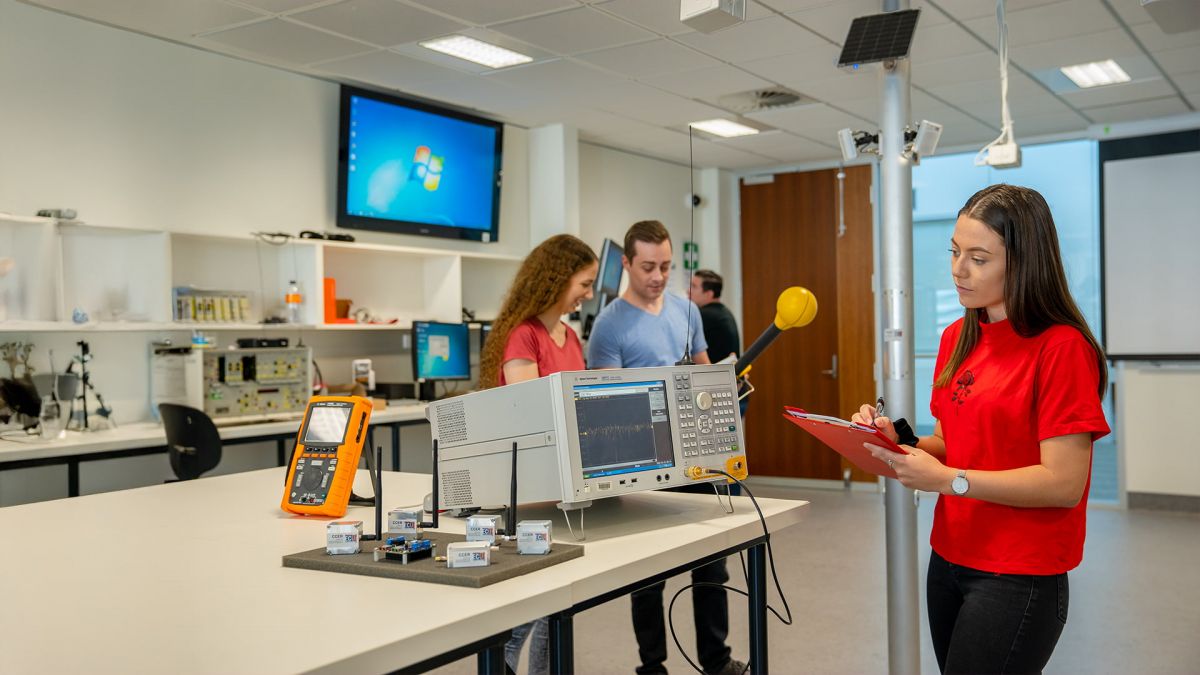
Studying engineering technology also provides a clear and flexible career pathway. Graduates can enter the workforce directly as Engineering Technologists, pursue chartered status through Engineers Australia, or use the degree as a stepping stone into a Bachelor of Engineering (Honours) with recognised advanced standing at many institutions. The degree's applied focus — combining laboratory work, industry projects, and work-integrated learning — means graduates are job-ready from day one, with the practical skills and professional portfolio that employers in civil, mechanical, electrical, and emerging technology sectors are actively seeking.
The primary entry pathway into the Bachelor of Technology (Engineering) for domestic students is completion of Year 12 (or equivalent) with a competitive ATAR score, typically ranging from around 55 to 75 depending on the provider and specialisation. Most institutions also require demonstrated achievement in prerequisite or assumed knowledge subjects, particularly Mathematics (at the level of Mathematical Methods or equivalent) and, in some cases, Physics or Chemistry. Students who have completed a Certificate IV, Diploma, or Advanced Diploma in a relevant engineering or technical field are typically eligible for direct entry and may receive significant advanced standing — in some cases, up to one year of credit — which can reduce the time to complete the degree. Tradespeople with relevant experience and formal qualifications may also be eligible to apply for Recognition of Prior Learning (RPL) for applicable units, further shortening their study duration.
For students entering through alternative pathways, many institutions offer a selection interview and/or a mathematics assessment test to gauge academic readiness for degree-level study. This is particularly common for applicants who are re-entering education after time in industry, or who hold partially completed higher education qualifications. International students are generally required to demonstrate English language proficiency through tests such as IELTS (typically a minimum overall band of 6.0–6.5 with no individual band below 6.0), TOEFL iBT, or equivalent. Some providers accept completion of an approved English language program in lieu of standardised testing. Students who do not meet direct entry requirements are typically supported through pathway programs, enabling access to the degree with additional preparation.
This course may be offered in different study modes depending on the university, campus location, course structure and student type. Students should check the available delivery mode before applying, as not every study option is available at every institution.
On-campus study is the traditional mode of delivery where students attend classes, lectures, tutorials, workshops or seminars at the university campus. This option may suit students who prefer face-to-face learning, access to campus facilities, networking with classmates, practical workshops, group projects and direct engagement with academic staff.
Some universities may offer programs fully online or with online subject options. Online study can be attractive for students who need flexibility due to work, family, location or other commitments. Online study may suit domestic students, working professionals or students who want to study from outside Australia.
Hybrid or blended study usually combines online learning with some on-campus classes, workshops, intensive sessions or practical components. This mode may suit students who want flexibility but still want some face-to-face interaction. The exact structure varies between institutions.
Programs in Australia may have different intake structures depending on the university. The most common intake systems are semester, trimester and block mode.
Many Australian universities follow a two-semester academic calendar. The main intakes are commonly Semester 1 (around February or March) and Semester 2 (around July). Semester-based study usually allows students to complete a set number of subjects over approximately 12 to 14 weeks.
Some universities use a trimester system, which generally provides three study periods a year — around February/March, June/July and October/November. Trimester study may provide more flexibility and may help some students complete their course faster.
Some institutions may offer selected subjects or programs in block mode, where students focus on one subject at a time over a shorter, more intensive teaching period. Block mode may suit students who prefer concentrated learning or working professionals managing study around employment.
Some online or professionally focused programs may offer more frequent start dates or flexible entry points throughout the year. Students should not assume that every course has monthly or multiple intakes — availability depends on the institution, course structure and student type.
Graduates of the Bachelor of Technology (Engineering) are well positioned for employment across Australia's most active and growing industries. Engineering technologists occupy an important and practical role within project teams — working closely with professional engineers to design, test, maintain, and oversee the delivery of technical systems and infrastructure. Major employers include government infrastructure agencies, construction and civil contracting companies, mining and resources businesses, renewable energy operators, manufacturing firms, telecommunications providers, defence contractors, and engineering consulting practices. Graduates may work in the field, in laboratories, in project offices, or in technical support roles, and many go on to achieve chartered engineering technologist status or transition into management positions over time.
Entry Level
Graduate Technologist / Technical Assistant
Graduate Engineering Technologist, Engineering Trainee, Technical Support Officer, Junior Site Engineer, Laboratory Technician
Early Career
Engineering Technician / Project Officer
Engineering Technician, Project Engineer, Quality Control Officer, Maintenance Technician, Instrumentation Technician, Civil Technical Officer
Mid-Level
Senior Technologist / Lead Engineer
Senior Engineering Technologist, Lead Project Engineer, Senior Maintenance Engineer, Systems Engineer, Site Supervisor, Asset Engineer
Senior Level
Engineering Manager / Principal Technologist
Engineering Manager, Principal Technologist, Construction Manager, Operations Manager, Technical Services Manager, Project Manager
Leadership
Director / Head of Engineering
Director of Engineering, Head of Technical Services, Chief Engineer, General Manager (Engineering), Senior Project Director, Principal Consultant
Salaries for Bachelor of Technology (Engineering) graduates in Australia vary by discipline, industry sector, and location, with engineering consistently ranking among the highest-paying fields for undergraduate degree holders.
Melbourne
Melbourne is Victoria's engineering and manufacturing hub, home to major infrastructure projects, a strong defence industry presence, and one of Australia's largest construction pipelines. The city's diverse economy supports engineering technologists across civil, electrical, and mechanical disciplines, with employers including large consulting firms, government agencies, and advanced manufacturers based in the inner west and outer industrial corridors.
Sydney
Sydney offers outstanding opportunities for engineering technology graduates, particularly in civil infrastructure, building services, telecommunications, and utilities, underpinned by billions in ongoing government transport and housing projects. The city is a major economic centre with higher average starting salaries than most other Australian cities and strong connections to multinational engineering consulting firms operating across the Asia-Pacific region.
Brisbane
Brisbane's rapidly growing infrastructure and energy sectors — boosted by the 2032 Olympics pipeline and Queensland's renewable energy transformation — create strong and sustained demand for engineering technologists across civil, electrical, and environmental disciplines. The city's proximity to resource-rich regions of Queensland also opens doors into mining and resources roles for graduates willing to work regionally.
Perth
Perth is Australia's resources and mining capital, making it one of the highest-paying cities for engineering technology graduates, particularly those specialising in mechanical, electrical, and mining engineering. The city's engineering sector is closely linked to major iron ore, gold, and lithium operations in the Pilbara and Goldfields regions, with many employers offering fly-in fly-out rosters and premium remuneration packages.
Adelaide
Adelaide is emerging as a significant centre for defence technology, advanced manufacturing, and renewable energy engineering, with major investments in naval shipbuilding and the Hydrogen Jobs Plan shaping strong medium-term demand for engineering technologists. The city offers a lower cost of living compared to Sydney or Melbourne and a collaborative industry environment well suited to early-career professionals building experience across sectors.
Canberra
Canberra provides unique opportunities for engineering technology graduates interested in defence, government infrastructure, utilities, and public sector asset management, with a stable employment base anchored by federal government projects and agencies. The ACT's ongoing investment in transport infrastructure, smart city initiatives, and sustainability projects ensures steady demand for technically skilled engineering professionals.
Before choosing a course, students should compare:
International students who want to study in Australia should also consider additional requirements before applying.
Join successful graduates
Students Helped
Application Processed
Listed Universities
Listed Courses