Start building today!
Experience the Find the courses and unlock the true potential
The Bachelor of Technology (Motorsports) is a specialised undergraduate engineering qualification designed to equip students with the technical, analytical, and management skills needed to work in the motorsport and high-performance automotive industries. The course develops core problem-solving abilities alongside financial and management competencies associated with manufacturing industries, with a particular focus on the motorsports sector. Students gain a solid understanding of design, simulation, and fabrication processes, as well as the management challenges involved in producing the complex automotive systems and components that underpin professional motorsport. The qualification is accredited by Engineers Australia as an AQF Level 7 Bachelor Degree Award, providing industry recognition and a pathway to professional engineering membership.
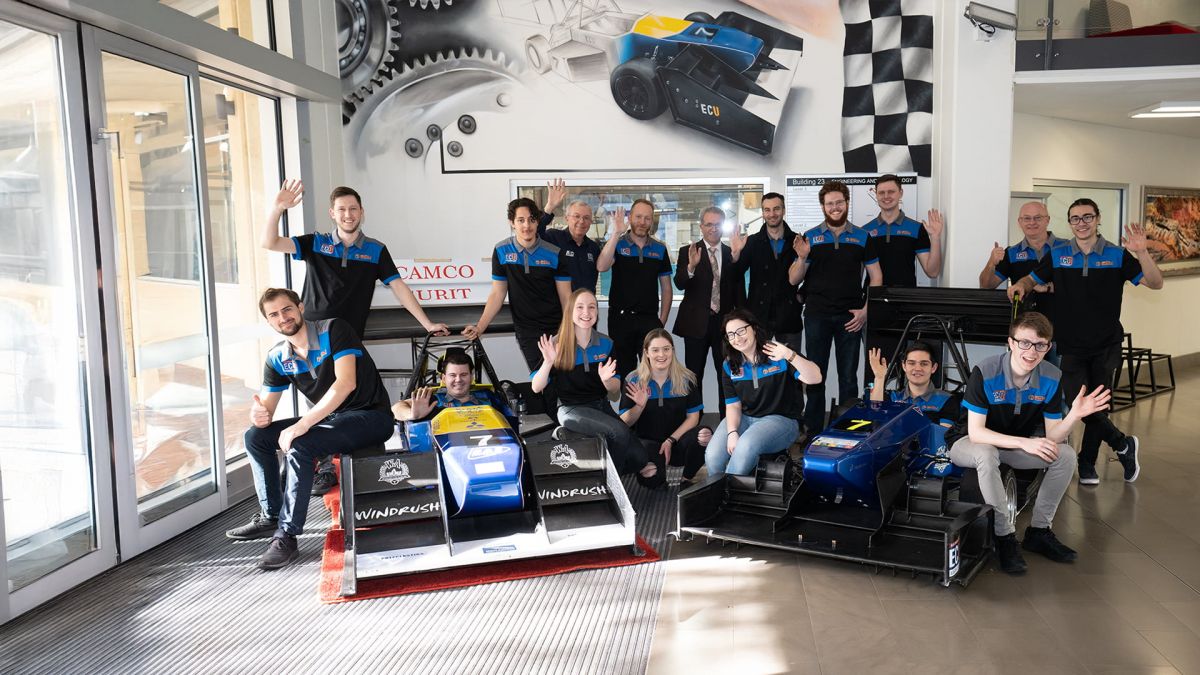
The course is highly practical and industry-connected, covering areas such as race car systems, instrumentation and measurement, computer-aided design and manufacturing (CAD/CAM), materials science, engineering mechanics, motorsport project management, and sports marketing. Students also engage in extracurricular activities and real-world projects that mirror the fast-paced culture of the motorsport industry. Employers who recruit from this degree include professional motorsport race teams, automotive OEMs, performance vehicle manufacturers, defence contractors, aerospace firms, precision engineering companies, motorsport event management organisations, and transport technology companies. The broad engineering and technology base also opens doors in product design, advanced manufacturing, and project management sectors beyond motorsport.
Australia has a passionate and well-established motorsport culture, anchored by iconic events such as the Supercars Championship, the Formula 1 Australian Grand Prix, the Bathurst 1000, and a thriving grassroots racing scene. This ongoing demand sustains a professional ecosystem of race teams, engineering firms, component manufacturers, and event organisations — all requiring skilled graduates with specialised motorsport technology knowledge. With the global automotive industry also undergoing a major technological transition toward electrification, hybrid powertrains, and advanced data analytics, motorsport engineers are increasingly valued for their capacity to innovate under extreme performance constraints, making them attractive to sectors well beyond racing.
There is a recognised skills gap in Australia for engineering professionals who combine hands-on technical capability with specialised motorsport knowledge. Graduates of this qualification are well positioned to meet this gap, entering a career field where practical experience, engineering problem-solving, and industry passion intersect. The course also provides a strong foundation for those wishing to progress to postgraduate study in mechanical, mechatronic, or automotive engineering, or to pursue internationally focused motorsport careers in series such as Formula 1, World Rally Championship, or Formula E.
For direct entry into the Bachelor of Technology (Motorsports), applicants must hold a senior secondary school certificate (Year 12 or equivalent) with a competitive ATAR. Preferred prerequisite subjects include Mathematics: Methods (ATAR level) and at least one of Physics ATAR or Engineering Studies ATAR, as these underpin the quantitative and scientific content of the course. Applicants who have not completed these prerequisite subjects are generally not excluded — they may instead complete bridging or foundation units during their first year of study to bring their knowledge up to the required standard. Mature-age applicants and those with relevant vocational qualifications or trade certificates may also be considered through alternative entry pathways.
For international students, English language proficiency is required and is typically demonstrated through IELTS (an overall band score of 6.0 with no individual band below 6.0 is commonly required, or equivalent scores in TOEFL, PTE Academic, or similar tests). International applicants may also demonstrate English proficiency through successful completion of prior study conducted in English. Students who have already commenced a bachelor's degree at an Australian higher education provider may apply for credit transfer or advanced standing, with entry requirements assessed on a case-by-case basis. Applicants to double-degree programs (such as combining Motorsports with Mechatronics Honours) may face slightly higher ATAR benchmarks and additional subject prerequisites. Work experience in automotive or engineering environments, while not mandatory for undergraduate entry, is viewed favourably and can strengthen an application submitted through special admissions or mature-age pathways.
This course may be offered in different study modes depending on the university, campus location, course structure and student type. Students should check the available delivery mode before applying, as not every study option is available at every institution.
On-campus study is the traditional mode of delivery where students attend classes, lectures, tutorials, workshops or seminars at the university campus. This option may suit students who prefer face-to-face learning, access to campus facilities, networking with classmates, practical workshops, group projects and direct engagement with academic staff.
Some universities may offer programs fully online or with online subject options. Online study can be attractive for students who need flexibility due to work, family, location or other commitments. Online study may suit domestic students, working professionals or students who want to study from outside Australia.
Hybrid or blended study usually combines online learning with some on-campus classes, workshops, intensive sessions or practical components. This mode may suit students who want flexibility but still want some face-to-face interaction. The exact structure varies between institutions.
Programs in Australia may have different intake structures depending on the university. The most common intake systems are semester, trimester and block mode.
Many Australian universities follow a two-semester academic calendar. The main intakes are commonly Semester 1 (around February or March) and Semester 2 (around July). Semester-based study usually allows students to complete a set number of subjects over approximately 12 to 14 weeks.
Some universities use a trimester system, which generally provides three study periods a year — around February/March, June/July and October/November. Trimester study may provide more flexibility and may help some students complete their course faster.
Some institutions may offer selected subjects or programs in block mode, where students focus on one subject at a time over a shorter, more intensive teaching period. Block mode may suit students who prefer concentrated learning or working professionals managing study around employment.
Some online or professionally focused programs may offer more frequent start dates or flexible entry points throughout the year. Students should not assume that every course has monthly or multiple intakes — availability depends on the institution, course structure and student type.
Graduates of the Bachelor of Technology (Motorsports) enter a diverse and dynamic career landscape that extends well beyond the racetrack. In addition to direct employment in professional motorsport race teams and series, graduates find strong demand in automotive OEMs, precision and advanced manufacturing firms, defence and aerospace industries, performance vehicle companies, motorsport component suppliers, and engineering consultancies. The specialised combination of technical engineering skills, project management capability, and motorsport domain knowledge makes graduates competitive in any sector requiring high-performance mechanical systems expertise. Career mobility is strong, with many professionals beginning in junior technical roles and progressing through to senior race engineering, design management, or technology leadership positions.
Entry Level
Graduate / Junior Technologist
Graduate Motorsport Engineer, Junior Automotive Technologist, Graduate Mechanical Engineer, Workshop Technical Assistant, Motorsport Data Technician
Early Career
Engineer / Technologist
Motorsport Design Engineer, Vehicle Dynamics Engineer, Manufacturing Engineer, CAD Engineer, Automotive Systems Engineer, Motorsport Data Analyst
Mid-Level
Senior Engineer / Specialist
Senior Race Engineer, Performance Development Engineer, Chassis Engineer, Powertrain Engineer, Senior Product Development Engineer, Technical Coordinator
Senior Level
Principal Engineer / Engineering Manager
Lead Race Engineer, Engineering Manager, Principal Automotive Engineer, Senior Project Manager (Motorsport), Head of Vehicle Dynamics, Technical Director (Race Team)
Leadership
Director / Head / Chief Engineer
Chief Engineer, Director of Engineering, Head of Motorsport Technology, Director of Product Development, General Manager (Motorsport Operations)
Salaries for motorsport and automotive technology graduates in Australia vary by role, experience level, and employer type, with specialised motorsport engineering roles commanding above-average remuneration.
Melbourne
Melbourne is Australia's motorsport capital, home to the Formula 1 Australian Grand Prix at Albert Park, the Supercars Championship, and a dense cluster of race teams, automotive engineering firms, and performance vehicle manufacturers. The city's strong advanced manufacturing sector and proximity to major motorsport events and employers make it an ideal base for students and graduates in this field.
Sydney
Sydney offers access to a large automotive and advanced manufacturing industry base, with numerous performance vehicle dealerships, engineering consultancies, and motorsport-adjacent companies operating across New South Wales. The city also hosts major motorsport events and provides strong graduate employment opportunities in product development, automotive systems, and precision manufacturing.
Brisbane
Brisbane and the broader South East Queensland region have a growing motorsport and automotive technology sector, supported by engineering manufacturers, performance vehicle companies, and proximity to Queensland Raceway and other race circuits. The region's expanding advanced manufacturing industry and lower cost of living make it an attractive city for motorsport engineering students and graduates.
Perth
Perth is the home base for Australia's dedicated Bachelor of Technology (Motorsports) qualification and has a strong motorsport community, with Barbagallo Raceway and a network of performance automotive businesses located nearby. The city's robust engineering economy — underpinned by resources, defence, and precision manufacturing industries — provides graduates with diverse employment options beyond motorsport.
Adelaide
Adelaide has a proud motorsport heritage as the former host of the Australian Formula 1 Grand Prix and is home to the Tailem Bend motorsport precinct (The Bend Motorsport Park), one of Australia's largest and most modern racing facilities. The city is also a hub for defence manufacturing and automotive technology, providing motorsport engineering graduates with unique local opportunities in both racing and high-tech manufacturing sectors.
Canberra
While Canberra is not a traditional motorsport hub, it offers motorsport technology graduates strong opportunities in defence engineering, government-funded research institutions, and advanced technology sectors. The ACT's proximity to Sydney and its growing engineering and innovation precinct means graduates can pursue engineering careers with organisations that value high-performance systems and technical problem-solving expertise.
Before choosing a course, students should compare:
International students who want to study in Australia should also consider additional requirements before applying.
Join successful graduates
Students Helped
Application Processed
Listed Universities
Listed Courses