Start building today!
Experience the Find the courses and unlock the true potential
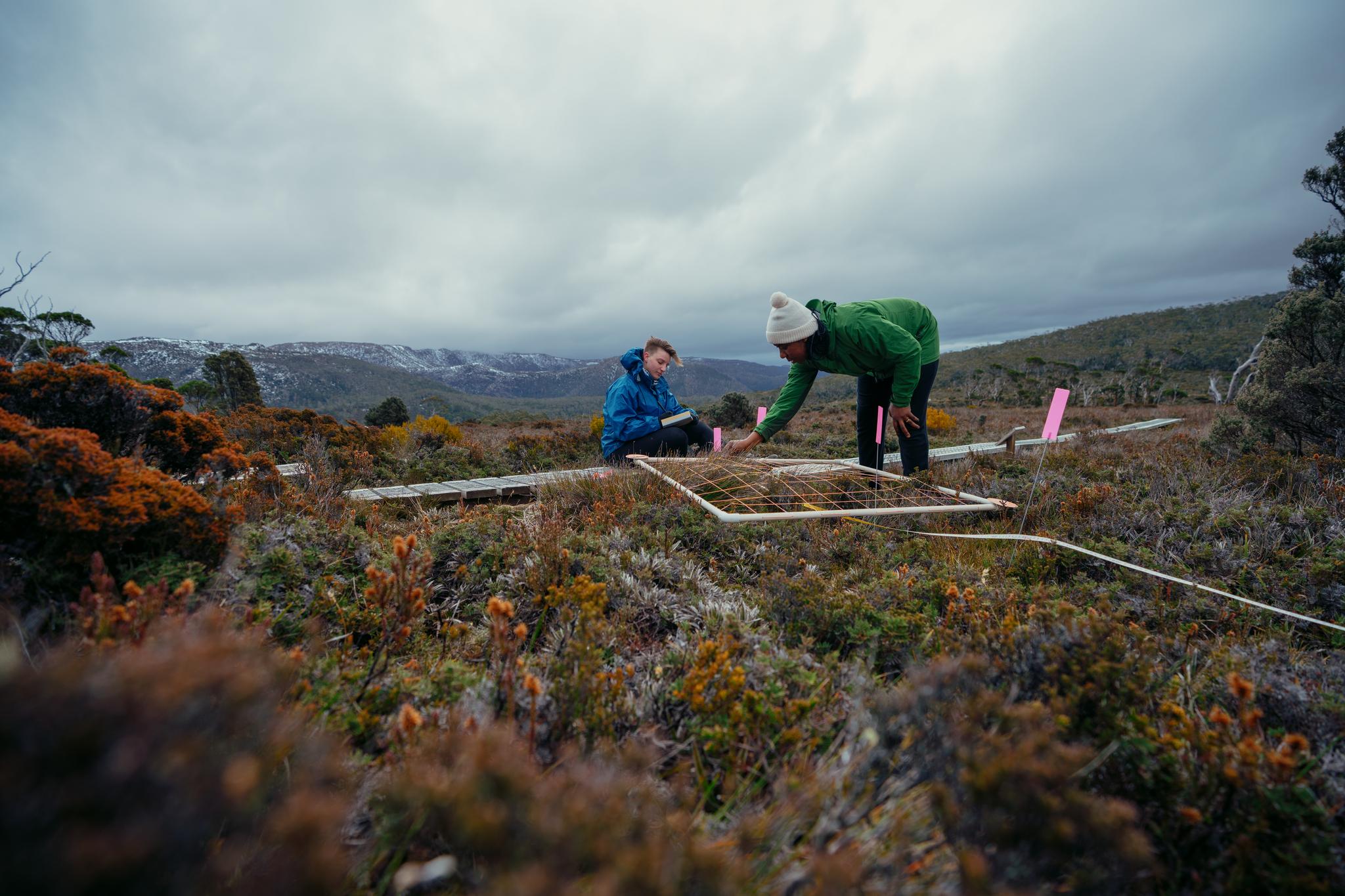
The Doctor of Philosophy (Biological Sciences) is Australia's highest academic research qualification, designed for individuals who wish to make an original and significant contribution to scientific knowledge in the life sciences. The degree is research-focused in nature — rather than following a prescribed set of taught subjects, candidates design and execute an independent research project under the guidance of an expert supervisory panel, producing a thesis of up to 100,000 words that is examined by members of the Australian and international scientific academic community. Research areas commonly explored include molecular biology, cell biology, genetics, genomics, ecology, evolutionary biology, marine biology, plant science, microbiology, biotechnology, bioinformatics, zoology, and environmental biology. The degree typically takes three to four years of full-time study to complete.
The PhD in Biological Sciences is ideally suited to graduates who have completed an Honours or Master's degree in a biological or related scientific discipline and who have a passion for discovery, problem-solving, and advancing the frontiers of human knowledge. Candidates are supervised by nationally and internationally recognised scientists, have access to state-of-the-art laboratories, field stations, and research infrastructure, and are embedded in vibrant university research communities. The degree equips graduates not just with deep technical expertise in their chosen research area, but also with highly transferable skills in critical thinking, project management, data analysis, and scientific communication.
Key employers of PhD graduates in Biological Sciences include the Commonwealth Scientific and Industrial Research Organisation (CSIRO), federal and state government departments (including environment, agriculture, and health), public universities, medical research institutes, hospitals, environmental consultancies, the pharmaceutical and biotechnology industry, agri-science companies, and conservation and natural resource management agencies. The degree is equally relevant for graduates pursuing careers in academia as for those entering the private, government, or not-for-profit sectors.
Australia faces significant national challenges — from managing unique and threatened ecosystems and endemic wildlife to responding to emerging infectious diseases, food security pressures, and the impacts of climate change — that demand a new generation of highly trained biological scientists. The demand for PhD-qualified researchers is strong across government, industry, and academia, with CSIRO, the Australian Research Council (ARC), and the National Health and Medical Research Council (NHMRC) collectively investing billions of dollars in biological and medical research annually. The Federal Government's 'Future Made in Australia' agenda and investments in biotech, green hydrogen, and health innovation are further creating high-skill employment pathways for doctoral graduates in the biological sciences.
Beyond traditional research and academic roles, PhD graduates in Biological Sciences are increasingly sought after in the private sector — including biotechnology start-ups, pharmaceutical companies such as CSL, Moderna, and Pfizer (BioNTech), and environmental consulting firms. The breadth of transferable skills developed during a PhD — including complex data analysis, scientific writing, independent project management, and evidence-based decision making — makes graduates highly competitive across a wide range of sectors. Domestic students may also benefit from the Australian Government's Research Training Scheme (RTS), which exempts eligible candidates from tuition fees for up to four years, significantly reducing the financial barrier to completing a doctoral degree.
The standard academic entry requirement for a Doctor of Philosophy (Biological Sciences) at Australian universities is a four-year Bachelor's degree with First Class or Upper Second Class Honours (Class IIA or above) in a relevant biological or scientific discipline. Alternatively, applicants may be eligible with a completed Master of Philosophy or a research master's degree that included a substantive thesis or research component. In some cases, admission may be granted to applicants holding a coursework master's degree with a strong GPA (typically at least 5.65 on a 7-point scale) combined with demonstrable research experience equivalent to Honours Class IIA. The bachelor's degree should include a research component — such as a thesis, research project, or research methodology subjects — constituting at least 25% of one full-time academic year. Admission is competitive, and meeting minimum requirements does not guarantee entry, as places are subject to supervisory availability, research infrastructure, and approval from the relevant academic authority.
A critical and often non-negotiable requirement is identifying and securing agreement from a suitable supervisor before submitting a formal application. Prospective candidates must align their proposed research topic with the expertise of an academic supervisor at their chosen institution, and in many cases must develop a preliminary research proposal. International applicants are required to meet English language proficiency standards — typically an IELTS overall score of 6.5 to 7.0 (with no band below 6.0), or equivalent in TOEFL, PTE Academic, or other recognised tests. Some institutions may also consider relevant industry or professional research experience, co-authored publications, or equivalent qualifications on a case-by-case basis.
This course may be offered in different study modes depending on the university, campus location, course structure and student type. Students should check the available delivery mode before applying, as not every study option is available at every institution.
On-campus study is the traditional mode of delivery where students attend classes, lectures, tutorials, workshops or seminars at the university campus. This option may suit students who prefer face-to-face learning, access to campus facilities, networking with classmates, practical workshops, group projects and direct engagement with academic staff.
Some universities may offer programs fully online or with online subject options. Online study can be attractive for students who need flexibility due to work, family, location or other commitments. Online study may suit domestic students, working professionals or students who want to study from outside Australia.
Hybrid or blended study usually combines online learning with some on-campus classes, workshops, intensive sessions or practical components. This mode may suit students who want flexibility but still want some face-to-face interaction. The exact structure varies between institutions.
Programs in Australia may have different intake structures depending on the university. The most common intake systems are semester, trimester and block mode.
Many Australian universities follow a two-semester academic calendar. The main intakes are commonly Semester 1 (around February or March) and Semester 2 (around July). Semester-based study usually allows students to complete a set number of subjects over approximately 12 to 14 weeks.
Some universities use a trimester system, which generally provides three study periods a year — around February/March, June/July and October/November. Trimester study may provide more flexibility and may help some students complete their course faster.
Some institutions may offer selected subjects or programs in block mode, where students focus on one subject at a time over a shorter, more intensive teaching period. Block mode may suit students who prefer concentrated learning or working professionals managing study around employment.
Some online or professionally focused programs may offer more frequent start dates or flexible entry points throughout the year. Students should not assume that every course has monthly or multiple intakes — availability depends on the institution, course structure and student type.
Graduates of a PhD in Biological Sciences are highly versatile, pursuing careers across academia, government, industry, and the not-for-profit sector in Australia and internationally. They may work as independent research scientists at leading institutions, take on specialist roles in biotechnology and pharmaceutical companies, advise government on environmental and biosecurity policy, or lead conservation efforts in national parks and environmental agencies. The research training, analytical rigour, and communication skills developed during a PhD make graduates competitive for senior and leadership roles across a remarkable range of professional contexts.
Entry Level
Graduate Researcher / Research Assistant
Research Assistant, Laboratory Technician, Graduate Research Officer, Junior Scientist, Postgraduate Research Associate
Early Career
Postdoctoral Fellow / Research Officer
Postdoctoral Research Fellow, Research Officer, Environmental Officer, Biosecurity Officer, Science Communicator, Junior Lecturer
Mid-Level
Senior Research Scientist / Specialist
Senior Research Scientist, Ecologist, Molecular Biologist, Geneticist, Bioinformatician, Senior Environmental Consultant, Lecturer
Senior Level
Principal Scientist / Senior Manager
Principal Research Scientist, Senior Lecturer, Associate Professor, R&D Manager, Principal Environmental Scientist, Science Policy Adviser
Leadership
Director / Professor / Chief Scientist
Professor, Research Group Leader, Chief Scientist, Director of Research, Head of Department, Chief Environmental Officer, Dean of Science
Salary ranges for PhD graduates in Biological Sciences in Australia vary significantly by sector, specialisation, and level of experience, with strong earning potential in biotechnology, government research, and senior academic roles.
Melbourne
Melbourne is widely regarded as the biotechnology capital of Australia, home to a critical mass of public and private biomedical and bioscientific research institutes concentrated in the Parkville precinct — including major research hospitals, pharmaceutical companies such as CSL, and world-leading institutes. The city offers PhD candidates exceptional access to industry partnerships, cutting-edge facilities, and a vibrant life sciences ecosystem supported by strong Victorian Government investment in biotech.
Sydney
Sydney is Australia's second-largest hub for biological sciences research, with major medical research institutes, leading universities, and a thriving biotechnology and pharmaceutical sector driving demand for PhD-qualified researchers. The city's proximity to federal health agencies and its large network of teaching hospitals and environmental organisations makes it an excellent base for biomedical, environmental, and translational research.
Brisbane
Brisbane offers PhD candidates access to a growing biotechnology sector, the Queensland Government's significant investment in agricultural and environmental sciences, and proximity to unique tropical and marine ecosystems including the Great Barrier Reef. CSIRO's Industrial Biotechnology laboratory in Dutton Park and a network of strong research universities make Brisbane a compelling destination for biological sciences doctoral study, particularly in ecology, marine biology, and agri-science.
Perth
Perth is an emerging hub for biological sciences research, particularly in the areas of marine biology, environmental science, and mining-related biotechnology, with CSIRO's Industrial Biotechnology facility based at Floreat. The city's access to Western Australia's extraordinary marine environments, unique biodiversity, and the mining and resources sector creates distinctive opportunities for PhD candidates in ecology, bioremediation, and conservation biology.
Adelaide
Adelaide has a growing biotechnology and health sciences research presence, with significant government and university investment in biological sciences and a developing innovation precinct at Lot Fourteen on North Terrace. The city is particularly strong in plant biology, wine science, agricultural biotechnology, and environmental research, with access to unique South Australian ecosystems and a close-knit, collaborative scientific community.
Canberra
Canberra is home to CSIRO's national headquarters, the Australian National University's internationally ranked Research School of Biology, and a concentration of federal government science agencies, making it one of the most strategically important cities in Australia for biological sciences PhD research. Candidates benefit from direct access to national policy and regulatory bodies, the Australian Institute of Marine Science, and world-class research infrastructure focused on biosecurity, ecology, and genomics.
Before choosing a course, students should compare:
International students who want to study in Australia should also consider additional requirements before applying.
Join successful graduates
Students Helped
Application Processed
Listed Universities
Listed Courses