Start building today!
Experience the Find the courses and unlock the true potential
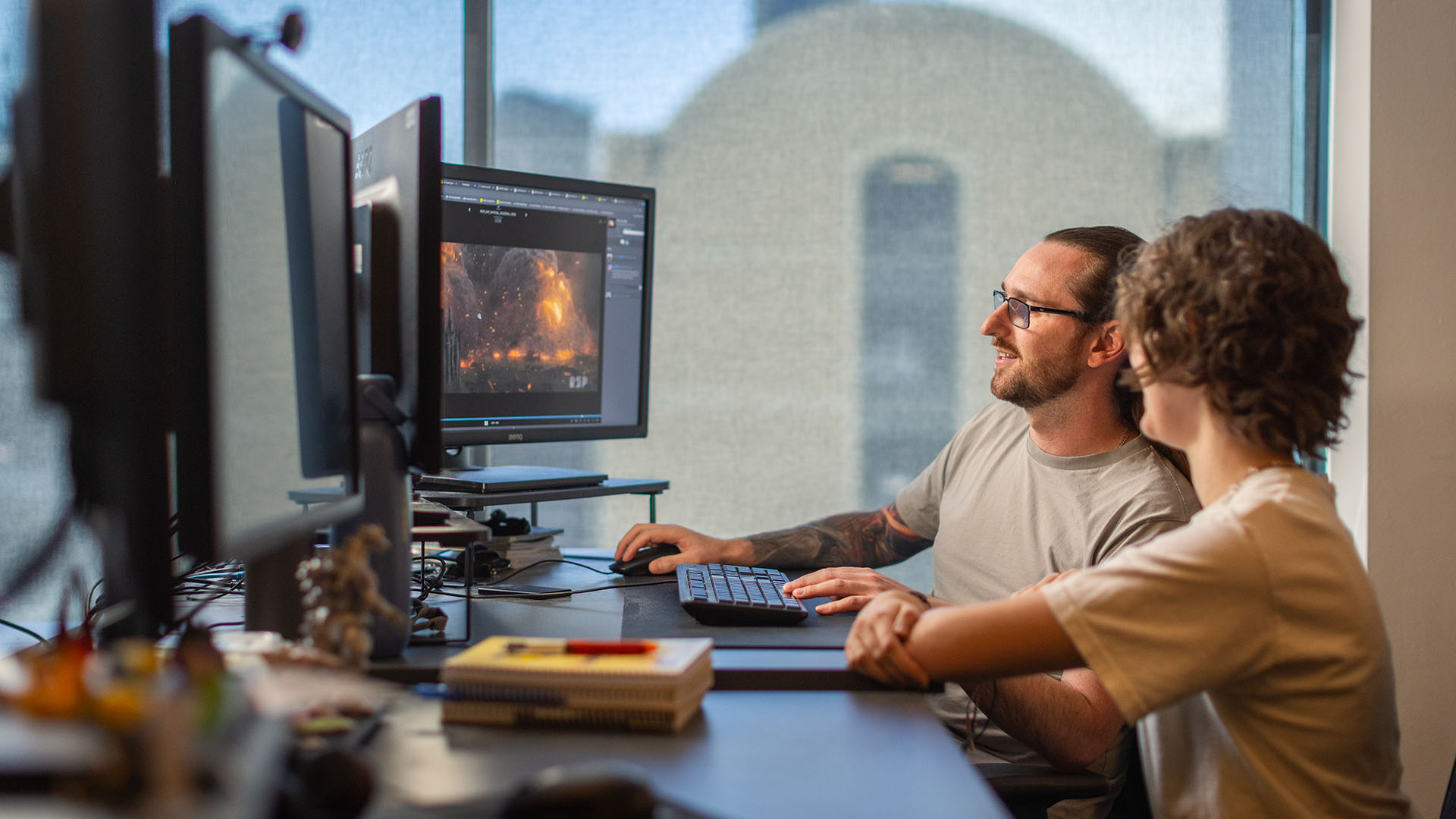
The Graduate Certificate in Dynamic Effects and Lighting is an intensive, industry-embedded postgraduate qualification designed to fast-track graduates into the visual effects (VFX) industry. Delivered on-site at a professional VFX studio in a simulated production environment, students develop advanced specialist skills in creating photorealistic dynamic effects — including explosions, particle simulations, water effects, procedural environments, and CG lighting — using industry-standard software such as Houdini. The course is structured to mirror real-world studio workflows, meaning students work to production deadlines, attend company meetings and events, and are mentored by working VFX artists and supervisors from day one. It sits within the Creative Arts, Communication and Media Studies field of study and is typically completed in approximately 12 weeks of intensive full-time study.
This qualification is designed for creative professionals who already have a foundation in media arts, visual effects, animation, or a related discipline and wish to specialise in dynamic effects and lighting for feature film, episodic television, streaming platforms, and digital content. Graduates leave with a professional-standard showreel and resume, ready to enter the workforce in technical and artistic VFX roles. Employers include major Australian and international VFX studios, film and television production companies, streaming services such as Netflix and Disney+, advertising agencies, video game developers, and post-production houses — all of which have a significant and growing presence in Australia.
Australia's post-production, digital, and visual effects (PDV) industry is experiencing remarkable growth, having been valued at $714 million in 2023 — a 21% increase on the previous year — and the demand for skilled FX artists and lighting technical directors continues to outpace the available talent pool. A 30% federal PDV Offset cash rebate, stackable with state-level incentives pushing effective returns past 40% in some jurisdictions, has made Australia one of the most sought-after VFX destinations on the planet, attracting major Hollywood productions and fuelling a skills shortage for specialist roles. A graduate certificate in Dynamic Effects and Lighting directly addresses this gap by producing job-ready candidates with verified, industry-aligned skills in the exact specialisations studios are hiring for.
Beyond the immediate employment opportunity, this qualification provides a globally transferable skill set. With Australia's VFX studios regularly contributing to Marvel, Disney, Netflix, and other major international productions, graduates are positioned to build careers not just locally but at studios worldwide. The course's unique embedded-studio model — where students learn alongside working professionals — means networking, industry contacts, and even job offers can materialise before graduation, making the return on this short, focused qualification exceptionally strong.
To be eligible for admission to a Graduate Certificate in Dynamic Effects and Lighting, applicants must typically satisfy one of three pathways: hold a completed bachelor degree (AQF Level 7) or higher from a recognised higher education institution, preferably in media arts, visual effects, animation, screen and media, or a related creative discipline; hold a completed Advanced Diploma (AQF Level 6) in Screen and Media or equivalent from a registered training organisation (RTO); or demonstrate at least three years of relevant professional experience in the visual effects or broader creative industries, supported by a showreel and curriculum vitae. In some cases, applicants holding academic qualifications in unrelated fields may also be considered if they can demonstrate substantial experience in media arts or visual effects through their submitted materials. Entry is competitive, and when demand exceeds available places, selection is based on the strength of entry criteria.
All applicants are required to submit a showreel of their own creative work along with a curriculum vitae outlining relevant skills and experience. The showreel is a critical component of the selection process and should ideally demonstrate existing knowledge or entry-level skills in dynamic effects, lighting, or broader visual effects practice. Assumed knowledge in relevant technical areas, while not mandatory, is highly beneficial. For international students, English language proficiency requirements typically include an IELTS overall score of 6.5 (with no band below 6.0 in Reading and Writing), or equivalent scores through TOEFL iBT (79+), Pearson PTE Academic (58+), or Cambridge CAE/CPE (177+).
This course may be offered in different study modes depending on the university, campus location, course structure and student type. Students should check the available delivery mode before applying, as not every study option is available at every institution.
On-campus study is the traditional mode of delivery where students attend classes, lectures, tutorials, workshops or seminars at the university campus. This option may suit students who prefer face-to-face learning, access to campus facilities, networking with classmates, practical workshops, group projects and direct engagement with academic staff.
Some universities may offer programs fully online or with online subject options. Online study can be attractive for students who need flexibility due to work, family, location or other commitments. Online study may suit domestic students, working professionals or students who want to study from outside Australia.
Hybrid or blended study usually combines online learning with some on-campus classes, workshops, intensive sessions or practical components. This mode may suit students who want flexibility but still want some face-to-face interaction. The exact structure varies between institutions.
Programs in Australia may have different intake structures depending on the university. The most common intake systems are semester, trimester and block mode.
Many Australian universities follow a two-semester academic calendar. The main intakes are commonly Semester 1 (around February or March) and Semester 2 (around July). Semester-based study usually allows students to complete a set number of subjects over approximately 12 to 14 weeks.
Some universities use a trimester system, which generally provides three study periods a year — around February/March, June/July and October/November. Trimester study may provide more flexibility and may help some students complete their course faster.
Some institutions may offer selected subjects or programs in block mode, where students focus on one subject at a time over a shorter, more intensive teaching period. Block mode may suit students who prefer concentrated learning or working professionals managing study around employment.
Some online or professionally focused programs may offer more frequent start dates or flexible entry points throughout the year. Students should not assume that every course has monthly or multiple intakes — availability depends on the institution, course structure and student type.
Graduates of the Graduate Certificate in Dynamic Effects and Lighting are equipped to enter the Australian and international VFX industry in a range of creative, technical, and production roles. Major employers include VFX studios, film and television production companies, animation studios, streaming platforms, video game developers, advertising agencies, and post-production facilities operating across Sydney, Melbourne, Brisbane, and Adelaide. The Australian PDV industry's sustained growth, combined with the global demand for high-quality VFX talent on major productions for studios such as Marvel, Disney, Netflix, and Amazon Prime, means that graduates with verified industry skills and a strong showreel are in genuine demand — often before they have even completed the qualification.
Entry Level
Graduate Artist / Assistant
Junior FX Artist, Junior Lighting Artist, Render Wrangler / Technical Services Operator, VFX Production Assistant, CG Generalist (Junior)
Early Career
Artist / Coordinator
FX Artist, Lighting Artist, Lighting Technical Director, VFX Production Coordinator, 3D Simulation Artist, Compositing Artist
Mid-Level
Senior Artist / Specialist
Senior FX Artist, Senior Lighting Artist, Senior Lighting TD, Lead Lighting Artist, Digital Matte Painter, VFX Producer
Senior Level
Lead / Supervisor
Lead FX Artist, Lighting Supervisor, CG Supervisor, VFX Supervisor, Senior VFX Producer
Leadership
Director / Head of Department
Head of FX, Head of Lighting, VFX Creative Director, Executive VFX Producer, VFX Studio Head
Salaries in the Australian VFX and dynamic effects sector vary with experience, studio size, and the complexity of productions, with strong earning potential for specialists as they advance.
Melbourne
Melbourne is home to major VFX studios including Luma Pictures — known for its deep Marvel and Disney feature film credits — as well as Method Studios, Fin Design + Effects, and a thriving game development sector with studios such as Big Ant Studios and Firemonkeys. The city's strong creative community, world-class arts culture, and relatively affordable cost of living make it an attractive base for emerging VFX talent.
Sydney
Sydney houses Australia's largest and most internationally connected VFX ecosystem, led by Netflix Animation Studios (formerly Animal Logic) and supported by Industrial Light & Magic (ILM), Fin Design + Effects, Blockhead VFX, and a range of post-production facilities. It is the primary hub for international studio productions working with Australian talent, offering the highest concentration of senior roles and career advancement opportunities in the country.
Brisbane
Brisbane is one of Australia's fastest-growing VFX centres, bolstered by Queensland's generous 15% state uplift production incentive that makes it highly attractive to international productions. The city is home to studios including Alt.vfx, Cutting Edge, Formation Effects, and a Rising Sun Pictures studio — offering strong employment pathways, a vibrant creative community, and a lifestyle-friendly environment close to Gold Coast production facilities.
Perth
Perth offers a growing creative industries sector supported by institutions such as WAAPA (one of Australia's leading performing arts and production training academies), with opportunities in live events, broadcast, advertising, and screen production. While smaller than the east coast VFX hubs, Perth's lower cost of living and expanding media sector make it an accessible entry point, particularly for those interested in live production, events lighting, and broadcast visual effects.
Adelaide
Adelaide is the home of Rising Sun Pictures — one of Australia's most celebrated VFX studios with credits spanning major Marvel, Harry Potter, and Hollywood franchise productions — making it a uniquely specialised hub for dynamic effects and lighting graduates. The city's tight-knit industry community, affordable lifestyle, and the direct pipeline from graduate study to studio employment give Adelaide a compelling advantage for students in this specific field.
Canberra
Canberra's creative industries are anchored by government-funded cultural institutions, national broadcasters, and a growing digital media sector, offering opportunities in broadcast production, government communications, cultural exhibitions, and interactive media. While not a primary VFX hub, Canberra provides stable employment prospects in lighting design for cultural and institutional contexts, and its proximity to Sydney makes national industry connections accessible.
Before choosing a course, students should compare:
International students who want to study in Australia should also consider additional requirements before applying.
Join successful graduates
Students Helped
Application Processed
Listed Universities
Listed Courses