Start building today!
Experience the Find the courses and unlock the true potential
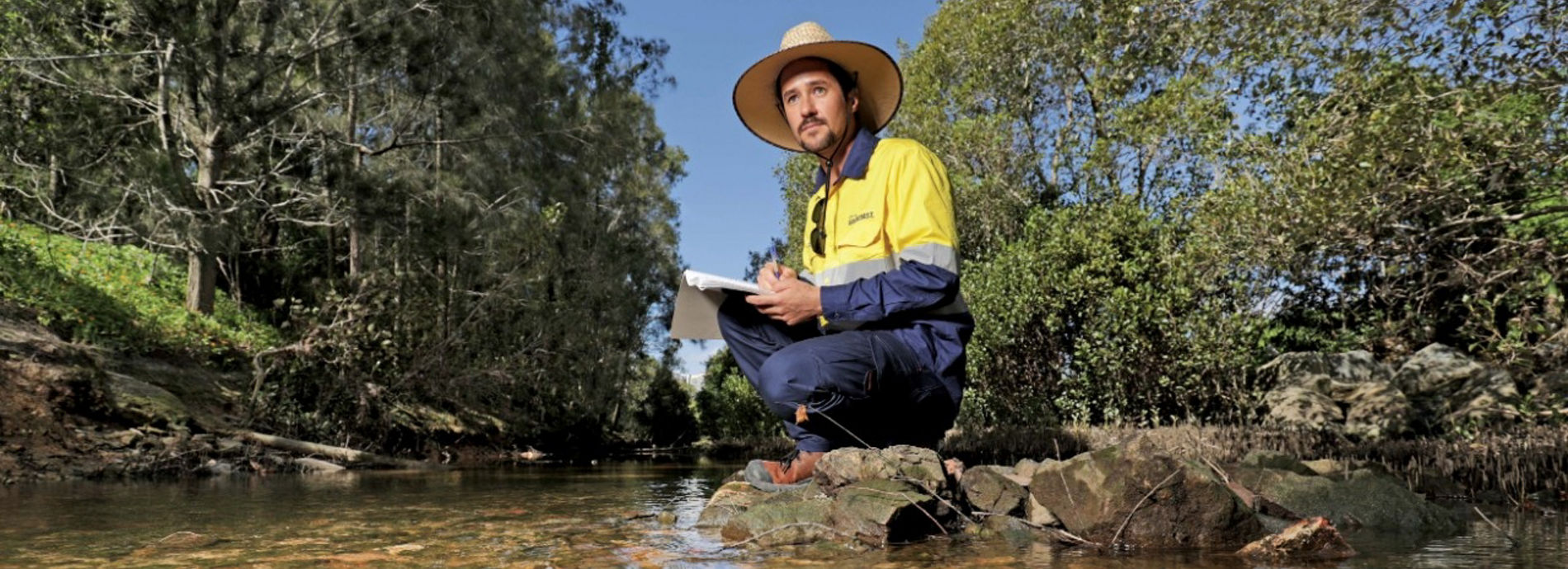
The Master of Catchment Science is a specialised postgraduate degree designed to develop highly capable professionals who can plan, manage, protect, and restore Australia's river basins, waterways, and catchment systems. The course integrates knowledge across hydrology, ecology, environmental chemistry, geomorphology, GIS and remote sensing, statistical and mathematical data analysis, hydraulics, hydrological and catchment modelling, and environmental economics. Students learn to combine scientific, engineering, and economic knowledge to address the real and pressing challenges posed by urbanisation, agricultural land clearing, climate variability, and water scarcity that have profoundly transformed Australia's catchments over time.
The degree is aimed at science, engineering, and environmental graduates who want to build advanced technical expertise and move into leadership roles in catchment and water resource management. It suits those currently working in the water, environment, or natural resource sectors who wish to formalise and deepen their skills, as well as recent graduates looking to specialise in this rapidly growing field of professional practice. The curriculum bridges theory and applied fieldwork, equipping students to design, deliver, and evaluate policies, plans, projects, and infrastructures for catchment protection and rehabilitation.
Graduates are employed across a wide range of sectors. Key employers include environmental and water consulting firms, local councils, state and federal government environment and water agencies, catchment management authorities, water utilities, natural resource management bodies, mining companies, and research organisations. The degree prepares students for leading technical and advisory roles in one of Australia's most critical and in-demand environmental science disciplines.
Australia faces mounting pressure on its water resources from climate change, prolonged droughts, flooding events, agricultural intensification, and rapid urban growth — all of which directly impact catchment health and water security. There is a well-documented shortage of qualified catchment scientists and water resource specialists, with governments, utilities, and consulting firms actively seeking professionals who can model, monitor, and manage complex catchment systems. Investment in water infrastructure, environmental flows, and catchment restoration programs is growing at the federal and state level, driven by policy frameworks such as the Murray-Darling Basin Plan and various state-based Natural Resource Management strategies, creating sustained demand for graduates.
Studying catchment science positions graduates at the intersection of environmental science, data analytics, and policy — a uniquely multidisciplinary skill set that is highly valued and difficult to replace with automation. The field offers strong job security, meaningful work with direct environmental impact, and clear career progression from technical roles into management and advisory positions. With water scarcity projected to intensify across much of Australia, the skills developed in this degree will only become more critical and financially rewarding over coming decades.
Most Australian providers offering a Master of Catchment Science or equivalent postgraduate qualification require applicants to hold a recognised bachelor's degree in a relevant discipline. Suitable undergraduate backgrounds typically include environmental science, ecology, hydrology, geography, geology, civil or environmental engineering, natural resource management, or a closely related field. Some programs welcome applicants from adjacent science disciplines provided they can demonstrate sufficient foundational knowledge in physical or natural sciences. A minimum academic performance equivalent to a credit average (typically around 5.0 on a 7-point scale, or approximately 60–65%) is generally required, though competitive programs may expect a higher GPA. Applicants with a lower GPA but substantial relevant professional experience may be considered on a case-by-case basis.
Relevant work experience is an asset and, in some pathways, a requirement — particularly for programs that offer accelerated or direct-entry routes for experienced practitioners. Some providers offer graduate certificate or graduate diploma exit points within the master's structure, which may have slightly lower entry thresholds and allow students to transition into the full master's as they demonstrate academic capability. Prior learning recognition is available at many institutions, enabling students with formal tertiary study, workplace training, or professional credentials to reduce their study load.
International applicants must meet English language proficiency requirements, with a minimum IELTS overall score of 6.5 (with no band below 6.0) being the most commonly specified standard, though some programs require an overall score of 7.0 or higher. Equivalent scores in TOEFL iBT, PTE Academic, or Cambridge English are generally accepted. Applicants should also ensure their overseas qualifications are assessed as equivalent to Australian standards, which may require assessment through the relevant professional body or an Australian credential recognition authority.
This course may be offered in different study modes depending on the university, campus location, course structure and student type. Students should check the available delivery mode before applying, as not every study option is available at every institution.
On-campus study is the traditional mode of delivery where students attend classes, lectures, tutorials, workshops or seminars at the university campus. This option may suit students who prefer face-to-face learning, access to campus facilities, networking with classmates, practical workshops, group projects and direct engagement with academic staff.
Some universities may offer programs fully online or with online subject options. Online study can be attractive for students who need flexibility due to work, family, location or other commitments. Online study may suit domestic students, working professionals or students who want to study from outside Australia.
Hybrid or blended study usually combines online learning with some on-campus classes, workshops, intensive sessions or practical components. This mode may suit students who want flexibility but still want some face-to-face interaction. The exact structure varies between institutions.
Programs in Australia may have different intake structures depending on the university. The most common intake systems are semester, trimester and block mode.
Many Australian universities follow a two-semester academic calendar. The main intakes are commonly Semester 1 (around February or March) and Semester 2 (around July). Semester-based study usually allows students to complete a set number of subjects over approximately 12 to 14 weeks.
Some universities use a trimester system, which generally provides three study periods a year — around February/March, June/July and October/November. Trimester study may provide more flexibility and may help some students complete their course faster.
Some institutions may offer selected subjects or programs in block mode, where students focus on one subject at a time over a shorter, more intensive teaching period. Block mode may suit students who prefer concentrated learning or working professionals managing study around employment.
Some online or professionally focused programs may offer more frequent start dates or flexible entry points throughout the year. Students should not assume that every course has monthly or multiple intakes — availability depends on the institution, course structure and student type.
Graduates of the Master of Catchment Science enter a broad and growing employment landscape spanning government, consulting, utilities, research, and the not-for-profit sector. They are equipped to work across the full lifecycle of catchment management — from field monitoring and data analysis through to policy development and infrastructure planning. Employers include federal and state government departments (environment, water, agriculture), catchment management authorities, local councils, water utilities, mining and resources companies, environmental and engineering consulting firms, universities, and international development organisations. The interdisciplinary nature of the degree means graduates are competitive across roles that blend science, data, and policy, and many progress rapidly into senior advisory or leadership positions.
Entry Level
Graduate / Assistant
Graduate Catchment Scientist, Graduate Hydrologist, Graduate Environmental Scientist, Junior Water Quality Analyst, Graduate NRM Officer
Early Career
Officer / Coordinator
Catchment Management Officer, Environmental Officer, Stormwater Coordinator, Water Resources Officer, GIS Analyst (Water), Catchment Project Officer
Mid-Level
Adviser / Specialist
Hydrologist, Water Resources Specialist, Environmental Consultant, Fluvial Geomorphologist, Catchment Modeller, Aquatic Ecologist, Water Policy Analyst
Senior Level
Manager / Senior Adviser
Senior Hydrologist, Senior Environmental Scientist, Catchment Program Manager, Senior Water Resources Engineer, Senior Environmental Consultant, Principal Catchment Scientist
Leadership
Director / Head / Principal
Director of Catchment Management, Head of Water Resources, Principal Scientist (Water), Regional NRM Director, Chief Environmental Officer, Water Strategy Director
Salaries for catchment science graduates in Australia vary by role, sector, and experience level, with hydrologists and environmental scientists forming the core benchmark professions.
Melbourne
Melbourne is home to major catchment management authorities, including those managing Port Phillip and Westernport and the North Central catchments, along with large state government water agencies and a thriving environmental consulting sector. The city's strong focus on water-sensitive urban design, stormwater management, and waterway restoration creates abundant opportunities for graduates.
Sydney
Sydney offers access to leading water utilities, the NSW Department of Planning and Environment, and a highly active environmental consulting industry engaged in catchment protection, stormwater engineering, and coastal water quality management. The city's proximity to diverse river systems, estuaries, and the Blue Mountains catchment provides rich applied learning and employment contexts.
Brisbane
Brisbane is the home base for key catchment science programs and is surrounded by South East Queensland's complex river and estuary systems, including the Brisbane River catchment. Graduates benefit from close proximity to state government natural resource agencies, the International WaterCentre, water utilities, and a growing environmental consulting sector responding to flood management and land use challenges.
Perth
Perth operates in one of Australia's most water-stressed regions, giving catchment scientists here unique expertise in dryland hydrology, groundwater management, and water recycling. The city has strong links to the mining and resources sector — a major employer of environmental and water specialists — as well as state government bodies managing the Swan-Avon and other critical catchments.
Adelaide
Adelaide sits at the heart of the Murray-Darling Basin, Australia's most important and intensively managed river system, making it an ideal location for catchment science study and work. The city offers close access to state and federal water agencies, the South Australian Research and Development Institute (SARDI), and roles tied to the Murray-Darling Basin Plan implementation and agricultural water management.
Canberra
Canberra is the national policy hub for water and catchment management, hosting federal agencies including the Department of Climate Change, Energy, the Environment and Water, the Murray-Darling Basin Authority, and the CSIRO. Graduates here are well-positioned for roles in national water policy, scientific research, environmental regulation, and catchment investment program management.
Before choosing a course, students should compare:
International students who want to study in Australia should also consider additional requirements before applying.
Join successful graduates
Students Helped
Application Processed
Listed Universities
Listed Courses