Start building today!
Experience the Find the courses and unlock the true potential
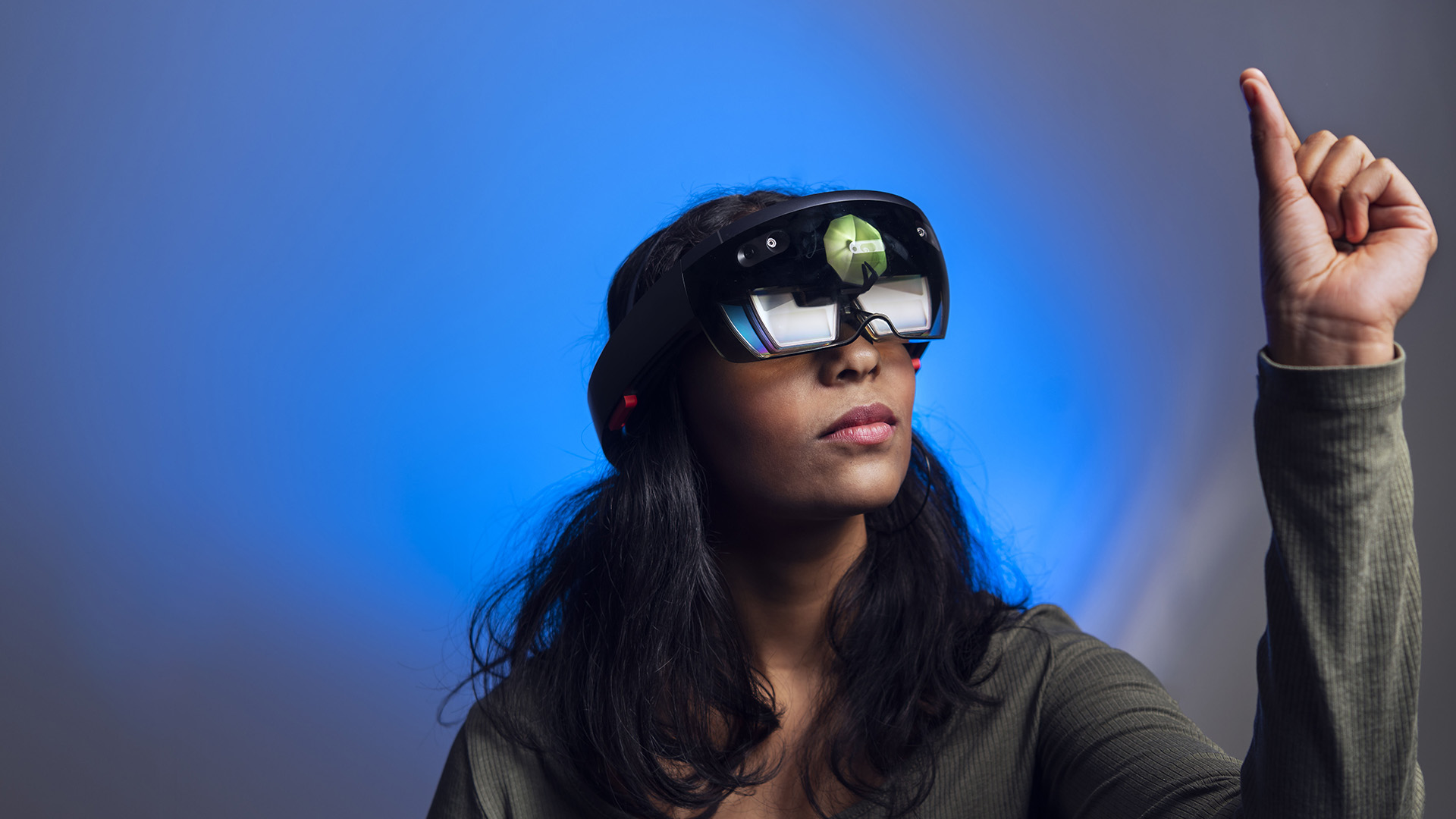
The Master of Immersive Media Technologies is a postgraduate qualification at AQF Level 9 that trains students to design, develop and deploy virtual reality (VR), augmented reality (AR) and mixed reality (MR) experiences across a wide range of industries. The degree is deeply cross-disciplinary, combining creative storytelling and digital design with advanced technical skills in game engines, 3D asset generation, interactive systems and AI tools. Students also gain a comprehensive understanding of the physiological and ergonomic implications of immersive technology design — examining how human factors can enhance or inhibit immersion and accessibility. The program typically runs for 18 months to 2 years full-time, depending on prior qualifications, and culminates in a substantial research project that allows students to deepen expertise in a specific area of the immersive media landscape.
This course is designed for two key types of student: graduates who already hold a bachelor's degree in immersive media, media, communication, audiovisual production or related creative-technology disciplines who want to advance their skills to a senior level; and graduates from other fields — such as IT, engineering, healthcare, architecture, education or business — seeking to pivot into the fast-growing immersive technology sector. It emphasises both the creative and technical elements required for industry success, including entrepreneurial and leadership foundations needed to lead projects and teams. Graduates emerge prepared for roles in hands-on content development and simulation as well as project leadership across a variety of sectors.
Key employers of graduates span entertainment studios, serious games developers, healthcare simulation companies, education technology firms, defence and government agencies, mining and resources companies, architecture and real estate visualisation firms, advertising and marketing agencies, and the rapidly expanding XR startup ecosystem. Organisations such as major broadcasters, training simulation providers, interactive media studios, hospitals, defence contractors, and technology companies like Meta and Snap are all active employers within the Australian market.
Demand for highly trained immersive media professionals in Australia significantly outstrips supply, creating strong career prospects for graduates at every level. The global AR and VR market is projected to grow at over 10% annually through to 2031, reaching an estimated market value of $75.9 billion, and industries from healthcare and education to defence, mining and retail are all investing heavily in extended reality solutions. In Australia, this translates to a growing number of roles across both large enterprises and innovative startups — with employers actively seeking people who can bridge the gap between creative vision and technical execution.
There is a pronounced skills gap in Australia for professionals who understand both the design thinking and the engineering underpinning immersive media. A postgraduate qualification in this field signals to employers that a graduate possesses advanced, specialised capabilities that cannot be easily replicated. The degree also future-proofs careers: as AI, spatial computing and wearable hardware continue to evolve, professionals with deep foundations in immersive technology design will be well placed to lead innovation across virtually every industry sector.
Most programs in this field require applicants to hold a recognised bachelor's degree in a relevant discipline, such as media, communication, audiovisual production, journalism, interactive design, computer science, information technology, or a cognate creative-technology field. Some programs may accept graduates from other disciplines — such as healthcare, education, architecture or engineering — particularly if they can demonstrate relevant experience or a portfolio of related creative or technical work. Academic entry typically requires a grade point average equivalent to a credit average or above. Applicants from non-relevant undergraduate backgrounds may be required to complete bridging studies or pathway units before commencing the full master's program.
Due to the highly practical nature of these programs and their reliance on specialised hardware and software, most offerings require in-person attendance from the commencement of semester. International students are generally required to be onshore and attending face-to-face classes from day one of the program. In terms of English language proficiency, international applicants typically need an overall IELTS score of 6.5 with no individual band below 6.0, a TOEFL iBT score of at least 79 with specified sub-scores in writing, speaking, reading and listening, or an equivalent result in a recognised test such as PTE Academic (overall 58, no skill below 50) or Cambridge English Advanced (overall 176, no skill below 169).
While not always mandatory, a portfolio demonstrating relevant creative or technical work is strongly recommended — or in some cases required — particularly for applicants whose academic background is not directly in media or technology. Some programs also value professional experience in digital media, game development, design, IT or adjacent fields. Prospective students are encouraged to contact admissions teams directly, as entry requirements can vary and providers may offer individual assessment for applicants with non-standard backgrounds.
This course may be offered in different study modes depending on the university, campus location, course structure and student type. Students should check the available delivery mode before applying, as not every study option is available at every institution.
On-campus study is the traditional mode of delivery where students attend classes, lectures, tutorials, workshops or seminars at the university campus. This option may suit students who prefer face-to-face learning, access to campus facilities, networking with classmates, practical workshops, group projects and direct engagement with academic staff.
Some universities may offer programs fully online or with online subject options. Online study can be attractive for students who need flexibility due to work, family, location or other commitments. Online study may suit domestic students, working professionals or students who want to study from outside Australia.
Hybrid or blended study usually combines online learning with some on-campus classes, workshops, intensive sessions or practical components. This mode may suit students who want flexibility but still want some face-to-face interaction. The exact structure varies between institutions.
Programs in Australia may have different intake structures depending on the university. The most common intake systems are semester, trimester and block mode.
Many Australian universities follow a two-semester academic calendar. The main intakes are commonly Semester 1 (around February or March) and Semester 2 (around July). Semester-based study usually allows students to complete a set number of subjects over approximately 12 to 14 weeks.
Some universities use a trimester system, which generally provides three study periods a year — around February/March, June/July and October/November. Trimester study may provide more flexibility and may help some students complete their course faster.
Some institutions may offer selected subjects or programs in block mode, where students focus on one subject at a time over a shorter, more intensive teaching period. Block mode may suit students who prefer concentrated learning or working professionals managing study around employment.
Some online or professionally focused programs may offer more frequent start dates or flexible entry points throughout the year. Students should not assume that every course has monthly or multiple intakes — availability depends on the institution, course structure and student type.
Graduates of a Master of Immersive Media Technologies are positioned for careers across a broad and rapidly expanding landscape in Australia and internationally. Employment sectors include entertainment, gaming, film and television, healthcare simulation, defence training, education technology, architecture and construction, mining and resources, marketing and brand experience, and government digital services. Employers range from leading XR studios and serious games companies to hospitals, defence contractors, educational institutions, major advertising agencies and global technology companies such as Meta, Snap, Netflix, ILM and TikTok, all of which have a presence in Australia. The combination of creative design and technical development skills makes graduates exceptionally versatile, enabling them to work in hands-on production roles, lead cross-disciplinary teams, or pursue entrepreneurial paths in the growing Australian XR startup ecosystem.
Entry Level
Graduate / Junior Developer
Junior Unity Developer, Junior XR Developer, Graduate 3D Artist, Junior Interactive Designer, VR Experience Technician
Early Career
Developer / Designer / Coordinator
XR Developer, Immersive Experience Designer, Unity/Unreal Developer, Digital Content Coordinator, Simulation Developer, UX Designer
Mid-Level
Senior Developer / Specialist
Senior XR Developer, Senior 3D Artist, Technical Artist, Immersive Learning Specialist, XR Technology Specialist, Creative Technologist, VR/AR Project Manager
Senior Level
Lead / Manager
Lead XR Developer, Immersive Technology Lead, XR Product Manager, Senior Immersive Experience Producer, VR/AR Studio Manager
Leadership
Director / Head / Principal
Head of XR, Director of Immersive Technology, Principal Creative Technologist, Chief Technology Officer (XR Studio), Founder / CEO of Immersive Media Startup
Salaries in Australia's immersive media and XR sector vary by role, industry and experience level, with technical specialists and senior leaders commanding the strongest remuneration.
Melbourne
Melbourne is one of Australia's leading creative technology hubs, home to a vibrant games industry, numerous XR studios and innovation precincts such as Melbourne Connect, making it an excellent city for immersive media students to build industry networks. The city's strong arts, film, advertising and education technology sectors provide a diverse range of employers for graduates in this field.
Sydney
Sydney hosts major global technology companies including Meta, Snap, Netflix, ILM and TikTok — all of which are active employers in the immersive and interactive media space — alongside a thriving cluster of AR/VR studios such as Start Beyond and Arterra Interactive. The city's scale and its position as Australia's largest commercial and media market means Sydney-based graduates have access to some of the highest-paying and most prestigious roles in the country.
Brisbane
Brisbane is a growing hub for games development and creative technology, bolstered by government investment in screen industries and the long-term legacy of the 2032 Olympics driving demand for immersive experiences in entertainment, tourism and events. The city offers a lower cost of living than Sydney or Melbourne while still providing strong access to a developing local XR industry.
Perth
Perth's significant mining, resources and defence sectors are increasingly adopting immersive simulation and training technologies, making the city a unique market for immersive media graduates with interests in industrial or enterprise XR applications. Companies involved in heavy equipment simulation and defence training, including major players based in Western Australia, actively recruit specialists in this space.
Adelaide
Adelaide is particularly notable as the home of the Master of Immersive Media Technologies program, making it a specialised hub for this qualification with strong industry partnerships, dedicated lab facilities and access to a growing immersive technology community. The city's defence, health and education sectors are all active adopters of XR technology, and the relatively affordable cost of living makes it an attractive option for postgraduate students.
Canberra
Canberra's concentration of federal government agencies, defence organisations and public sector research bodies creates unique demand for immersive technology in training simulation, data visualisation and public engagement — with roles available through bodies such as the Department of Home Affairs and Lockheed Martin Australia. The city also benefits from proximity to major research institutions, offering opportunities for graduates interested in the applied research and policy dimensions of immersive technology.
Before choosing a course, students should compare:
International students who want to study in Australia should also consider additional requirements before applying.
Join successful graduates
Students Helped
Application Processed
Listed Universities
Listed Courses