Start building today!
Experience the Find the courses and unlock the true potential
Course Overview
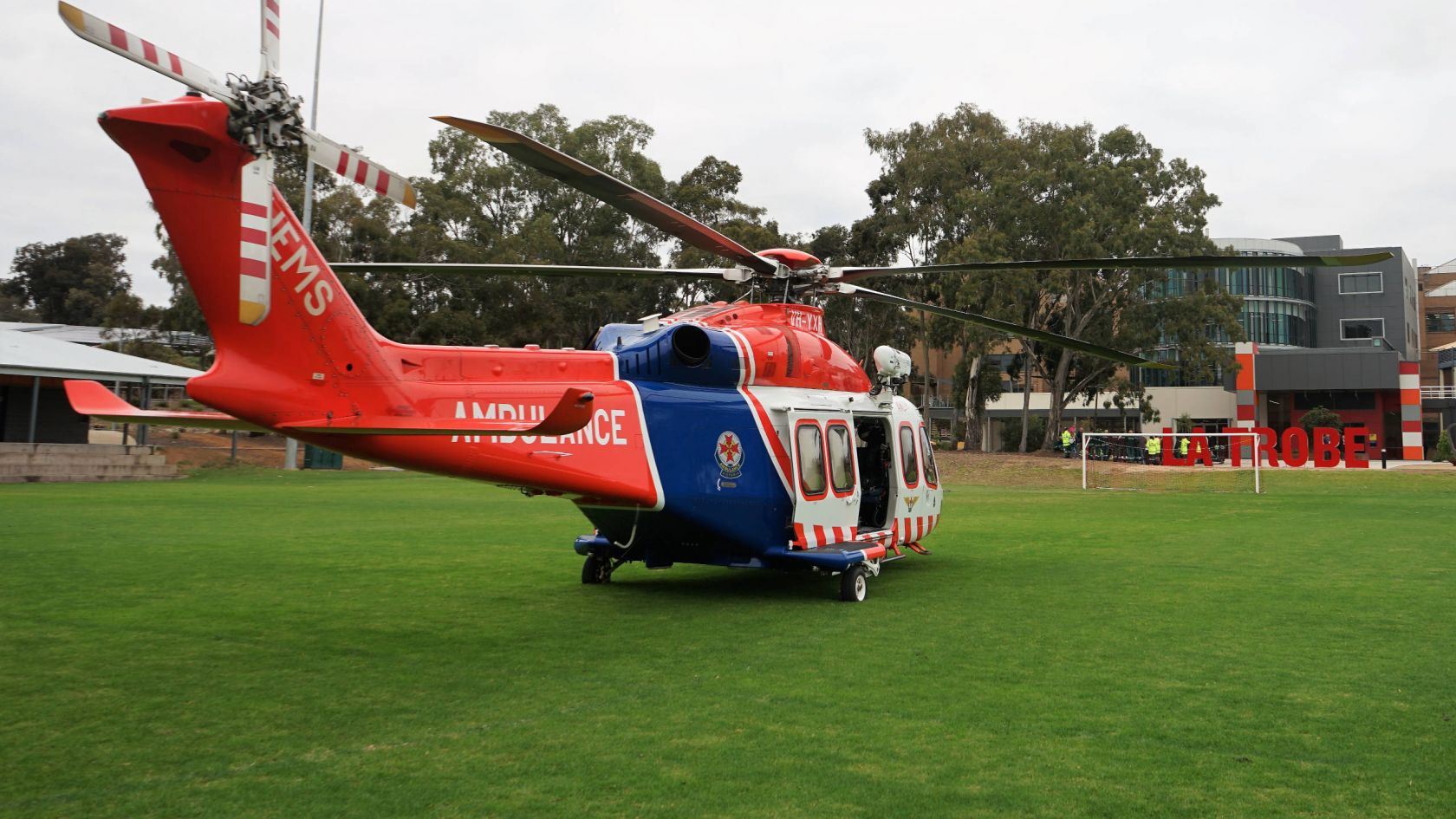
La Trobe's Bachelor of Paramedic Practice with Honours gives you the knowledge and skills to launch a career in this important field of health. You'll develop a strong foundation in biosciences and paramedic practice for trauma, respiratory, cardiac, paediatric and obstetric management. Kickstart your career with first-hand paramedic experience. Build the experience and resilience to tackle this exciting career with work-based learning opportunities in hospitals, community settings and with Ambulance Victoria. You can also practice in the Paramedicine Practical Laboratory equipped with industry-standard medical equipment and an outdoor emergency simulation space. As a graduate, you will be ready to apply your practical skills when you're needed most. The course also offers a research honours pathway, which can facilitate direct entry into postgraduate studies.
You'll learn:
Where You Can Study
Melbourne
Plenty Rd, Bundoora, Melbourne, Victoria 3086
Student Information
Provider's Published Fee
Duration
Intakes
Study Mode
Eligibility
Domestic students:
Recent secondary education (Year 12)
This course uses the ATAR as part of its selection considerations.
VCE: Units 3 and 4: a study score of at least 30 in English (EAL) or at least 25 in English other than EAL. Units 3 and 4: a study score of at least 20 in two of Biology, Chemistry, Health And Human Development, any Mathematics, Physical Education, Physics or Psychology.
HSC: Two of Biology; Chemistry; any Mathematics; Physics; or Personal Development, Health and Physical Education (Band 2). One of English Standard, English Advanced (Band 3), English as an Additional Language or Dialect (Band 4).
Selection rank adjustments
VCE: A study score of 25 in Health And Human Development, any Mathematics, Physical Education or any Science equals 4 aggregate points per study. A study score of 20 in any LOTE equals 4 aggregate points per study. Overall maximum of 12 points.
HSC: Applicants who successfully complete one of the following HSC or equivalent Year 12 subjects will have their selection rank increased by one point per study: Performance Band 3 in Mathematics Standard 2; Mathematics; Mathematics Extension 1; Mathematics Extension 2; Biology; Chemistry; Physics; Investigating Science; Personal Development; Health and Physical Education (PDHPE); any language other than English (Band 2). Overall, selection ranks can be increased by a maximum of five points.
Higher education, VET and work/life experience applicants
Subject proficiency: Demonstrated proficiency equivalent to stated Year 12 prerequisites.
Additional selection information
International students:
Recent secondary education (Year 12)
Units 3 and 4: a study score of at least 30 in English (EAL) or at least 25 in English other than EAL.
Units 3 and 4: a study score of at least 20 in two of Biology, Chemistry, Health And Human Development, any Mathematics, Physical Education, Physics or Psychology.
English language requirements
7.0 IELTS (Academic) with no individual band less than 7.0.
All applicants:
Inherent requirements
Behavioural and relational skills
Core requirement Students must be able to manage their own responses and behaviour to work effectively in a range of learning environments with diverse people and tasks. This includes the capacity to be receptive and respond appropriately to constructive feedback. Students should also be able to work with others in a team or group environment and make and maintain effective relationships with a wide range of individuals in order to complete tasks or for professional practice. See also Student behaviours policy for more information. Course-specific requirement Paramedicine is governed by specific regulatory and ethical standards and requirements in order to ensure healthcare is delivered in an accountable, professional, and safe manner. For example, students must display behavioural stability and manage their personal responses while working with emotionally and physically distressed individuals from diverse groups and backgrounds. Paramedic students must be able to work both individually and in teams in varied and unpredictable environments, often under time pressure, and function effectively in a frequently demanding role. Students must demonstrate strong interpersonal communication skills in order to ensure safe delivery of health services. This includes written, verbal and non-verbal communication skills. Students must have the ability to sufficiently engage with a range of information, as effective interpretation, recording, and transmission of information ensures the safe and accurate provision of health care. They must be able to recognise and respond appropriately to verbal and non-verbal cues displayed by colleagues and patients to ensure safe, appropriate and responsive care. https://www.paramedicineboard.gov.au/Professional-standards/Professional-capabilities-for-registered-paramedics.aspx
Cognition
Students must be able to locate, acquire, retain and apply knowledge as part of their learning and for assessment. They must have the ability to sustain their attention over a designated period, maintain their focus in a variety of learning environments and remember information long enough to complete tasks in a reasonable and safe timeframe. Paramedicine students must be able to use retained information and recall information without reference, often in time pressured circumstances. They must be able to integrate learned knowledge into practice, including the ability to apply formulas in order to make measured calculations, such as drug doses, regarding patient care. Students must also be able to maintain attention in distracting, psychologically challenging, and changeable environments in order to deliver safe and timely patient care. Paramedicine students must be able to maintain focus and concentrate on multiple tasks for extended time periods. They must have the capacity to complete shifts that extend beyond 12 hours and include rotating shifts while on clinical placement, and concurrently maintain consistent focus and concentration during that time.
Sensory (visual, auditory, tactile, olfaction)
Students should possess the ability to interact with visual, auditory or tactile inputs sufficiently to manage their learning environment and to meet professional performance needs. Paramedicine students must have adequate visual acuity to observe patient symptoms and perform a wide range of clinical skills to ensure accurate, consistent and safe self and patient care. This care is often delivered in dynamic and unpredictable environments. Paramedicine students must have adequate hearing or auditory ability to monitor, assess and manage patients, and effectively identify hazards in a range of work environments.For example, students must be able to accurately perform chest auscultations. They must also be able to hear and respond appropriately to feedback and instructions from multiple sources at once, including patients, colleagues and emergency service staff. Students must possess adequate touch/tactile ability in order to perform competent and safe patient care. For example, paramedicine students must be able to palpate anatomical structures and use tactile ability to assess physiological parameters including pulses. Paramedicine students must have an adequate sense of smell to undertake clinical assessment of patients where odour may be indicative of abnormality, such as gastrointestinal bleeding or ketoacidosis. They must also be able to detect the presence of hazardous substances including fuel or gas.
Strength and mobility
Gross motor skills: Students should possess the strength, range of motion, coordination and mobility sufficient to manage their learning environment and ultimately, professional performance needs. Fine motor skills: Students should possess the manual dexterity and fine motor skills sufficient to manage their learning environment and ultimately, professional performance needs. Paramedicine students must possess both gross and fine motor skills to undertake common tasks such as lifting, carrying, pushing, pulling, standing, twisting and bending.These tasks may be performed in uncontrolled environments which includes low-light situations and on uneven ground. Paramedicine students must be able to demonstrate and perform these tasks consistently and safely to reduce the risk of harm to self and others. Paramedic practice also requires fine motor function to perform clinical assessments and to manipulate and operate medical equipment. Fine motor function is also required when performing treatment techniques including intravenous cannulation, wound dressings, and drug preparation and delivery.
Career & Study Pathways
Building knowledge and skills in paramedic practice opens the door to your future career as a:
Quality & Recognition
Academic Regulator
TEQSA
Professional Body
Paramedicine Board of Australia / AHPRA
Accreditation Status
AccreditedSkills Assessor
Paramedicine Board of Australia
Course Content
Academic Integrity Module
Wominjeka La Trobe: Indigenous Cultural Literacy for Higher Education
Anatomy and Physiology 1
Anatomy and Physiology 2
First Nations Health for Paramedics
Legal and Ethical Practice in Paramedicine
Research and Evidence in Practice
Rural Community Engagement
Understanding Health and Wellbeing
Communication Skills in Paramedicine
Foundations of Paramedic Practice 2
Integrating Evidence into Practice
Introduction to Paramedic Practice
Paramedic Cardiac and Respiratory
Paramedic Management - Trauma
Pharmacology for Health Professionals
Complex Trauma Management
Gerontology for Paramedics
Integrated Cardiac and Respiratory
Integrated Medical Management
Obstetrics for Paramedics
Paediatrics for Paramedics
Paramedic Medical Management
Drugs, Health and Society
Major Incident Management
Mental Health in Paramedicine
Populations with Specific Needs for Paramedics
Communicating in Health Sciences
Foundations of Professional Communication
Research Project Planning
Rural Health
Advanced Clinical Management
Extended Community Paramedicine
Paramedic Practice Project
Honours Research Project
Professional Practice Consolidation
Common Questions
The Bachelor of Paramedic Practice with Honours is an undergraduate degree offered by La Trobe University, however the detailed course overview, entry requirements, and curriculum information were not available on the page content provided.
La Trobe University provides application information through their 'How to apply' section on their website, and prospective students can also explore early entry and pathway programs, as well as the Aspire early entry program, to find their way into La Trobe courses.
La Trobe University offers scholarships for both domestic and international students. Prospective students are encouraged to visit the Scholarships section of the La Trobe website for details on available funding opportunities relevant to their course.
Application
Three simple steps to get enrolled
Step 01
Enquire
Click "Enquire Now" and tell us a little about yourself. It's free and takes 2 minutes.
Step 02
Submit Documents
Our team will guide you on exactly which documents to prepare and submit.
Step 03
Get Enrolled
Receive your offer letter and confirm your enrolment. Welcome to the course!
Processing time: Offer letter issued within approximately 1 business days.
Honestly I was lost when I first started looking at Australian colleges. There are just too many options and every agent gives you different info. A friend told me about FindTheCourses and within a week I had shortlisted 3 programs that actually matched my budget and visa situation. My advisor Sanjay was super helpful — never felt like I was being pushed into anything.

Priya Sharma
India
Master of Nursing · Griffith University