Start building today!
Experience the Find the courses and unlock the true potential
Course Overview
Become a fully-qualified physiotherapist.
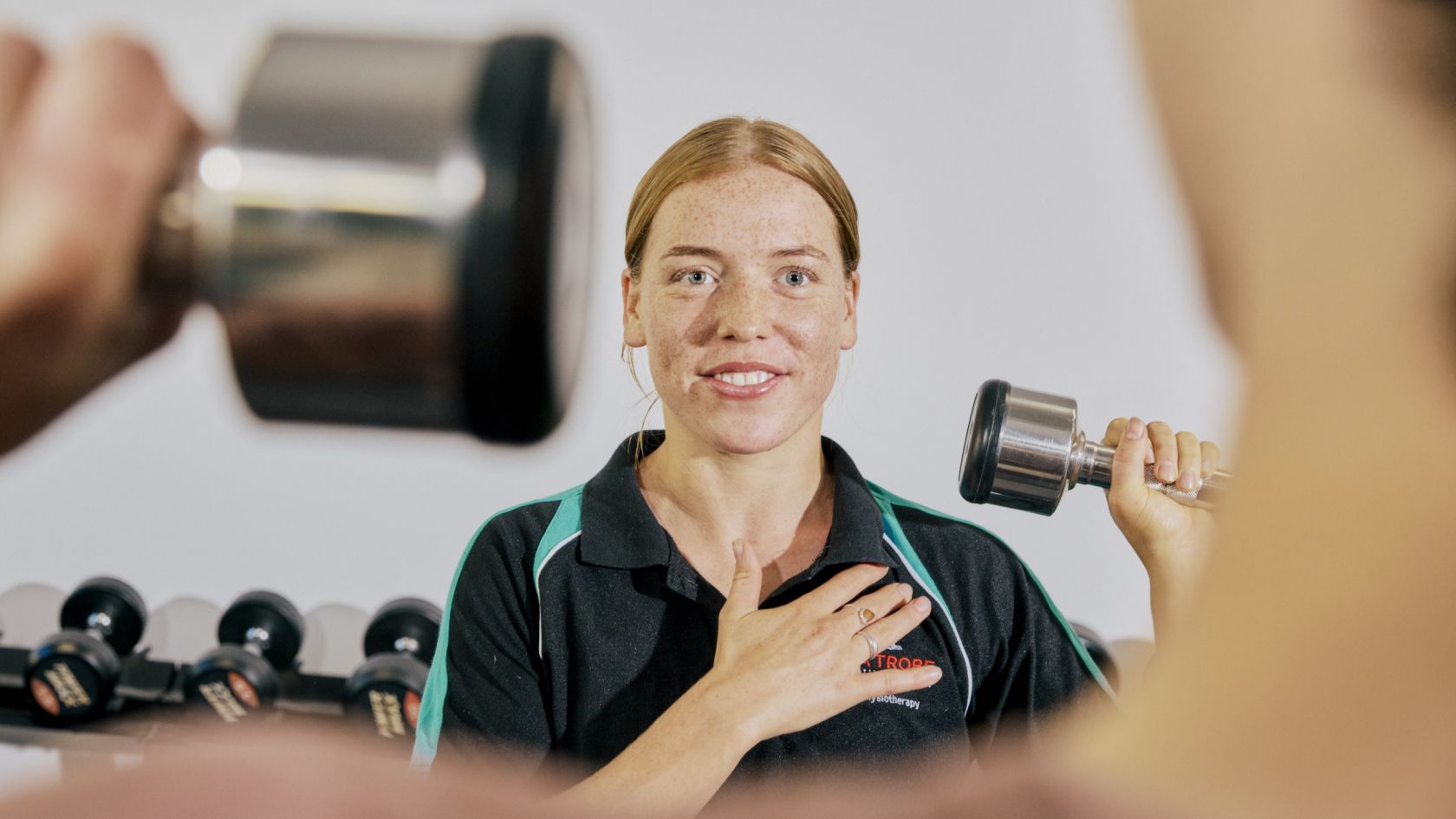
Movement is essential to our health, happiness and connection to others - and physios help us move better. Get ready to use exercise and movement to improve the lives of athletes, children, adults and people recovering from surgery, injury or illness.
With La Trobe's Bachelor of Physiotherapy (Honours) you'll get a detailed understanding of the human body and develop the practical skills to launch your career in this rewarding and dynamic field of health. At La Trobe, not only will you learn from industry leaders and world-class researchers, you'll experience unique industry opportunities with our broad range of partners.
Start building your practical skills as soon as you start first year and finish your degree with clinical training equivalent to six months of workplace experience. Graduate work ready and in-demand as a fully-qualified physiotherapist and step into your first job.
Throughout the course you'll gain quality hands-on experience with placements at leading hospitals and private practices. You could find yourself in acute hospital units, rehabilitation facilities, community health clinics, private practice, sporting organisations, educational facilities or research centres.
Choose to take your physiotherapy degree global with international placement or study opportunities - like students before you who've experienced Denmark, Italy, Vietnam and India. Or keep it local with placements throughout Melbourne and regional Victoria.
In your Honours year, you'll undertake research or industry-based project work where you'll solve real problems relating to human health and physical performance.
You'll learn:
Where You Can Study
Melbourne
Plenty Rd, Bundoora, Melbourne, Victoria 3086
Student Information
Provider's Published Fee
Duration
Intakes
Study Mode
Eligibility
Domestic students:
Recent secondary education (Year 12)
This course uses the ATAR as part of its selection considerations.
VCE: Units 3 and 4: a study score of at least 30 in English (EAL) or at least 25 in English other than EAL. Units 3 and 4: a study score of at least 25 in two of Biology, Chemistry, Physics, General Mathematics, Mathematics Methods, Specialist Mathematics or Physical Education.
HSC:
One of English Standard, English Advanced (Band 3), English as an Additional Language or Dialect (Band 4).
Two of Biology, Chemistry, Mathematics, Physics, or Personal Development, Health and Physical Education (Band 3).
Selection rank adjustments
VCE: A study score of 30 in any Mathematics, Physical Education or any Science equals 4 aggregate points per study. A study score of 25 in Health and Human Development equals 4 aggregate points. A study score of 20 in any LOTE equals 4 aggregate points per study. Overall maximum of 10 points.
HSC: Applicants who successfully complete one of the following HSC or equivalent Year 12 subjects will have their selection rank increased by one point per study: Performance Band 4 in Mathematics General 2; Mathematics; HSC Mathematics Extension 1; HSC Mathematics Extension 2; Biology; Chemistry; Physics; Senior Science; Personal Development; Health and Physical Education (PDHPE); Performance Band 2 in any Language Other Than English (LOTE) subject. Overall, selection ranks can be increased by a maximum of four points.
Additional selection information
International students:
Recent secondary education (Year 12)
Units 3 and 4: a study score of at least 30 in English (EAL) or at least 25 in English other than EAL.
Units 3 and 4: a study score of at least 25 in two of Biology, Chemistry, Physics, General Mathematics, Mathematics Methods, Specialist Mathematics or Physical Education.
English language requirements
7.0 IELTS (Academic) with no individual band less than 7.0.
Please refer to our Language requirements page for details of other accepted English proficiency tests and additional recognised English language proficiency measures, such as English as the language of instruction.
All applicants:
Inherent requirements
Behavioural and relational skills
Core requirement Students must be able to manage their own responses and behaviour to work effectively in a range of learning environments with diverse people and tasks. This includes the capacity to be receptive and respond appropriately to constructive feedback. Students should also be able to work with others in a team or group environment and make and maintain effective relationships with a wide range of individuals in order to complete tasks or for professional practice. See also Student behaviours policy for more information. Course-specific requirement Physiotherapy students must behave ethically and in accordance with relevant laws and professional codes of conduct to ensure safe, consensual and professional practice in all contexts. Physiotherapy students require the maturity and capacity to manage their own emotions and behaviour effectively when working with people in educational and practice settings, including in situations that can be challenging, unpredictable and stressful. Physiotherapy students are required to be physically examined by their peers in mixed-gender practical classes, and to interact with and physically examine their peers and clients (of all ages, genders, linguistic and cultural backgrounds) in teaching and clinical / hospital environments. With consent, students will be required to remove layers of clothing, which may include to the level of their underwear, when practicing physiotherapy assessment and treatment techniques on each other for learning purposes. Students will be required to administer physiotherapy treatment to clients in teaching and clinical settings who, with consent, will also remove layers of their clothing. The ability to effectively detect, interpret and apply verbal and non-verbal communication are fundamental to physiotherapy practice. For example, displaying appropriate facial expressions, gestures and eye contact, while being mindful of space and time boundaries, promotes the development of rapport and trust in academic and professional relationships. The ability to observe and interpret verbal and non-verbal cues is essential for safe and effective assessment and treatment of clients in healthcare settings. Interactions with clients also need to be respectful, culturally sensitive, clear, accurate, attentive, empathetic, and non-judgemental. Being sensitive to individual differences displays respect and empathy to others and develops trusting relationships.
Physiotherapy students also need to receive and maintain an agreed schedule of vaccinations to meet the requirements of clinical placement providers in various healthcare settings – students must attend clinical placements in a variety of healthcare settings to fulfill the course requirements.
Physiotherapy Board of Australia Code of Conduct: https://www.physiotherapyboard.gov.au/Codes-Guidelines/Code-of-conduct.aspx Physiotherapy Practice Thresholds: https://www.physiotherapyboard.gov.au/documents/default.aspx?record=WD15%2f16750&dbid=AP&chksum=LWuk27uBUFj5MTUort6Qug%3d%3d
Cognition
Students must be able to locate, acquire, retain and apply knowledge as part of their learning and for assessment. They must have the ability to sustain their attention over a designated period, maintain their focus in a variety of learning environments and remember information long enough to complete tasks in a reasonable and safe timeframe. Safe and effective delivery of physiotherapy practice is based on comprehensive knowledge that must be sourced, understood, recalled and applied appropriately; this includes conceptualising and applying appropriate knowledge in response to academic assessment tasks. It also includes appropriately applying knowledge of theory, research evidence, policies and procedures in the class and practice settings. Literacy skills are required to: convey spoken and written messages accurately and effectively in learning and practice settings; paraphrase, summarise and reference in accordance with appropriate academic conventions in written assignments. Additionally, effective written communication is required to ensure written and electronic clinical documentation meets professional and medico-legal requirements. Competent application of numeracy skills is essential in physiotherapy to facilitate the safe and effective delivery of care. Examples include accurately measuring and recording physiological characteristics in client notes; completing accurate arithmetic calculations of outcome measures; prescribing adaptive equipment that correctly meets client measurement requirements e.g. wheelchair or gait aid prescription.
Physiotherapy service delivery requires sufficient physical and mental endurance and resilience to effectively perform detailed and/or multiple tasks over sustained and repeated periods, independently and autonomously. Sustained concentration and alertness is required to ensure consistently effective and safe implementation and monitoring of physiotherapy practice. Examples include: participating in face-to-face and virtual lectures, tutorials and practical classes; remain in an upright position for sustained periods of time in practical classes and clinical settings; provide consistent physiotherapy service delivery for the required number of hours while completing clinical placements.
Physiotherapy Practice Thresholds: https://www.physiotherapyboard.gov.au/documents/default.aspx?record=WD15%2f16750&dbid=AP&chksum=LWuk27uBUFj5MTUort6Qug%3d%3d
Sensory (visual, auditory, tactile, olfaction)
Students should possess the ability to interact with visual, auditory or tactile inputs sufficiently to manage their learning environment and to meet professional performance needs.
Physiotherapy students require sufficient visual acuity to demonstrate the required range of skills, tasks and assessments to maintain consistent, accurate and safe care to self and others. Visual observations, examinations and assessment are fundamental to safe and effective physiotherapy practice. Examples include observing and detecting subtle changes in a client's anatomical appearance, posture, movement and functional activities during assessment; closely monitoring a client during treatment; viewing medical records including written test results and radiological imaging films; and using electronic devices to aid assessment and treatment. Sufficient auditory ability is necessary to monitor, assess and manage individual health needs consistently and accurately. Auditory assessments and observations are fundamental to safe and effective physiotherapy practice, with examples including: listening to normal and abnormal breathing and heart sounds through a stethoscope; detecting emergency cues such as buzzers, alarms, public address announcements, or calls for help; accurately monitoring a client's verbal and non-verbal responses during assessment and treatment such as expressions of pain or verbal feedback. Sufficient tactile ability is necessary to monitor, assess and detect clients' physical characteristics and act on any abnormalities detected to provide appropriate physiotherapy management. Tactile assessments and treatments are fundamental to safe and effective physiotherapy practice, with examples including: palpating and manipulating precise anatomical structures including joints, muscles, soft tissues, and pulses to detect and correct abnormalities.
Strength and mobility
Gross motor skills: Students should possess the strength, range of motion, coordination and mobility sufficient to manage their learning environment and ultimately, professional performance needs. Fine motor skills: Students should possess the manual dexterity and fine motor skills sufficient to manage their learning environment and ultimately, professional performance needs. Physiotherapy students require sufficient gross and fine motor skills to provide effective healthcare over sustained periods of time. This includes the ability to appropriately position self, equipment, and clients to perform tasks consistently and safely to reduce risk of harm to self and others. Tasks that involve gross motor skills include lifting, carrying, pushing, pulling, standing, twisting, and bending. Examples of gross motor skills that are important for physiotherapy include: maintaining own and client's balance / support during assessment and treatment; transferring and mobilising people in a safe manner; handling or supporting a client's limbs, trunk, head or whole body; demonstrating and facilitating aerobic, balance and strength exercises including the use of weights, springs, pulleys and resistance bands; evaluating and facilitating movement of clients in a safe and effective manner who have varying physical capacity, who are positioned on plinths and hospital beds, on mats on the floor, on chairs and when standing/walking. Tasks that involve fine motor skills include being able to grasp, press, push, turn, squeeze and manipulate various people and objects. Examples of fine motor skills that are important for physiotherapy include: demonstrating, measuring and facilitating exercises, movements and daily activities that involve precise movement of individual joints and muscles; palpating and manipulating precise anatomical structures for assessment and treatment purposes; safely operate tools and devices used in the assessment and treatment of clients (eg. stethoscope, goniometer, dynamometer).
Physiotherapy Practice Thresholds: https://www.physiotherapyboard.gov.au/documents/default.aspx?record=WD15%2f16750&dbid=AP&chksum=LWuk27uBUFj5MTUort6Qug%3d%3
Career & Study Pathways
Graduates can pursue a career in industries such as:
Quality & Recognition
Academic Regulator
TEQSA
Professional Body
Australian Physiotherapy Council
Accreditation Status
AccreditedSkills Assessor
Australian Physiotherapy Council
Course Content
Academic Integrity Module
Wominjeka La Trobe: Indigenous Cultural Literacy for Higher Education
Anatomy for Physiotherapy A
Anatomy for Physiotherapy B
From Bad Science to Good Health
Human Biosciences A
Physiotherapy Skills and Reasoning 1
Physiotherapy Skills and Reasoning 2
Anatomy for Physiotherapy C
Exercise and Physical Activity in Physiotherapy
Introduction to Placement
Musculoskeletal Physiotherapy
Neurological Physiotherapy 1
Pathophysiology for Health Professionals
Pharmacology for Health Professionals
Physiotherapy for Older Adults
Integrated Clinical Reasoning
Neurological Physiotherapy 2
Paediatric Physiotherapy
Physiotherapy for the Spine and Pelvis
Professional Practicum A
Cardiorespiratory Physiotherapy
Professional Practicum B
Professional Practicum C
Professional Practicum D
Sport, Exercise and Physical Activity
Professional Practicum E
Common Questions
The Bachelor of Physiotherapy (Honours) is an undergraduate degree offered at La Trobe University, however the page content retrieved did not include specific course details such as an overview, entry requirements, or unit information.
You can search for the course directly on the La Trobe University website at latrobe.edu.au, or contact the university through their International student enquiries or general Contacts page for more detailed information.
Yes, La Trobe University is a registered Australian University with TEQSA provider number PRV12132 and CRICOS Provider number 00115M.
Application
Three simple steps to get enrolled
Step 01
Enquire
Click "Enquire Now" and tell us a little about yourself. It's free and takes 2 minutes.
Step 02
Submit Documents
Our team will guide you on exactly which documents to prepare and submit.
Step 03
Get Enrolled
Receive your offer letter and confirm your enrolment. Welcome to the course!
Processing time: Offer letter issued within approximately 1 business days.
Honestly I was lost when I first started looking at Australian colleges. There are just too many options and every agent gives you different info. A friend told me about FindTheCourses and within a week I had shortlisted 3 programs that actually matched my budget and visa situation. My advisor Sanjay was super helpful — never felt like I was being pushed into anything.

Priya Sharma
India
Master of Nursing · Griffith University