

Start building today!
Experience the Find the courses and unlock the true potential
Course Overview
Where You Can Study
Brisbane
66 Ernest St, South Brisbane, QLD 4101
Eligibility
Career & Study Pathways
Quality & Recognition
Academic Regulator
ASQA
Professional Body
State/Territory Trade Licensing Authority
Accreditation Status
AccreditedSkills Assessor
TRA (Trades Recognition Australia)
Course Content
Follow environmental and sustainability best practice in an automotive workplace
This unit describes the performance outcomes required to follow environmental and sustainability best practices, including complying with established workplace procedures and environmental regulations as well as following sustainability practices that may reduce the environmental impact of work practices and outputs. It applies to those working in the automotive industry. No licensing, legislative, regulatory or certification requirements apply to this unit at the time of publication.
Follow safe working practices in an automotive workplace
This unit describes the skills and knowledge required to identify and follow safety and emergency procedures in an automotive workplace.
Depower and reinitialise battery electric vehicles
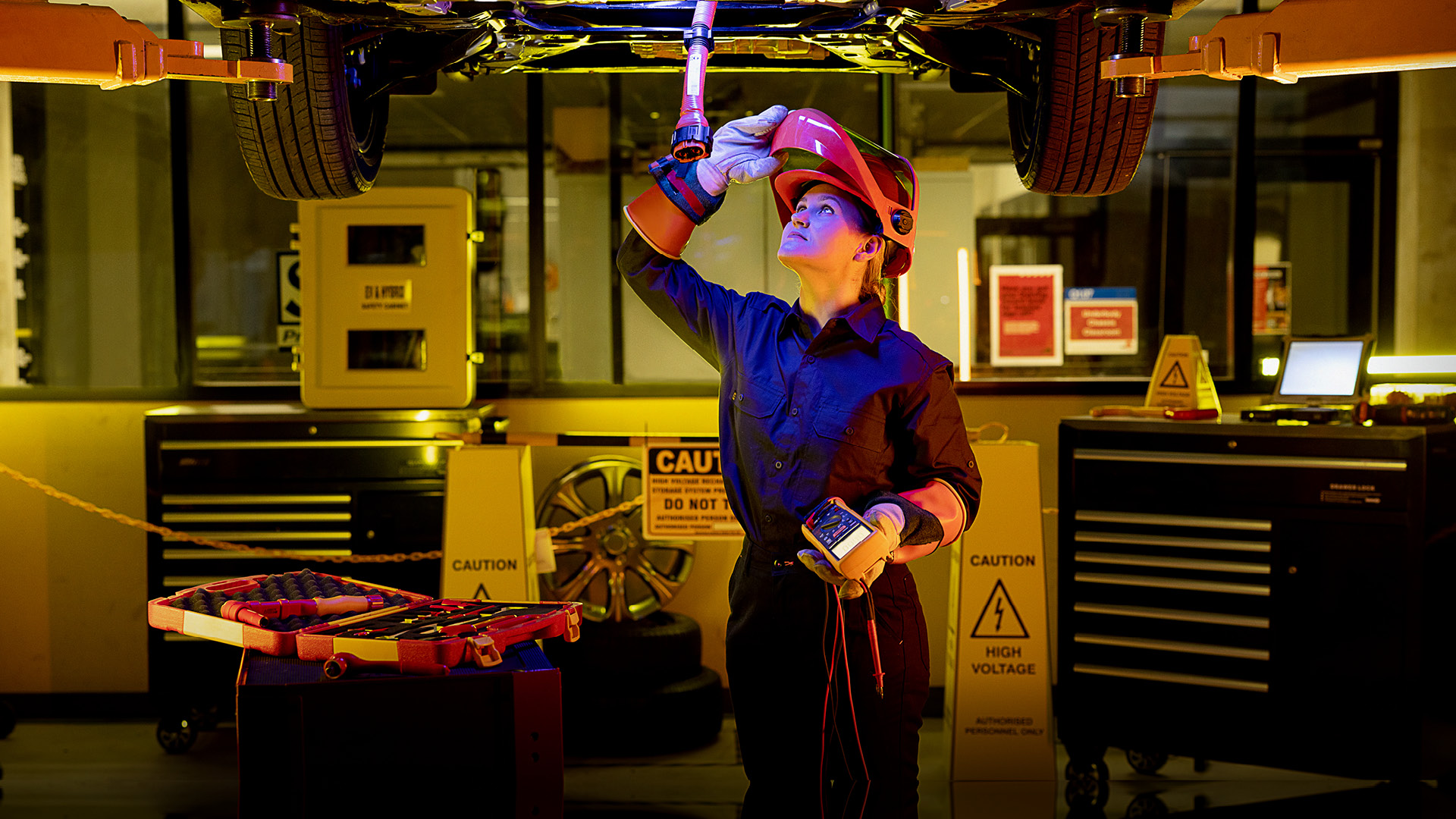
This unit describes the skills and knowledge required to depower and reinitialise battery electric vehicles (BEVs). It involves ensuring the vehicle high voltage (HV) rechargeable energy storage system (RESS) is isolated before commencing any service or repair work. It also involves calibrating vehicle systems that may need resetting once the energy storage system is reinitialised. Importance is placed in the unit on applying RESS and separated extra low voltage (SELV) electrical safety procedures.
Inspect and maintain battery electric vehicles
This unit describes the skills and knowledge required to inspect and maintain battery electric vehicles (BEVs). It involves working with automotive electrical components, maintaining rechargeable energy storage systems (RESS), and performing basic tests on electric drive motors. Importance is placed in the unit on applying both high voltage (HV) rechargeable energy storage systems RESS and separated extra low voltage (SELV) electrical safety procedures.
Diagnose and repair traction motor speed control systems in battery electric vehicles
This unit describes the skills and knowledge required to diagnose and repair faults in the traction motor speed control systems of battery electric vehicles (BEVs). These systems may be referred to as digital motor controllers (DMCs) or motor control units (MCUs).
Diagnose and repair high voltage traction motors in battery electric vehicles
This unit describes the skills and knowledge required to diagnose and repair faults in the high voltage traction motors of battery electric vehicles (BEVs). The unit involves preparing for the task, sourcing a diagnostic testing strategy, diagnosing the cause of the fault, carrying out the repair, performing post-repair testing, and completing workplace processes and documentation. Importance is placed in the unit on applying electrical safety procedures when working on high voltage (HV) rechargeable energy storage systems (RESS).
Diagnose and repair auxiliary motors and associated components in battery electric vehicles
This unit describes the skills and knowledge required to diagnose and repair faults in the auxiliary motors of battery electric vehicles (BEVs), and in their associated components and control systems.
Diagnose and repair system instrumentation and safety interlocks in battery electric vehicles
This unit describes the skills and knowledge required to diagnose and repair faults in the system instrumentation and safety interlocks of battery electric vehicles (BEVs).
Diagnose and repair HVAC and rechargeable energy storage cooling systems in battery electric vehicle
This unit describes the skills and knowledge required to diagnose and repair faults in the heating, ventilation and air conditioning (HVAC) and rechargeable energy storage cooling systems of battery electric vehicles (BEVs).
Diagnose and repair DC to DC converters in battery electric vehicles
This unit describes the skills and knowledge required to diagnose and repair faults in the high voltage (HV) direct current (DC) to low voltage (LV) DC of battery electric vehicles (BEVs).
Use and maintain electrical test equipment in an automotive workplace
This unit describes the performance outcomes required to select, use and maintain electrical test equipment used in an automotive workplace for the purpose of identifying, diagnosing and rectifying electrical and electronic faults in vehicles or machinery. It applies to those working in the automotive service and repair industry. The electrical systems and components include those in agricultural machinery, heavy commercial vehicles, light vehicles, vessels, motorcycles, mobile plant machinery or outdoor power equipment. No licensing, legislative, regulatory or certification requirements apply to this unit at the time of publication.
Test and repair basic electrical circuits
This unit describes the skills and knowledge required to inspect, test and repair basic electrical circuits in vehicle and machinery electrical systems.
Test, charge and replace batteries and jump-start vehicles
This unit describes the skills and knowledge required to test, charge, replace, retest and secure a range of automotive batteries, including vehicle or machinery jump-starting procedures.
Service air conditioning and HVAC systems
This unit describes the skills and knowledge required to service air conditioning systems, including heating, ventilation and air conditioning (HVAC) systems, fitted to a range of vehicles and machinery.
Develop and carry out diagnostic test strategies
This unit describes the skills and knowledge required to develop and carry out a diagnostic testing strategy on vehicles, vessels or machinery.
Use and maintain tools and equipment in an automotive workplace
This unit describes the skills and knowledge required to select, use, maintain and store tools and equipment in an automotive workplace.
Diagnose and repair high voltage rechargeable energy storage systems in battery electric vehicles
This unit describes the skills and knowledge required to diagnose and repair faults in the high voltage (HV) rechargeable energy storage systems (RESS) of battery electric vehicles (BEVs).
Diagnose and repair automotive electrical systems
This unit describes the skills and knowledge required to diagnose and repair automotive electrical systems. The systems used vary based on the work context
Diagnose and repair air conditioning and HVAC components
This unit describes the skills and knowledge required to diagnose and repair faults in the air conditioning systems, including heating, ventilation and air conditioning (HVAC) systems, fitted to a range of vehicles and machinery for passenger convenience and comfort. The systems used vary based on the work context.
Diagnose and repair light vehicle hydraulic braking systems
This unit describes the skills and knowledge required to diagnose and repair faults in the hydraulic braking systems of light vehicles.
Diagnose and repair light vehicle steering systems
This unit describes the skills and knowledge required to diagnose and repair light vehicle steering systems.
Diagnose and repair light vehicle suspension systems
This unit describes the skills and knowledge required to diagnose and repair light vehicle suspension systems.
Remove, inspect, repair and refit light vehicle tyres and tubes
This unit describes the skills and knowledge required to remove, inspect, repair and refit light vehicle tyres and tubes from wheels. It involves identifying and confirming work requirements, preparing for the task, removing, inspecting, repairing and refitting the tyres and tubes, and completing workplace processes and documentation.
Carry out servicing operations
This unit describes the skills and knowledge required to carry out servicing operations.
Inspect and service braking systems
This unit describes the skills and knowledge required to inspect and service braking systems according to manufacturer specifications.
Inspect and service steering systems
This unit describes the performance outcomes required to inspect and service steering systems. It involves preparing for the task, inspecting the system, reporting the inspection findings, servicing and adjusting the system, and completing workplace processes and documentation. It applies to those working in the automotive service and repair industry. The steering systems include those of agricultural machinery, heavy commercial vehicles, light vehicles, marine vessels, mobile plant machinery, motorcycles or outdoor power equipment. No licensing, legislative, regulatory or certification requirements apply to this unit at the time of publication.
Inspect and service suspension systems
This unit describes the performance outcomes required to inspect and service front and rear suspension systems. It involves preparing for the task, inspecting the front and rear suspension system for wear, oil or air leaks and physical damage, reporting the inspection findings, servicing and adjusting the system, and completing workplace processes and documentation. It applies to those working in the automotive service and repair industry. The suspension systems include those of agricultural machinery, heavy commercial vehicles, light vehicles, mobile plant machinery, motorcycles, outdoor power equipment or trailers. No licensing, legislative, regulatory or certification requirements apply to this unit at the time of publication.
Balance wheels and tyres
This unit describes the skills and knowledge required to balance automotive wheels and tyres. It involves identifying and confirming work requirements; preparing for the work; inspecting, balancing and refitting wheel and tyre assemblies; and completing workplace processes and documentation. It applies to those working within the automotive light vehicle service and repair or light vehicle wheel alignment industry. The wheels and tyres include those of agricultural machinery, heavy commercial vehicles, light vehicles, mobile plant machinery, motorcycles or trailers.
Use and maintain measuring equipment in an automotive workplace
This unit describes the performance outcomes required to select, use, maintain and store automotive measuring equipment. It involves selecting and maintaining measuring equipment, and using measuring equipment to determine length, width, angles, ovality, depth, out of square, clearances, run-out, pressure and temperature of automotive components and materials. It applies to those working in all sectors of the automotive industry. This unit does not apply to electrical measuring equipment that measures voltage, resistance or current flow. No licensing, legislative, regulatory or certification requirements apply to this unit at the time of publication.
Inspect and service drive shafts
This unit describes the skills and knowledge required to inspect and service vehicle drive shafts. It involves preparing for the task, inspecting the drive shaft for damage or abnormal wear, reporting the inspection findings, servicing and adjusting the drive shaft, and completing workplace processes and documentation.
Diagnose, remove and replace heavy electric vehicle rechargeable energy storage systems
This unit describes the skills and knowledge required to diagnose, remove and replace high voltage (HV) rechargeable energy storage systems (RESS) in heavy electric vehicles.
Diagnose and repair heavy vehicle air braking systems
This unit describes the skills and knowledge required to diagnose and repair faults in the air braking systems of heavy vehicles.
Diagnose and repair heavy vehicle steering systems
This unit describes the skills and knowledge required to diagnose and repair heavy vehicle steering systems.
Diagnose and repair heavy vehicle suspension systems
This unit describes the skills and knowledge required to diagnose and repair heavy vehicle suspension systems.
Diagnose and repair heavy vehicle drive shafts
This unit describes the skills and knowledge required to diagnose and repair faults in the drive shafts of heavy vehicles.
Inspect and service hydraulic systems
This unit describes the performance outcomes required to inspect and service hydraulic systems. It involves preparing for the task, inspecting the system, reporting the inspection findings, servicing and adjusting the system, and completing workplace processes and documentation. It applies to those working in the automotive service and repair industry. The hydraulic systems include those of agricultural machinery, heavy commercial vehicles, marine vessels, mobile plant machinery or outdoor power equipment. This unit is not intended for drive systems, power steering or hydraulic braking systems. No licensing, legislative, regulatory or certification requirements apply to this unit at the time of publication.
Select and use bearings, seals, gaskets, sealants and adhesives
This unit describes the skills and knowledge required to select and use bearings, seals, gaskets, sealants and adhesives in the automotive vehicle industry.
Diagnose and repair cooling systems
This unit describes the skills and knowledge required to diagnose and repair faults in the cooling systems of vehicles. The systems used vary based on the work context.
Inspect and service final drive assemblies
This unit describes the performance outcomes required to inspect and service final drive assemblies. It involves preparing for the task, inspecting the assembly, reporting the inspection findings, servicing and adjusting the assembly, and completing workplace processes and documentation. It applies to those working in the automotive service and repair industry. The final drive assemblies include those of agricultural machinery, heavy commercial vehicles, light vehicles, mobile plant machinery or outdoor power equipment. No licensing, legislative, regulatory or certification requirements apply to this unit at the time of publication.
Common Questions
Yes. You must already be employed to enrol as an apprentice or trainee with TAFE Queensland. You must be indentured as an apprentice with your employer, and employers need to be able to provide the necessary human and physical resources to qualify for an apprentice.
Eligible apprentices and trainees that meet the Queensland state funding requirements will be charged a set fee per nominal hour, calculated at a regulated rate of $1.60 per nominal hour. Concession rates apply for students who hold a current Health Care Card or who identify as Aboriginal or Torres Strait Islander. Non-funded apprentices and trainees will be charged a fee for service cost, which will be confirmed prior to the commencement of training. Additionally, the Queensland government is supporting young Queenslanders up to the age of 25 by providing access to fully subsidised training across a range of priority apprenticeship or traineeship qualifications.
Yes. You must not have a pacemaker, another medical device, or a condition that can be affected by the strong permanent magnets within an EV, as per AS5732:2022 (Sect 2.1).
TAFE Queensland offers flexible training delivery options including workplace training, block training, drop in days, mobile training (mobile van), day release, online learning, or a mix of all these options. The course is available at campuses in Acacia Ridge, Bracken Ridge, and Ipswich (Greater Brisbane), Toowoomba (Darling Downs and South West), and Townsville Trade Training Centre Bohle (North Queensland).
Successful completion of this qualification will allow you to apply for recognition as a qualified vehicle tradesperson. You can pursue roles such as Automotive Electric Light Vehicle Technician or Automotive Electric Heavy Vehicle Technician, with the course outcome being the AUR32721 Certificate III in Automotive Electric Vehicle Technology (Light Vehicle) or (Heavy Vehicle).
Application
Three simple steps to get enrolled
Step 01
Enquire
Click "Enquire Now" and tell us a little about yourself. It's free and takes 2 minutes.
Step 02
Submit Documents
Our team will guide you on exactly which documents to prepare and submit.
Step 03
Get Enrolled
Receive your offer letter and confirm your enrolment. Welcome to the course!
Processing time: Offer letter issued within approximately 1 business days.
Honestly I was lost when I first started looking at Australian colleges. There are just too many options and every agent gives you different info. A friend told me about FindTheCourses and within a week I had shortlisted 3 programs that actually matched my budget and visa situation. My advisor Sanjay was super helpful — never felt like I was being pushed into anything.

Priya Sharma
India
Master of Nursing · Griffith University

