
Associate Degree in Culinary Management
Available from 1 institute
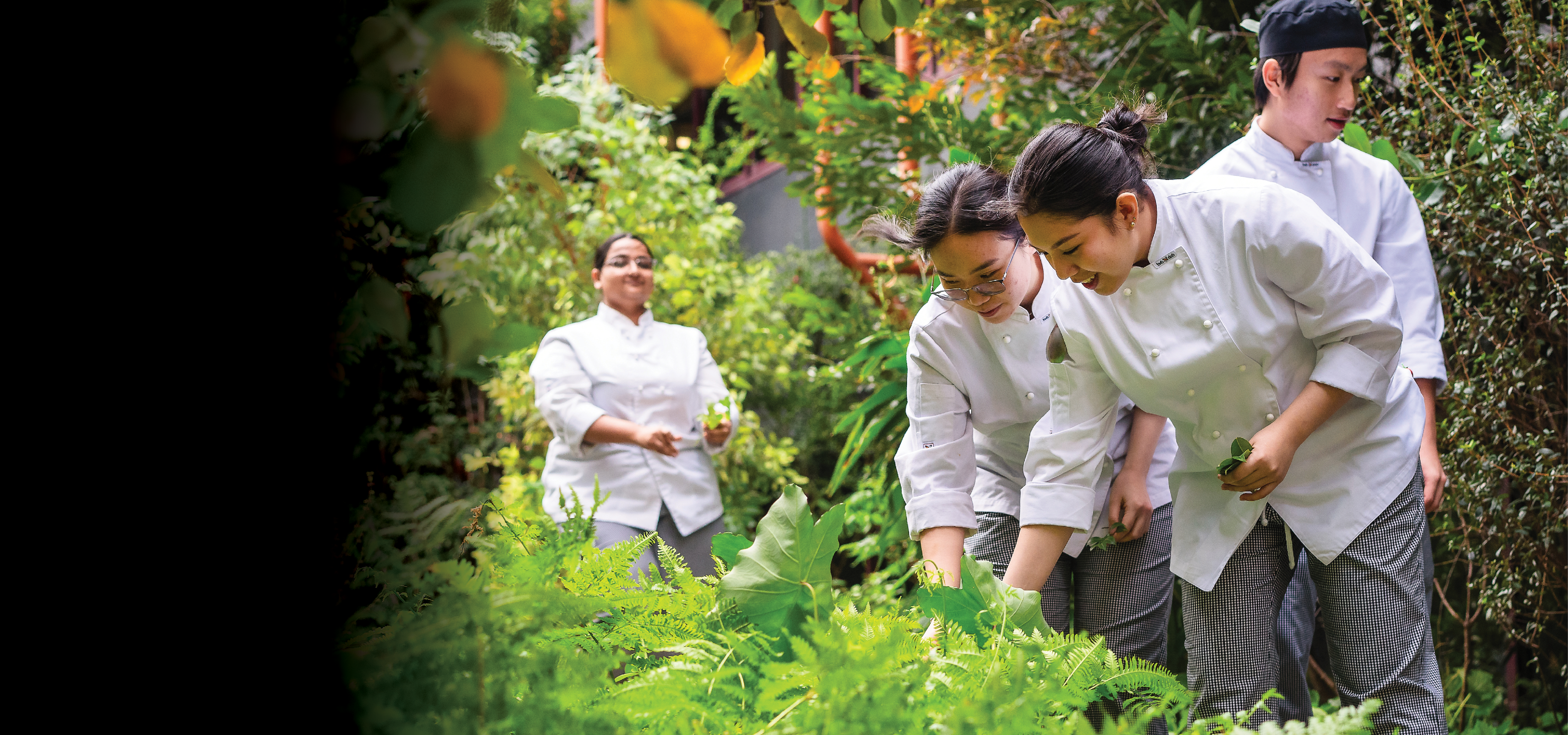

Course Overview
Commercial Cookery is a nationally recognised vocational qualification in Australia that trains students in the practical and theoretical skills needed to work as professional cooks and chefs in commercial kitchen environments. The primary qualification — the Certificate III in Commercial Cookery (SIT30821) — is the foundational entry point into the profession, covering everything from food preparation, stocks, sauces, soups, and meat cookery to pastry, desserts, menu planning, food safety, and kitchen hygiene. Students learn to use a wide range of culinary equipment and techniques while developing a sound understanding of kitchen operations. Higher-level qualifications such as the Certificate IV in Kitchen Management and the Diploma of Hospitality Management deepen these skills and prepare graduates for supervisory and management roles. The course combines classroom-based theory with extensive hands-on training in fully equipped commercial kitchens and real-world work placements. To complete the Certificate III, students must successfully finish 25 units of competency — 20 core and 5 elective units — drawn from the SIT Tourism, Travel and Hospitality Training Package.
Commercial Cookery graduates are employed across a diverse range of settings in Australia's hospitality and food service industry. Employers include restaurants, hotels, clubs, pubs, cafes, bistros, cafeterias, resorts, cruise ships, aged care facilities, hospitals, catering companies, schools, and corporate food service providers. The qualification is delivered by TAFEs, private registered training organisations (RTOs), and specialist culinary colleges throughout every major Australian city and many regional areas, making it highly accessible for both domestic and international students. The qualification is registered under the Australian Qualifications Framework (AQF) and is nationally recognised, meaning credentials are valid and respected across all Australian states and territories.
Why Study This Course?
Australia's hospitality industry is one of the country's most dynamic and resilient sectors. Driven by a strong food culture, growing tourism, population expansion, and increasing consumer demand for dining experiences, the industry continues to generate significant employment opportunities. The occupation of Chef (ANZSCO code 351311) is listed on Australia's Medium and Long-Term Strategic Skills List (MLTSSL), reflecting an ongoing national shortage of qualified culinary professionals. Industry projections consistently point to tens of thousands of job openings for cooks and chefs over the next five years, making commercial cookery one of the most secure VET career pathways available in Australia today. For international students, a commercial cookery qualification can also serve as a structured pathway toward skilled migration and permanent residency.
Beyond employment security, commercial cookery offers graduates an extraordinary degree of career flexibility and global mobility. A skilled chef can work in virtually any country in the world, pivot between fine dining, event catering, aged care, corporate kitchens, or entrepreneurship, and continuously develop specialisations in areas like patisserie, plant-based cuisine, or culinary education. The ability to work full-time (with 72% of chefs employed on a full-time basis — above the hospitality industry average) and earn a competitive salary while doing creative, hands-on work makes this one of the most personally rewarding trade qualifications available in Australia.
What You'll Learn
Skills You'll Develop
Common Course Names in Australia
- Certificate III in Commercial Cookery (SIT30821)
- Certificate IV in Kitchen Management (SIT40521)
- Diploma of Hospitality Management — Commercial Cookery Stream (SIT50422)
- Advanced Diploma of Hospitality Management — Commercial Cookery Stream (SIT60322)
- Chef Apprenticeship (Certificate III pathway)
- Certificate III in Patisserie (SIT31021)
- Diploma of Hospitality Management (SIT50422)
- Certificate IV in Commercial Cookery
Typical Subjects
Entry Requirements
Most Australian providers of the Certificate III in Commercial Cookery (SIT30821) have no formal academic prerequisites for domestic students. The qualification allows direct entry and does not require applicants to hold a prior certificate or completed Year 12. However, providers typically require applicants to be at least 15–18 years of age at course commencement (age requirements vary by institution and delivery mode). All applicants are generally required to complete a Language, Literacy, Numeracy and Digital (LLND) assessment to ensure they have the foundational skills needed to successfully complete the course. Students should also be physically able to work in a kitchen environment, including standing for extended periods and safely handling food ingredients — including animal proteins, as the training package requires all participants to prepare appropriate food items as part of assessment. Recognition of Prior Learning (RPL) and credit transfer are available for students with relevant prior study or industry experience, allowing them to fast-track their qualification.
For international students, English language proficiency requirements typically apply. Providers generally require an IELTS score of around 5.5–6.0 overall (or equivalent in tests such as PTE, TOEFL, or Cambridge), or evidence of at least five years of study conducted in English in a recognised country. Some providers may instead use an internal Language, Literacy and Numeracy (LLN) test for applicants from lower visa assessment level countries. A key practical requirement common across most providers is that students must have access to a commercial kitchen — either through the provider's on-campus training facilities or through a formal workplace arrangement — in order to complete the mandatory work-based training hours, which typically range from 192 to 240 hours depending on the institution.
Mode of Study
This course may be offered in different study modes depending on the university, campus location, course structure and student type. Students should check the available delivery mode before applying, as not every study option is available at every institution.
On-Campus Study
On-campus study is the traditional mode of delivery where students attend classes, lectures, tutorials, workshops or seminars at the university campus. This option may suit students who prefer face-to-face learning, access to campus facilities, networking with classmates, practical workshops, group projects and direct engagement with academic staff.
Online Study
Some universities may offer programs fully online or with online subject options. Online study can be attractive for students who need flexibility due to work, family, location or other commitments. Online study may suit domestic students, working professionals or students who want to study from outside Australia.
Hybrid or Blended Study
Hybrid or blended study usually combines online learning with some on-campus classes, workshops, intensive sessions or practical components. This mode may suit students who want flexibility but still want some face-to-face interaction. The exact structure varies between institutions.
Intake Information
Programs in Australia may have different intake structures depending on the university. The most common intake systems are semester, trimester and block mode.
Semester Intakes
Many Australian universities follow a two-semester academic calendar. The main intakes are commonly Semester 1 (around February or March) and Semester 2 (around July). Semester-based study usually allows students to complete a set number of subjects over approximately 12 to 14 weeks.
Trimester Intakes
Some universities use a trimester system, which generally provides three study periods a year — around February/March, June/July and October/November. Trimester study may provide more flexibility and may help some students complete their course faster.
Block Mode
Some institutions may offer selected subjects or programs in block mode, where students focus on one subject at a time over a shorter, more intensive teaching period. Block mode may suit students who prefer concentrated learning or working professionals managing study around employment.
Flexible or Rolling Intakes
Some online or professionally focused programs may offer more frequent start dates or flexible entry points throughout the year. Students should not assume that every course has monthly or multiple intakes — availability depends on the institution, course structure and student type.
Assessment & Practical Learning
Assessment Methods
- Practical demonstration and observation in a commercial training kitchen
- Written questioning assessments and knowledge tests
- Structured assignments and research projects
- Case studies relating to kitchen operations or food safety scenarios
- Presentation and role-play activities
- Unit skill tests (competency-based checkpoints)
- Observation checklists completed by assessors (Satisfied / Not-Yet-Satisfied outcomes)
- Portfolio compilation of recipes, reflections, and industry documents
- Service periods in a training restaurant open to the public
- Supervisor feedback reports from workplace or work-based training
- Online written assessments via Learning Management System (LMS/Blackboard)
- Short answer theory tests
- Menu planning and costing exercises
- Recipe workbook completion and practical dish production
- Peer and self-assessment activities
Practical Components
- Hands-on cooking sessions in fully equipped on-campus commercial training kitchens
- Mandatory work-based training (WBT) in an operational commercial kitchen (typically 192–240 hours)
- Service periods in a training restaurant open to the paying public
- Work placement and industry internships arranged by the provider
- Simulation of high-pressure commercial kitchen service environments
- Preparation and production of complete menus across multiple cuisines
- Food safety and hygiene practical demonstrations
- Excursions to top-rated restaurants, hotels, and hospitality venues
- Live catering events and banquets coordinated by students
- Use of industry-standard kitchen equipment including commercial ovens, stoves, and refrigeration
- Breakfast, lunch, and à la carte dinner service periods
- Apprenticeship-style earn-while-you-learn delivery (campus training combined with employer training contracts)
Career Opportunities
Graduates of Commercial Cookery qualifications in Australia enter one of the country's most active and varied labour markets, with opportunities spanning fine dining restaurants, hotels, cafes, bistros, clubs, pubs, resorts, cruise ships, hospitals, aged care facilities, schools, corporate catering, and event management companies. The profession rewards ambition and specialisation — those who continue developing their skills can progress rapidly through the kitchen brigade hierarchy, move into food entrepreneurship, or transition into culinary education and training. Occupations such as Chef, Cook, Pastry Cook, and Baker are consistently listed on Australia's skilled occupation lists, reflecting the ongoing national demand for qualified culinary professionals.
Possible Job Roles
Career Ladder
Entry Level
Apprentice / Commis Chef
Apprentice Chef, Commis Chef, Kitchen Hand, Prep Cook, Breakfast Cook
Early Career
Demi Chef / Chef de Partie
Demi Chef de Partie, Chef de Partie, Section Cook, Pastry Cook, Larder Cook
Mid-Level
Sous Chef / Senior Cook
Sous Chef, Senior Cook, Catering Supervisor, Kitchen Supervisor, Camp Cook (FIFO)
Senior Level
Head Chef / Kitchen Manager
Head Chef, Kitchen Manager, Catering Manager, Restaurant Manager, Executive Sous Chef
Leadership
Executive Chef / Director of Culinary
Executive Chef, Director of Food and Beverage, Corporate Chef, Culinary Director, Food Service Entrepreneur, Culinary Trainer / RTO Assessor
Average Salary in Australia
Chef and cook salaries in Australia vary by experience, role, location, and employer type, ranging from entry-level wages to six-figure incomes for executive positions.
Study Options Across Australia
Melbourne
Melbourne is widely regarded as Australia's culinary capital, boasting one of the world's most vibrant and diverse food scenes with thousands of restaurants, cafés, and hospitality venues across its CBD and inner suburbs. The city offers Commercial Cookery students unparalleled access to industry placements, networking events, and employment opportunities in everything from fine dining to multicultural street food, making it the premier destination for those serious about a culinary career.
Sydney
As Australia's largest city and a major international tourism hub, Sydney provides Commercial Cookery graduates with a vast and competitive job market spanning world-class restaurants, luxury hotels, cruise terminals, corporate catering, and major event venues. The city's iconic dining culture, international profile, and high demand for skilled culinary professionals make it an excellent location to launch and grow a cookery career.
Brisbane
Brisbane is one of Australia's fastest-growing cities and a rising force in the national hospitality scene, with an expanding restaurant culture, tourism industry, and major events pipeline boosted by the city's development ahead of the 2032 Olympic Games. Commercial Cookery students benefit from more affordable living costs compared to Sydney and Melbourne, a warm climate, and strong industry growth creating increasing demand for qualified culinary workers.
Perth
Perth offers Commercial Cookery students a thriving hospitality industry driven by a booming resources sector, a high-income local population, and a growing tourism market, with strong demand for chefs in both city restaurants and FIFO (fly-in, fly-out) remote site catering roles in the mining sector — one of the highest-paying niches for qualified cooks in Australia. Many providers in Perth offer fee-free training for eligible Western Australian residents, reducing the financial barrier to entry significantly.
Adelaide
Adelaide is home to world-renowned food and wine regions including the Barossa Valley, McLaren Vale, and Adelaide Central Market, making it an inspiring location for aspiring chefs with a particular interest in produce-driven and regional Australian cuisine. The city's growing reputation as a food tourism destination, combined with a lower cost of living and a welcoming hospitality industry, makes it an attractive and increasingly popular choice for Commercial Cookery students.
Canberra
Canberra's hospitality industry has grown considerably in recent years, fuelled by a high-income public sector workforce, a thriving café culture, and a steady stream of domestic tourism to Australia's capital. Commercial Cookery graduates in Canberra find opportunities in government catering, corporate dining, boutique restaurants, and the nearby wine regions of the ACT and surrounding NSW, with relatively strong wages reflecting the city's higher cost of living and professional workforce.
Who Should Study This Course?
- People with a genuine passion for food, cooking, and creating memorable dining experiences
- School leavers or career changers looking for a practical, hands-on trade qualification with strong employment outcomes
- Those who thrive in fast-paced, team-oriented environments and enjoy working with their hands
- International students seeking a pathway to skilled employment and potential permanent residency in Australia
- Aspiring entrepreneurs who dream of owning a café, restaurant, catering business, or food truck
- Hospitality workers already employed in kitchens who want to formalise their skills and advance their careers
- Individuals who enjoy creative expression through food presentation, menu development, and culinary experimentation
- People interested in specialising in areas such as patisserie, dietary cooking, plant-based cuisine, or institutional catering
- Those who want the flexibility of working anywhere in Australia or internationally — the qualification is globally recognised
- Students who prefer competency-based, practical learning over academic study and written exams
Things to Consider Before Applying
Before choosing a course, students should compare:
Additional Information for International Students
International students who want to study in Australia should also consider additional requirements before applying.
Start Your Journey
Join successful graduates
2,000+
Students Helped
$200+
Application Processed
350+
Listed Universities
10,000+
Listed Courses