Start building today!
Experience the Find the courses and unlock the true potential
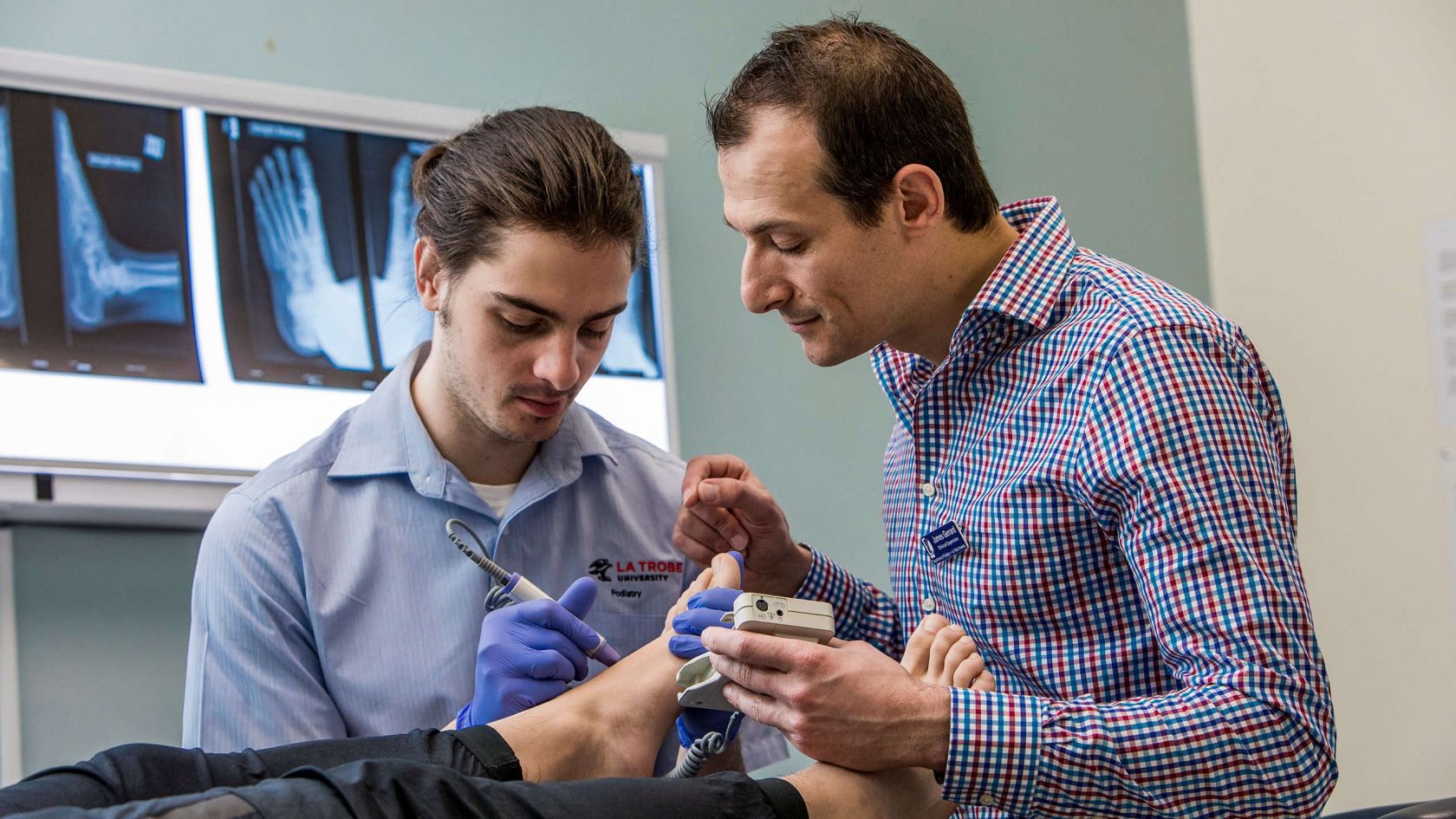
The Bachelor of Podiatry (Honours) is a four-year undergraduate degree that equips students with the comprehensive clinical, scientific, and professional skills needed to assess, diagnose, and treat disorders of the foot, ankle, and lower limb. The program blends foundational health sciences — including human anatomy, physiology, pharmacology, and biomechanics — with progressive clinical training that intensifies across the four years of study. Students begin with core health science theory before moving into hands-on clinical practice skills such as surgery, orthopaedic management, wound care, paediatrics, high-risk foot management, and sports injury treatment. The Honours component encourages independent research, deeper investigation within the discipline, and develops the analytical skills required for leadership roles and postgraduate pathways.
This degree is designed for students who are passionate about healthcare and want a focused allied health career with strong patient contact. It suits those who enjoy problem-solving, have an interest in the human body, and want to make a tangible difference in their patients' quality of life and mobility. The program is accredited by the Podiatry Accreditation Committee and approved by the Podiatry Board of Australia, meaning graduates are eligible to apply for registration with the Podiatry Board of Australia (PodBA) upon completion.
Graduates are equipped to work across a wide variety of clinical settings. Employers include public and private hospitals, private practices, community health centres, aged care facilities, sports clinics, children's health services, occupational health services, and home-based care providers. Graduates may also pursue careers in research, academia, health policy, or specialised fields such as podiatric surgery, diabetes management, sports podiatry, or paediatric podiatry. The profession is regulated under the Australian Health Practitioner Regulation Agency (AHPRA), ensuring consistent professional standards nationally.
Podiatry is a profession experiencing significant and sustained demand across Australia, driven by three powerful forces: an ageing population, a rising prevalence of chronic disease, and a documented workforce shortage. Demand for podiatry services is forecast to increase until the 2050s, and podiatrists are currently listed on Australia's Medium and Long-term Strategic Skills List (MLTSSL), signalling long-term national need. Despite this growing demand, undergraduate enrolments have declined, creating an urgent skills gap that makes qualified podiatrists highly sought after by both public and private healthcare employers across all states and territories — including regional and remote areas where access to foot health services is critically limited.
Beyond strong job security, the Bachelor of Podiatry (Honours) offers an intellectually stimulating and rewarding career path. Graduates can specialise in areas such as diabetes management, sports podiatry, paediatrics, podiatric surgery, wound care, or prescribing medicines, and can build careers in clinical practice, academia, health administration, or research. The Honours component also opens the door to postgraduate study, including Master's degrees, Doctor of Podiatric Medicine, and Doctor of Podiatric Surgery qualifications. With salaries competitive in the allied health sector and flexible employment options spanning private practice, hospital roles, and sole practitioner settings, podiatry offers a career with both stability and variety.
For school-leaver applicants, admission to the Bachelor of Podiatry (Honours) typically requires successful completion of a Year 12 senior secondary certificate such as the ATAR, VCE, QCE, or equivalent state qualification. Competitive ATARs for podiatry programs generally range from approximately 70 to 85, though this varies between institutions and changes annually. Assumed or prerequisite knowledge in biology and/or chemistry is strongly recommended, and some programs formally require these subjects. Institutions may also consider other entry criteria such as completion of a Diploma (AQF Level 5) or higher from a registered training organisation, or at least six months of prior higher education study in a relevant field.
Graduate-entry pathways are available at some institutions for students who hold a completed Australian bachelor's degree in a recognised biomedical, health, or medical science discipline, completed within the past 10 years, with a minimum grade point average as specified by each provider. These pathways allow eligible candidates to complete the degree in a shorter timeframe through advanced standing arrangements. Regardless of entry pathway, all applicants must register as student practitioners with the Australian Health Practitioner Regulation Agency (AHPRA) and the Podiatry Board of Australia prior to commencing clinical placements.
For international applicants or domestic students for whom English is an additional language, institutions typically require evidence of English language proficiency. Commonly accepted tests include IELTS Academic (generally a minimum overall score of 7.0 with no band below 6.5), TOEFL iBT, Pearson PTE Academic, or Cambridge English Advanced. Specific thresholds vary by institution. Some programs may also consider relevant healthcare work experience, volunteer experience in health or community settings, or performance in a personal statement as part of a holistic selection process, particularly where applicant numbers are competitive.
This course may be offered in different study modes depending on the university, campus location, course structure and student type. Students should check the available delivery mode before applying, as not every study option is available at every institution.
On-campus study is the traditional mode of delivery where students attend classes, lectures, tutorials, workshops or seminars at the university campus. This option may suit students who prefer face-to-face learning, access to campus facilities, networking with classmates, practical workshops, group projects and direct engagement with academic staff.
Some universities may offer programs fully online or with online subject options. Online study can be attractive for students who need flexibility due to work, family, location or other commitments. Online study may suit domestic students, working professionals or students who want to study from outside Australia.
Hybrid or blended study usually combines online learning with some on-campus classes, workshops, intensive sessions or practical components. This mode may suit students who want flexibility but still want some face-to-face interaction. The exact structure varies between institutions.
Programs in Australia may have different intake structures depending on the university. The most common intake systems are semester, trimester and block mode.
Many Australian universities follow a two-semester academic calendar. The main intakes are commonly Semester 1 (around February or March) and Semester 2 (around July). Semester-based study usually allows students to complete a set number of subjects over approximately 12 to 14 weeks.
Some universities use a trimester system, which generally provides three study periods a year — around February/March, June/July and October/November. Trimester study may provide more flexibility and may help some students complete their course faster.
Some institutions may offer selected subjects or programs in block mode, where students focus on one subject at a time over a shorter, more intensive teaching period. Block mode may suit students who prefer concentrated learning or working professionals managing study around employment.
Some online or professionally focused programs may offer more frequent start dates or flexible entry points throughout the year. Students should not assume that every course has monthly or multiple intakes — availability depends on the institution, course structure and student type.
Graduates of the Bachelor of Podiatry (Honours) enter a profession with strong, sustained employment prospects across both the public and private healthcare sectors in Australia. Registered podiatrists are in demand in major metropolitan centres as well as regional and remote communities, where workforce shortages are most acute. Career paths range from clinical practice in private or hospital settings to specialised roles in sports medicine, diabetes management, paediatrics, wound care, and podiatric surgery. With further study, graduates can pursue surgical specialisation, academic research, or endorsement to prescribe scheduled medicines, significantly expanding their scope and earning potential. The interprofessional nature of modern podiatric care also creates opportunities for collaboration and leadership within multidisciplinary health teams across aged care, Indigenous health, occupational health, and community health sectors.
Entry Level
Graduate Podiatrist
Graduate Podiatrist, Junior Clinician, Podiatry Assistant (pre-registration), Allied Health Graduate
Early Career
Registered Podiatrist
Registered Podiatrist, Community Health Podiatrist, Hospital Podiatrist, Sports Podiatrist, Aged Care Podiatrist
Mid-Level
Senior Podiatrist / Specialist
Senior Podiatrist, Diabetes Foot Care Specialist, Paediatric Podiatrist, Wound Care Specialist, Orthotics and Biomechanics Specialist
Senior Level
Principal Podiatrist / Clinic Manager
Principal Podiatrist, Podiatry Clinic Manager, Allied Health Team Leader, Podiatric Prescriber, Clinical Educator
Leadership
Director / Academic / Surgeon
Podiatric Surgeon, Director of Allied Health, Podiatry Department Head, University Lecturer / Associate Professor, Health Policy Adviser, Private Practice Owner
Podiatrist salaries in Australia vary based on experience, specialisation, work setting, and location, with private practice and specialist roles typically offering higher remuneration.
Melbourne
Melbourne is home to a large concentration of private podiatry clinics, major public hospitals, and aged care facilities, providing extensive employment and placement opportunities for graduates. The city's significant population of older residents and high rates of chronic disease management make it one of Australia's strongest markets for podiatric services, and its well-developed allied health infrastructure supports diverse specialisation pathways.
Sydney
As Australia's largest city, Sydney offers podiatry graduates access to world-class hospital networks, sports medicine centres, and a thriving private practice sector across its vast metropolitan region. The city's diverse and growing population — including a large diabetic and ageing demographic — drives consistent demand for specialist foot health services, particularly in high-risk and chronic disease management.
Brisbane
Brisbane and South East Queensland present strong opportunities for podiatry graduates, with a rapidly growing population, a vibrant sports culture, and expanding community health infrastructure. The region's warm climate encourages active outdoor lifestyles, generating demand for sports podiatry, and Queensland's significant Indigenous and rural health needs create pathways into community and outreach-based podiatric roles.
Perth
Perth's fast-growing population and expanding healthcare sector make it a competitive employment market for registered podiatrists, particularly in private practice and community health settings. Western Australia's large regional footprint also creates demand for podiatrists willing to work in rural and remote outreach roles, with government incentives and above-average remuneration packages often available to attract practitioners to underserved areas.
Adelaide
Adelaide has a notably older demographic profile compared to other Australian capitals, making it a city with consistently strong demand for podiatric care, particularly in aged care, wound management, and diabetes foot care. The city also has a well-established allied health community and public hospital network, providing graduates with a supportive professional environment and a manageable cost of living relative to Sydney or Melbourne.
Canberra
Canberra's healthcare sector is anchored by major public hospitals and a well-funded community health system, offering podiatry graduates stable public sector employment opportunities with structured career progression. The city's health-conscious and active population — including a large proportion of government workers and defence personnel — also supports demand for sports podiatry and preventative foot health services.
Before choosing a course, students should compare:
International students who want to study in Australia should also consider additional requirements before applying.
Join successful graduates
Students Helped
Application Processed
Listed Universities
Listed Courses