Start building today!
Experience the Find the courses and unlock the true potential
The Certificate III in Engineering – Technical (MEM30522) is a nationally recognised vocational qualification that defines the skills and knowledge required of an Engineering Technician within metal, engineering, manufacturing, and associated industries. The course is designed to provide an entry pathway to technician work in industry and is available through a Training Contract associated with an Australian Traineeship or through formal skills and knowledge recognition. It covers a broad spectrum of engineering work including production planning, scheduling, work studies, estimating material requirements, inspection, quality control, laboratory procedures, supplier evaluation, non-destructive testing, metallurgy, drafting, and assisting in the design and development of products and processes.
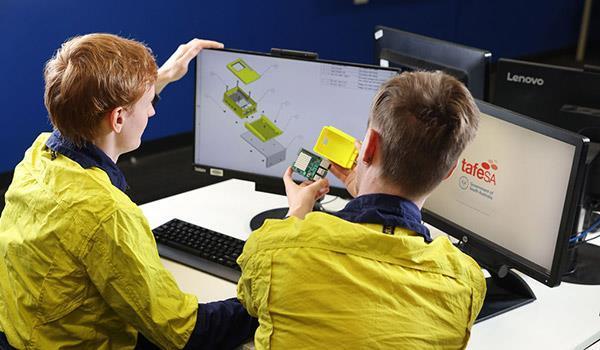
Students learn both theoretical components and participate in hands-on workshop projects that develop their skills and knowledge around general engineering concepts. A core focus of the qualification is developing the ability to produce detailed drawings and 3D models, and to design and develop prototypes using computer-aided design (CAD) programs such as AutoCAD — all in accordance with Australian Standards. Students also gain skills in modern office practices, workplace communication, safety procedures, quality controls, basic calculations, and sustainability concepts.
Graduates are sought by employers across a wide range of sectors including mining and mineral processing, manufacturing, civil construction, building and construction, oil and gas, and automotive industries. Employers range from large infrastructure and resources companies to specialist engineering consultancies and government agencies. Upon completion, graduates can progress directly into the workforce as engineering technicians or draftspersons, or choose to further their studies through a Diploma of Engineering – Technical (Drafting) or pursue specialisations in civil construction design, civil and structural engineering, electrical engineering technology, or mechanical engineering.
Australia's engineering and manufacturing sectors are experiencing sustained demand for skilled technical workers, and graduates of the Certificate III in Engineering – Technical are well-positioned to fill this gap. According to the Australian Government's Job Outlook service, job prospects for civil engineering draftspersons and technicians are strong, with the sector expected to experience moderate future growth and around 3,000 job openings anticipated over the next five years. As infrastructure investment continues across transport, energy, resources, and defence, the need for technically proficient engineering support workers — those who can translate design concepts into precise technical drawings and manage quality control on-site — is growing steadily.
This qualification also offers exceptional value as a career launchpad. It is a nationally accredited Certificate III level qualification, meaning credentials are recognised across all Australian states and territories — you can train in one state and take up work opportunities in another without needing to upskill. The course provides a direct pathway into apprenticeships, traineeships, and higher-level study, giving students both immediate employability and long-term career flexibility. For those who enjoy problem-solving, working with technology, and contributing to real-world projects, this qualification delivers practical, job-ready skills in a relatively short timeframe.
Formally, there are no mandatory entry requirements for the MEM30522 Certificate III in Engineering – Technical at the national qualification level, meaning students can enrol without prior engineering qualifications. However, individual registered training organisations (RTOs) and TAFE campuses may apply their own additional requirements, so prospective students should check with their preferred provider. A recommended academic benchmark across many providers includes approximately Year 10 completion, with literacy and numeracy skills sufficient to understand technical documents and perform basic engineering calculations. Some providers use a Skills Check or literacy and numeracy assessment prior to enrolment to ensure students are prepared for the coursework. TAFE Queensland, for example, recommends benchmark levels of 3 in English, 4 in Mathematics, and 3 in Digital Technology.
For students pursuing the qualification through an Australian Traineeship pathway, candidates must be signed to a Training Contract with an employer who can provide the necessary human and physical resources, range of work, supervision, and training as detailed in the agreed training plan. School-based trainees in years 10, 11, or 12 may also access the qualification subject to minimum paid employment requirements. International students are required to hold a valid student visa and Overseas Students Health Cover (OSHC) for the duration of the course. English language requirements apply to international applicants, typically at an IELTS level appropriate to vocational study.
Recognition of Prior Learning (RPL) and Credit Transfer are available at most providers for students who have already achieved relevant units of competency through previous study or workplace experience. It is anticipated that many learners may have gained preliminary skills through Year 12 study and can apply for RPL accordingly, subject to assessment by the registered training provider.
This course may be offered in different study modes depending on the university, campus location, course structure and student type. Students should check the available delivery mode before applying, as not every study option is available at every institution.
On-campus study is the traditional mode of delivery where students attend classes, lectures, tutorials, workshops or seminars at the university campus. This option may suit students who prefer face-to-face learning, access to campus facilities, networking with classmates, practical workshops, group projects and direct engagement with academic staff.
Some universities may offer programs fully online or with online subject options. Online study can be attractive for students who need flexibility due to work, family, location or other commitments. Online study may suit domestic students, working professionals or students who want to study from outside Australia.
Hybrid or blended study usually combines online learning with some on-campus classes, workshops, intensive sessions or practical components. This mode may suit students who want flexibility but still want some face-to-face interaction. The exact structure varies between institutions.
Programs in Australia may have different intake structures depending on the university. The most common intake systems are semester, trimester and block mode.
Many Australian universities follow a two-semester academic calendar. The main intakes are commonly Semester 1 (around February or March) and Semester 2 (around July). Semester-based study usually allows students to complete a set number of subjects over approximately 12 to 14 weeks.
Some universities use a trimester system, which generally provides three study periods a year — around February/March, June/July and October/November. Trimester study may provide more flexibility and may help some students complete their course faster.
Some institutions may offer selected subjects or programs in block mode, where students focus on one subject at a time over a shorter, more intensive teaching period. Block mode may suit students who prefer concentrated learning or working professionals managing study around employment.
Some online or professionally focused programs may offer more frequent start dates or flexible entry points throughout the year. Students should not assume that every course has monthly or multiple intakes — availability depends on the institution, course structure and student type.
Graduates of the Certificate III in Engineering – Technical are equipped to enter a wide range of industries where technical drawing, quality control, and engineering support functions are in demand. Career pathways span mining and mineral processing, civil and structural construction, manufacturing, oil and gas, automotive, defence, and government infrastructure projects. With experience and further study — such as a Diploma of Engineering – Technical — graduates can progress into senior drafting, design, and project coordination roles, making this qualification an excellent foundation for a long-term engineering career.
Entry Level
Trainee / Junior Technician
Engineering Trainee, Junior CAD Operator, Junior Draftsperson, Technical Assistant, Engineering Support Officer
Early Career
Technician / Draftsperson
Engineering Technician, Engineering Draftsperson, CAD Technician, Quality Control Inspector, Production Technician, NDT Technician
Mid-Level
Senior Technician / Senior Draftsperson
Senior Engineering Technician, Senior Draftsperson, Design Drafter, Structural Draftsperson, Mechanical Draftsperson, Technical Officer
Senior Level
Lead Technician / Engineering Associate
Lead Engineering Technician, Engineering Associate, Drafting Team Leader, Quality Assurance Specialist, Senior Technical Officer, Project Coordinator
Leadership
Principal / Engineering Manager
Principal Draftsperson, Engineering Manager, Technical Manager, Design Manager, Operations Manager (Engineering), Chief Engineering Technician
Salaries for graduates of the Certificate III in Engineering – Technical vary by industry, location, and experience level, with strong premiums available in mining, oil and gas, and infrastructure sectors.
Melbourne
Melbourne is a major hub for manufacturing, defence, and civil infrastructure, with strong demand for engineering technicians and draftspersons across both the public and private sectors. The city's concentration of engineering consultancies, construction firms, and advanced manufacturing businesses provides excellent traineeship and graduate employment opportunities.
Sydney
Sydney's booming infrastructure pipeline — including major transport, commercial construction, and utilities projects — creates consistent demand for engineering technicians and CAD-qualified draftspersons. The city offers access to a wide network of engineering firms, government agencies, and industry associations that actively recruit Certificate III graduates.
Brisbane
Brisbane is a growing engineering hub supported by major infrastructure investment linked to the resources sector in Queensland and large-scale construction projects including those connected to the 2032 Olympic Games. Graduates can find opportunities across civil engineering, mining services, manufacturing, and defence industries throughout south-east Queensland.
Perth
Perth is one of Australia's most attractive cities for Certificate III in Engineering – Technical graduates due to its proximity to the nation's largest mining, oil and gas, and mineral processing industries. Strong demand for engineering technicians and draftspersons in the resources sector makes Perth a high-earning destination, with salaries often boosted by site allowances and FIFO arrangements.
Adelaide
Adelaide has a growing engineering sector underpinned by defence manufacturing, naval shipbuilding, and a strong advanced manufacturing base. Accommodation is more affordable than in other capital cities, making Adelaide an attractive study and work destination for engineering students, with local industry providing solid traineeship and graduate pathways.
Canberra
Canberra offers unique opportunities for engineering technicians through its concentration of Commonwealth Government departments, defence agencies, and infrastructure bodies that require technically skilled support staff. Graduates can find roles in government engineering services, environmental monitoring, facilities management, and defence-related technical positions.
Before choosing a course, students should compare:
International students who want to study in Australia should also consider additional requirements before applying.
Join successful graduates
Students Helped
Application Processed
Listed Universities
Listed Courses