Start building today!
Experience the Find the courses and unlock the true potential
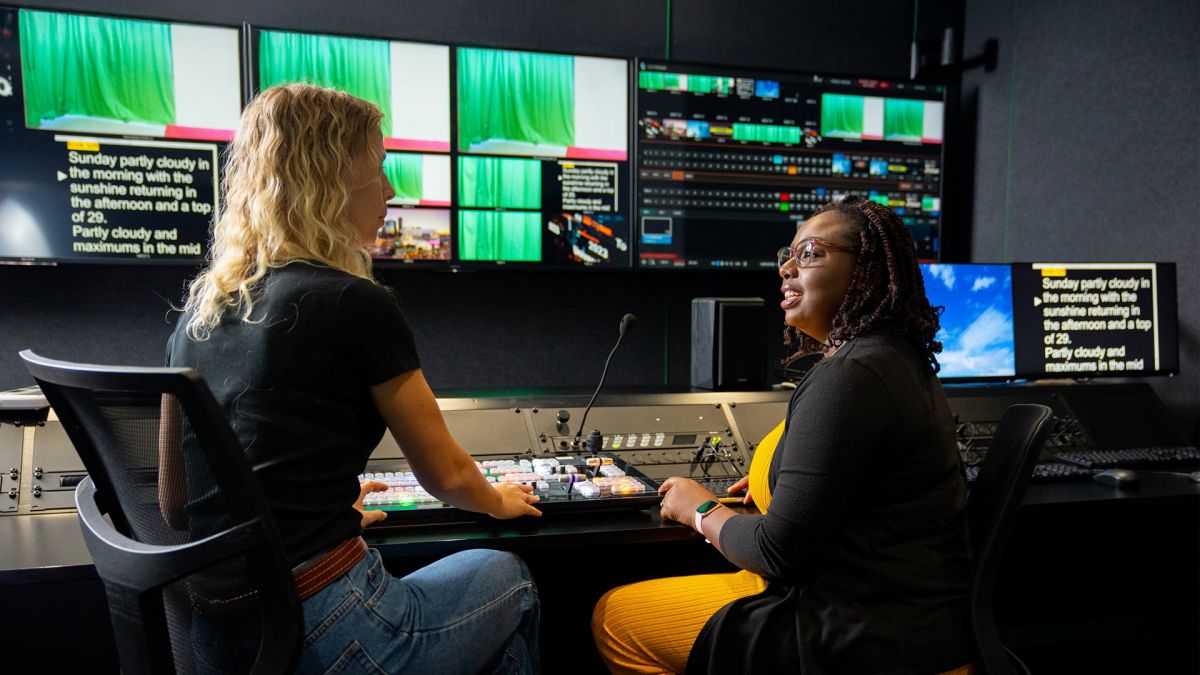
The Master of News and Entertainment Media is an advanced postgraduate qualification designed to equip students with the professional knowledge, technical skills, and strategic thinking needed to thrive across Australia's fast-evolving media landscape. The course typically spans one to two years and operates at AQF Level 9, covering everything from the fundamentals of journalism and news reporting to the production and presentation of entertainment content across television, radio, streaming platforms, podcasts, and digital storytelling channels. Students gain hands-on experience in industry-standard newsrooms and production studios, learning to work under real deadline pressures and to live broadcast standards — mirroring the demands of professional media environments.
This degree is designed for a diverse cohort: aspiring journalists, media graduates seeking specialisation, communications professionals wanting to upskill, and career changers looking to break into the media industry. The curriculum blends editorial craft with contemporary media management skills, including audience analytics, consumer behaviour, data-driven decision making, and the psychology of media leadership. Students also develop a deep understanding of converged media ecosystems — how news, entertainment, and digital content intersect across platforms and audiences.
Graduates are well-prepared to work with a wide range of employers, including national and commercial broadcasters such as the ABC, Nine Entertainment, Seven West Media, Network Ten, Sky News, and Nova Entertainment, as well as streaming services, digital news publications, production companies, corporate communications teams, and independent content studios. The credential is equally relevant to those pursuing roles in journalism, content strategy, digital media production, media management, or entertainment hosting.
Australia's media and entertainment market is experiencing robust and sustained growth. The industry was valued at AUD 61.32 billion in 2025 and is projected to reach AUD 95.96 billion by 2035, driven by the rapid expansion of streaming services, digital platforms, and on-demand content consumption. This growth is creating a genuine skills gap — employers increasingly need media professionals who can not only write and present across multiple platforms but also understand audience data, content strategy, and digital distribution. A postgraduate qualification in news and entertainment media gives graduates a decisive edge by combining editorial craft with technical production and management capabilities that are in high demand.
The shift to digital has transformed virtually every corner of the industry. Traditional broadcast roles are being reimagined, new platform-specific content roles are emerging, and organisations across every sector — from government and healthcare to sport and corporate — now require skilled media communicators. Studying at this level signals to employers a serious commitment to the profession and provides a structured pathway into specialist, senior, or cross-platform media roles that are not easily accessible with an undergraduate qualification alone.
Most Australian universities offering a Master of News and Entertainment Media or equivalent postgraduate media qualification require applicants to hold a bachelor's degree (AQF Level 7) from a recognised institution. Many programs accept applicants from a broad range of undergraduate disciplines, including media studies, communications, journalism, humanities, social sciences, marketing, law, arts, and creative industries. Some programs offer tiered entry points that adjust the duration of the degree depending on whether your prior degree is in a cognate discipline — meaning those with a media-related background may complete the degree in less time, while those from unrelated fields undertake bridging or foundation units. In lieu of a formal degree, some programs may consider applicants with substantial relevant professional experience, typically at least five years in a media, communications, or content-related field.
For international students and some domestic applicants, evidence of English language proficiency is required. Accepted tests typically include IELTS (commonly a minimum overall band of 6.5 to 7.0, with no sub-band below 6.0), TOEFL, or PTE Academic. Some institutions may also accept completion of prior postgraduate study in Australia as evidence of English proficiency. For entry into highly competitive programs, a strong academic record — often reflected in a Weighted Average Mark (WAM) — may be assessed, and meeting minimum published requirements does not guarantee an offer. Applicants may also be asked to submit a personal statement, a portfolio of relevant work, or attend an interview, particularly for programs with a practical or studio-based focus.
This course may be offered in different study modes depending on the university, campus location, course structure and student type. Students should check the available delivery mode before applying, as not every study option is available at every institution.
On-campus study is the traditional mode of delivery where students attend classes, lectures, tutorials, workshops or seminars at the university campus. This option may suit students who prefer face-to-face learning, access to campus facilities, networking with classmates, practical workshops, group projects and direct engagement with academic staff.
Some universities may offer programs fully online or with online subject options. Online study can be attractive for students who need flexibility due to work, family, location or other commitments. Online study may suit domestic students, working professionals or students who want to study from outside Australia.
Hybrid or blended study usually combines online learning with some on-campus classes, workshops, intensive sessions or practical components. This mode may suit students who want flexibility but still want some face-to-face interaction. The exact structure varies between institutions.
Programs in Australia may have different intake structures depending on the university. The most common intake systems are semester, trimester and block mode.
Many Australian universities follow a two-semester academic calendar. The main intakes are commonly Semester 1 (around February or March) and Semester 2 (around July). Semester-based study usually allows students to complete a set number of subjects over approximately 12 to 14 weeks.
Some universities use a trimester system, which generally provides three study periods a year — around February/March, June/July and October/November. Trimester study may provide more flexibility and may help some students complete their course faster.
Some institutions may offer selected subjects or programs in block mode, where students focus on one subject at a time over a shorter, more intensive teaching period. Block mode may suit students who prefer concentrated learning or working professionals managing study around employment.
Some online or professionally focused programs may offer more frequent start dates or flexible entry points throughout the year. Students should not assume that every course has monthly or multiple intakes — availability depends on the institution, course structure and student type.
Graduates of a Master of News and Entertainment Media in Australia enter a broad and evolving career landscape spanning commercial broadcasting, public media, digital publishing, corporate communications, streaming platforms, and independent content production. Employers range from national broadcasters and metropolitan newspapers to global streaming services, production companies, digital agencies, PR firms, and government communications divisions. The advanced nature of the postgraduate qualification positions graduates not just as on-ground reporters or producers, but as capable practitioners who can take on editorial leadership, content strategy, audience development, and media management roles across an increasingly fragmented and fast-moving industry.
Entry Level
Graduate / Junior Reporter
Graduate Journalist, Junior News Producer, Assistant Content Producer, Editorial Assistant, Junior Social Media Coordinator, Graduate Broadcast Technician
Early Career
Reporter / Producer
News Reporter, Radio Producer, Digital Content Producer, Podcast Producer, Current Affairs Researcher, Multimedia Journalist, Entertainment Reporter
Mid-Level
Senior Reporter / Senior Producer
Senior Journalist, Senior Producer, Content Strategist, Online News Editor, Audience Development Coordinator, Social Media Manager, Media Advisor
Senior Level
Editor / News Manager
News Editor, Managing Editor, Programme Manager, Senior Media Communications Manager, Digital Editorial Lead, Head of Content, Senior Broadcast Journalist
Leadership
Director / Head / Executive Producer
Executive Producer, Director of Content, Head of News, Editorial Director, Chief of Staff (Newsroom), General Manager (Media), Head of Digital Media
Salaries for media and journalism graduates in Australia vary significantly based on experience, specialisation, platform type, and whether the role is in public or commercial media.
Melbourne
Melbourne is one of Australia's most vibrant media cities, home to major broadcast networks, independent production companies, and a thriving digital publishing sector, making it an outstanding base for media students who want direct access to industry studios, internship pipelines, and a richly creative professional community.
Sydney
As Australia's largest media market, Sydney houses the headquarters of national broadcasters, commercial television networks, global streaming operations, and leading news organisations, offering media students unparalleled access to industry placements, high-profile newsrooms, and the country's most competitive media job market.
Brisbane
Brisbane's rapidly growing media scene — bolstered by major events, a booming production industry, and expanding digital content sector — makes it an increasingly attractive city for media students, with a lower cost of living than Sydney or Melbourne and strong connections to Queensland-based broadcasters and studios.
Perth
Perth offers a strong regional media market anchored by major commercial and public broadcasters serving Western Australia, and the city's growing digital economy and proximity to the Asia-Pacific region create unique opportunities for students interested in multimedia journalism, digital content, and cross-cultural media storytelling.
Adelaide
Adelaide's intimate yet active media community provides students with easy access to broadcasters, community radio, and a growing screen production industry, with the added advantage of a highly affordable student lifestyle and strong connections between universities and local media employers.
Canberra
Canberra's status as Australia's political capital makes it an exceptional location for students interested in political journalism, public affairs reporting, and government communications, with direct proximity to federal parliament, national broadcasters, and a high concentration of public sector media and communications roles.
Before choosing a course, students should compare:
International students who want to study in Australia should also consider additional requirements before applying.
Join successful graduates
Students Helped
Application Processed
Listed Universities
Listed Courses