Start building today!
Experience the Find the courses and unlock the true potential
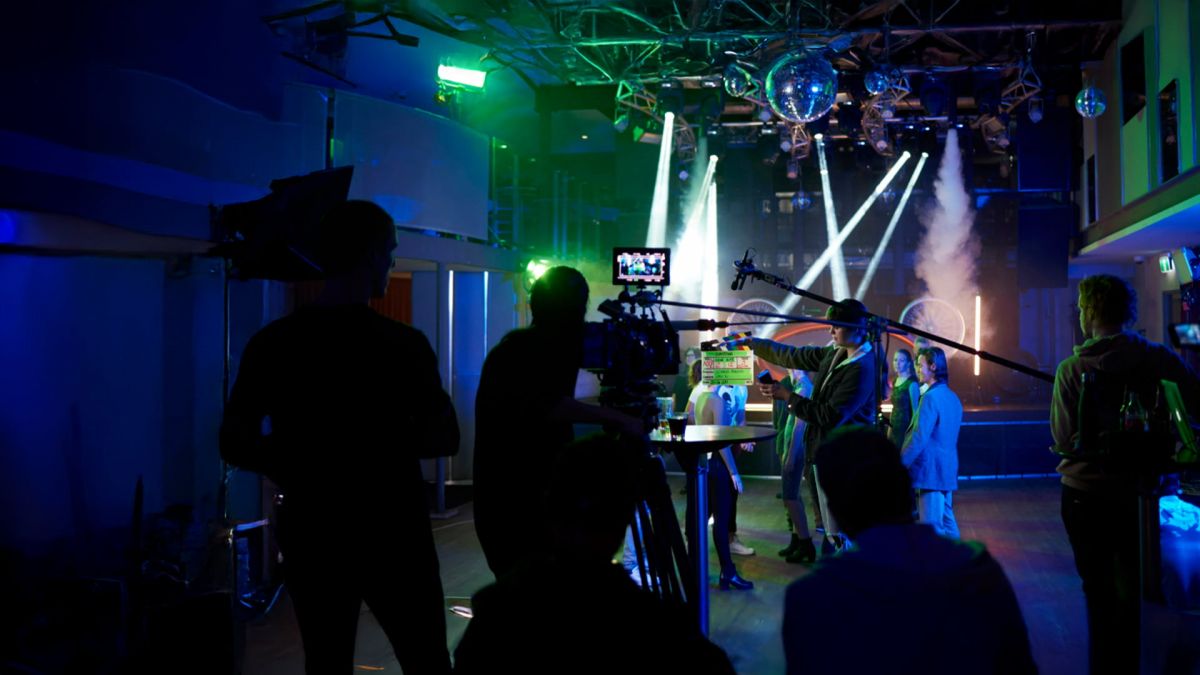
A Master of Screen Production is a postgraduate degree that equips students with advanced creative, technical, and industry-ready skills to work across the full spectrum of screen-based media — from film and television to documentary, digital content, and emerging platforms. The degree blends hands-on production experience with theoretical and critical frameworks, preparing graduates to lead projects from initial concept through to distribution and audience engagement. Students typically specialise in areas such as directing, producing, screenwriting, cinematography, editing, documentary, sound design, or production design, while collaborating across disciplines in a professional studio environment.
The course is designed for creative practitioners who want to elevate their craft to a professional or leadership level. It suits both those who hold an undergraduate background in screen or media production and career-changers from adjacent industries such as journalism, advertising, theatre, or digital media who bring relevant professional experience. Graduates emerge with a major creative portfolio project, a professional network, and specialist skills ready for employment in one of Australia's most dynamic and growing cultural industries.
Employers of graduates span Australia's entire screen ecosystem: national broadcasters including the ABC and SBS, streaming platforms such as Netflix, Stan, Amazon Prime Video, and Disney+, independent production companies, commercial television networks, advertising agencies, digital content studios, government screen agencies (including Screen Australia, Screen NSW, Screen Queensland, Film Victoria, and others), post-production houses, and the rapidly growing online content sector. Many graduates also pursue freelance careers or establish their own production companies.
Australia's screen industry is experiencing significant investment and growth, making this an excellent time to pursue a postgraduate qualification in screen production. According to Screen Australia, a record $2.7 billion AUD was spent on Australian and international screen productions in 2024/25, reflecting strong demand for skilled practitioners across all departments. Employment in motion picture and video production grew at a 5.6% compound annual rate between 2020 and 2025, with over 20,800 people working in the sector nationally. The explosive growth of global streaming services — all of which produce content in Australia — combined with expanding digital and online content markets, has created sustained demand for writers, directors, producers, editors, and other screen professionals with advanced training.
A master's degree provides a decisive competitive edge in a field where professional networks, a strong portfolio, and specialist expertise are the primary currency. Australia's screen industry has a well-documented skills shortage in senior creative and technical roles, meaning graduates with postgraduate training are often fast-tracked into leadership positions. The degree also opens doors to international co-productions and global streaming commissions, with Australian content increasingly sought after for export across Asia-Pacific and beyond. For those already working in the industry, a master's level qualification validates and deepens expertise, opening pathways to executive producing, creative leadership, and independent production.
Most Australian universities offering a Master of Screen Production require applicants to hold a bachelor's degree, with preference given to those with an undergraduate qualification in screen production, media, creative arts, communications, or a closely related discipline. Some institutions accept applicants from any bachelor's degree background provided they can demonstrate a minimum of two years of relevant professional experience in the screen industry — which may include paid, voluntary, or self-generated work in producing, directing, writing, editing, cinematography, or related roles. A competitive written statement of intent and, in many cases, a creative portfolio or showreel demonstrating existing practical work is required as part of the application process.
Academic entry benchmarks typically require a minimum weighted average mark of around 65% (Credit) across the undergraduate degree, though the most competitive programs — particularly those run by specialist screen institutions — use a merit-based assessment process that weighs creative aptitude and professional experience heavily alongside academic performance. Applicants with strong industry experience and an outstanding portfolio may be considered even without meeting the standard academic threshold. Some programs offer advanced standing (credit for prior learning) for applicants who hold a Graduate Certificate or Graduate Diploma in a relevant screen discipline, potentially shortening the degree duration.
For international students, English language proficiency is required, typically at IELTS Academic 6.5 overall with no band below 6.0 for university programs, and IELTS 7.0 overall for more specialist screen institutions. Equivalent scores in TOEFL iBT, PTE Academic, or Cambridge C1 Advanced are also accepted. International applicants to specialist programs may additionally be required to attend an interview — either in person or via video call — as part of the assessment process. All international students must also meet Australian visa requirements.
This course may be offered in different study modes depending on the university, campus location, course structure and student type. Students should check the available delivery mode before applying, as not every study option is available at every institution.
On-campus study is the traditional mode of delivery where students attend classes, lectures, tutorials, workshops or seminars at the university campus. This option may suit students who prefer face-to-face learning, access to campus facilities, networking with classmates, practical workshops, group projects and direct engagement with academic staff.
Some universities may offer programs fully online or with online subject options. Online study can be attractive for students who need flexibility due to work, family, location or other commitments. Online study may suit domestic students, working professionals or students who want to study from outside Australia.
Hybrid or blended study usually combines online learning with some on-campus classes, workshops, intensive sessions or practical components. This mode may suit students who want flexibility but still want some face-to-face interaction. The exact structure varies between institutions.
Programs in Australia may have different intake structures depending on the university. The most common intake systems are semester, trimester and block mode.
Many Australian universities follow a two-semester academic calendar. The main intakes are commonly Semester 1 (around February or March) and Semester 2 (around July). Semester-based study usually allows students to complete a set number of subjects over approximately 12 to 14 weeks.
Some universities use a trimester system, which generally provides three study periods a year — around February/March, June/July and October/November. Trimester study may provide more flexibility and may help some students complete their course faster.
Some institutions may offer selected subjects or programs in block mode, where students focus on one subject at a time over a shorter, more intensive teaching period. Block mode may suit students who prefer concentrated learning or working professionals managing study around employment.
Some online or professionally focused programs may offer more frequent start dates or flexible entry points throughout the year. Students should not assume that every course has monthly or multiple intakes — availability depends on the institution, course structure and student type.
Graduates of a Master of Screen Production are equipped to pursue careers across Australia's diverse and expanding screen ecosystem. Employment opportunities exist with national and commercial broadcasters, global streaming platforms operating in Australia, independent production companies, advertising and digital content agencies, post-production facilities, government screen agencies, educational institutions, and the increasingly significant online content sector. The degree's multi-disciplinary nature means graduates may work as creative generalists in smaller productions or as deep specialists — such as a director, editor, or sound designer — on large-scale productions. Freelance careers are common and viable in this field, and many graduates go on to establish their own independent production companies.
Entry Level
Graduate / Assistant
Production Assistant, Runner, Assistant Editor, Script Assistant, Camera Assistant, Art Department Assistant, Production Coordinator (Junior)
Early Career
Coordinator / Associate
Production Coordinator, Development Coordinator, Associate Producer, Junior Screenwriter, First Assistant Director, Junior Editor, Digital Content Producer
Mid-Level
Producer / Specialist
Film/TV Producer, Documentary Producer, Director of Photography, Screenwriter, Picture Editor, Sound Designer, Line Producer, Development Producer
Senior Level
Senior Producer / Director
Senior Producer, Experienced Film Director, TV Series Director, Showrunner, Post-Production Supervisor, Head of Development, Senior Commissioning Editor
Leadership
Director / Head / Executive
Executive Producer, Head of Content, Director of Programming, Creative Director, Managing Director (Production Company), Head of Screen Development
Salaries in Australia's screen production industry vary widely depending on specialisation, role, production scale, and experience level, with significant earning potential for experienced practitioners.
Melbourne
Melbourne is home to a thriving independent film scene, major production companies, Film Victoria, the Melbourne International Film Festival, and a dense cluster of post-production facilities — making it one of Australia's leading cities for screen production graduates. The city's strong arts culture and proximity to both commercial television studios and creative precincts like Docklands offers students exceptional networking and employment opportunities.
Sydney
Sydney is Australia's screen production capital, housing Fox Studios, the headquarters of major broadcasters including the ABC, Channel 9, Channel 7, and Network 10, as well as Australian branches of Netflix, Disney+, and Amazon Prime Video — making it the single largest employment hub for screen production graduates in the country. The city's proximity to international co-production networks and its dominant share of the national screen workforce make it the top destination for those seeking careers in major film, television, and streaming productions.
Brisbane
Brisbane has emerged as a major screen production hub following significant government investment in Queensland's screen industry, including Screen Queensland's funding programs and the Village Roadshow Studios on the Gold Coast — one of Australia's largest production facilities. Graduates benefit from a growing volume of international blockbuster and streaming productions attracted by Queensland's generous production incentives, as well as a vibrant local independent and documentary scene.
Perth
Perth offers screen production graduates a close-knit but active industry community supported by Screenwest, Western Australia's dedicated screen funding and development agency, which backs local features, documentaries, and digital content. The city's unique landscapes and growing reputation as a location for international productions provide distinctive creative opportunities, and Edith Cowan University's dedicated Master of Screen Production program makes Perth a natural choice for postgraduate screen study in the west.
Adelaide
Adelaide is home to a supportive independent screen culture backed by the South Australian Film Corporation (SAFC), one of Australia's oldest state screen agencies, and an emerging reputation for genre filmmaking and documentary production. The city's lower cost of living and strong government commitment to local content production make it an attractive base for emerging practitioners looking to develop and self-produce independent projects.
Canberra
Canberra provides screen production graduates with unique access to federal government media, documentary, and screen agency work, including proximity to the ABC, Screen Australia, the National Film and Sound Archive (NFSA), and a range of government and cultural institutions that commission documentary, factual, and archival screen content. It suits graduates drawn to documentary, public affairs media, or screen heritage and archiving roles.
Before choosing a course, students should compare:
International students who want to study in Australia should also consider additional requirements before applying.
Join successful graduates
Students Helped
Application Processed
Listed Universities
Listed Courses