Start building today!
Experience the Find the courses and unlock the true potential
The Diploma of Food Science and Technology (FBP50121) is a nationally recognised vocational qualification that prepares students for technical and management roles across Australia's food processing and manufacturing industries. The course reflects the role of workers who apply specialist knowledge and skills in food science and technology to food product development and to quality assurance of food manufacturing, conducting a wide range of specialist tasks including developing, monitoring, and evaluating food products through production trials. Students gain a thorough grounding in food chemistry, microbiology, sensory analysis, food safety systems, processing controls, and nutritional science — all taught within the framework of Australian and international food regulations.
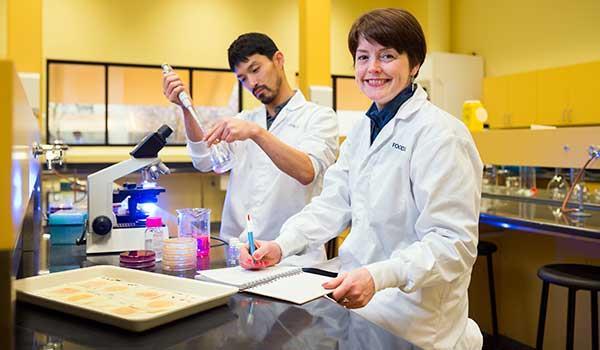
The diploma is designed for people seeking hands-on, technically focused roles in the food sector, whether they are school leavers entering the industry for the first time, current food production workers looking to formalise their skills, or career changers bringing scientific or hospitality backgrounds to food manufacturing. Combining chemistry, biology, and microbiology, the course equips graduates to make food healthier, tastier, and safer for consumers. Students research and develop new food products, produce a range of value-added products including cheese, ice cream, confectionery, olive oils, jams and sauces, and experiment with beverages such as beer, coffee and soft drinks.
Employers who hire Diploma of Food Science and Technology graduates span a broad range of Australian industries: large food manufacturers and FMCG (fast-moving consumer goods) companies, dairy and meat processors, beverage producers, bakery and confectionery businesses, government food regulatory bodies, quality assurance laboratories, and ingredient suppliers. The qualification provides a management-level occupational outcome in technical or quality roles in food processing and its supporting functions, and also serves as a direct pathway into bachelor-level study in food science, science, or health at Australian universities.
Australia's food and beverage manufacturing sector is one of the country's largest and most essential industries, supplying both domestic consumers and a significant export market. Skilled food technologists and quality assurance professionals are consistently in demand across metropolitan and regional areas alike, with over 2,400 food science jobs advertised nationally in a single year. The sector requires people with hands-on technical knowledge who can navigate complex food safety legislation, develop innovative products to meet evolving consumer trends — including health-conscious, allergen-free, and sustainably produced foods — and maintain the strict quality standards required by FSANZ (Food Standards Australia New Zealand).
Studying this diploma gives graduates a competitive edge through practical, job-ready skills that are valued by employers from day one. Because the qualification is delivered under the Australian Qualifications Framework (AQF) and is nationally recognised, graduates can work anywhere in the country without needing to upskill. The diploma also opens a clear academic pathway: completing this qualification can earn graduates guaranteed entry and significant credit recognition towards related bachelor degrees at Australian universities, making it an excellent stepping stone for those who wish to advance further into food science, nutrition, or business management.
Domestic students enrolling in the Diploma of Food Science and Technology generally face minimal formal barriers to entry, as the national training package lists no mandatory academic prerequisites for the qualification. Most Australian TAFE providers and registered training organisations (RTOs) recommend that applicants have completed Year 12 or equivalent, and many suggest a background in science subjects such as biology or chemistry as beneficial preparation. Some providers request a Language, Literacy and Numeracy (LLN) assessment to ensure students have skills at approximately a Year 12 level, which helps them cope with the technical reading, report writing, and mathematical content in the course. For those who have not completed Year 12, relevant industry experience or a lower-level qualification such as a Certificate III in Food Processing may be accepted as an alternative pathway.
International students are subject to additional requirements. Providers typically require evidence of academic completion equivalent to an Australian Year 12 qualification, often with an ATAR or equivalent score of 50 or higher, or satisfactory completion of a recognised foundation studies program or the International Baccalaureate Diploma (minimum 23 points). English language proficiency is also required: international students must demonstrate a good command of written and spoken English, usually through IELTS (Academic) with a score of around 5.5–6.0 overall, or an equivalent recognised test such as TOEFL or PTE Academic. Some providers accept completion of a Certificate III-level qualification delivered entirely in English as evidence of meeting both academic and English language requirements.
For students seeking credit recognition or advanced standing, prior learning in relevant fields — such as food production, laboratory science, nutrition, hospitality, or chemical engineering — may be assessed for Recognition of Prior Learning (RPL). The qualification is typically completed in approximately 52 weeks of full-time study, though part-time options are widely available. Upon graduation, the diploma provides a recognised pathway into related bachelor degrees at Australian universities, with some institutions offering guaranteed entry and up to 80 credit points towards the degree program.
This course may be offered in different study modes depending on the university, campus location, course structure and student type. Students should check the available delivery mode before applying, as not every study option is available at every institution.
On-campus study is the traditional mode of delivery where students attend classes, lectures, tutorials, workshops or seminars at the university campus. This option may suit students who prefer face-to-face learning, access to campus facilities, networking with classmates, practical workshops, group projects and direct engagement with academic staff.
Some universities may offer programs fully online or with online subject options. Online study can be attractive for students who need flexibility due to work, family, location or other commitments. Online study may suit domestic students, working professionals or students who want to study from outside Australia.
Hybrid or blended study usually combines online learning with some on-campus classes, workshops, intensive sessions or practical components. This mode may suit students who want flexibility but still want some face-to-face interaction. The exact structure varies between institutions.
Programs in Australia may have different intake structures depending on the university. The most common intake systems are semester, trimester and block mode.
Many Australian universities follow a two-semester academic calendar. The main intakes are commonly Semester 1 (around February or March) and Semester 2 (around July). Semester-based study usually allows students to complete a set number of subjects over approximately 12 to 14 weeks.
Some universities use a trimester system, which generally provides three study periods a year — around February/March, June/July and October/November. Trimester study may provide more flexibility and may help some students complete their course faster.
Some institutions may offer selected subjects or programs in block mode, where students focus on one subject at a time over a shorter, more intensive teaching period. Block mode may suit students who prefer concentrated learning or working professionals managing study around employment.
Some online or professionally focused programs may offer more frequent start dates or flexible entry points throughout the year. Students should not assume that every course has monthly or multiple intakes — availability depends on the institution, course structure and student type.
Graduates of the Diploma of Food Science and Technology are well positioned to enter a diverse and growing range of roles across Australia's food manufacturing, quality assurance, regulatory compliance, and product development sectors. Employers include large-scale food and beverage manufacturers, dairy and meat processors, bakeries, confectionery producers, ingredient suppliers, supermarket private-label food businesses, government agencies such as Food Standards Australia New Zealand (FSANZ), contract testing laboratories, and export-focused agricultural businesses. The diploma provides both direct entry into the workforce in technical roles and a clear pathway to senior positions with further experience or university study.
Entry Level
Graduate / Assistant / Technician
Food Technology Assistant, Laboratory Technician (Food), Quality Control Technician, Production Assistant, R&D Assistant, Food Safety Assistant
Early Career
Officer / Coordinator / Analyst
Food Technologist, Quality Assurance Officer, Food Safety Officer, Product Development Technologist, HACCP Coordinator, Sensory Analyst, Food Labelling Officer
Mid-Level
Specialist / Senior Technologist / Team Leader
Senior Food Technologist, Senior Quality Assurance Specialist, Food Safety Auditor, New Product Development Lead, Regulatory Affairs Specialist, Production Team Leader, Food Testing Manager
Senior Level
Manager / Senior Adviser
Quality Systems Manager, Food Safety Systems Manager, Product Development Manager, Processing Systems Manager, R&D Manager, Operations Manager (Food), Environmental Manager (Food Processing)
Leadership
Director / Head / Principal
Head of Food Safety and Quality, Director of Product Innovation, General Manager (Food Manufacturing), Principal Food Safety Consultant, Chief Food Technologist, National Quality Director
Salaries for food science and technology professionals in Australia vary according to experience, specialisation, and industry sector.
Melbourne
Melbourne is home to a thriving food and beverage manufacturing sector and hosts some of Australia's largest FMCG companies, dairy processors, and specialty food producers, making it one of the best cities for food science career opportunities. Victoria accounts for a significant share of Australia's scientific employment, and the city's culture of culinary innovation and strong connection between training providers and industry creates excellent networking and placement opportunities for students.
Sydney
Sydney is a major hub for food manufacturing, food safety regulation, and product development, with numerous multinational food companies, contract laboratories, and regulatory bodies operating in the greater Sydney region. The city's diverse food culture and large consumer market drive constant demand for new product development and quality assurance professionals, offering graduates a wide range of employers across sectors from large-scale processing to artisan and health food production.
Brisbane
Brisbane and the broader South East Queensland region offer strong opportunities in food science, particularly in meat and seafood processing, subtropical produce, dairy, and the growing functional foods market. Queensland's significant agricultural output and increasing investment in food innovation precincts make it an attractive location for graduates looking to work at the intersection of agriculture, food manufacturing, and product development.
Perth
Perth is well-positioned for food science graduates interested in the seafood, grain, meat, dairy, and horticultural export sectors, with Western Australia being one of Australia's most productive agricultural states and a major food export hub to Asian markets. The city's growing food innovation ecosystem and proximity to major food processing regions offer practical and career development opportunities for diploma graduates.
Adelaide
Adelaide has a strong reputation as a food and wine capital, with South Australia home to major wine, olive oil, dairy, seafood, and premium food manufacturing industries that actively recruit food technology graduates. The city is a particularly excellent choice for students interested in value-added food production and sensory science, with industry-connected training facilities and a cost-of-living advantage over larger cities.
Canberra
Canberra offers a unique pathway for food science graduates interested in food regulation, policy, and government roles, as the city is home to federal agencies including Food Standards Australia New Zealand (FSANZ), the Australian Competition and Consumer Commission (ACCC), and various agricultural research bodies. Graduates pursuing careers in regulatory affairs, food standards compliance, or food safety auditing will find the national capital a strategically valuable location.
Before choosing a course, students should compare:
International students who want to study in Australia should also consider additional requirements before applying.
Join successful graduates
Students Helped
Application Processed
Listed Universities
Listed Courses