Start building today!
Experience the Find the courses and unlock the true potential
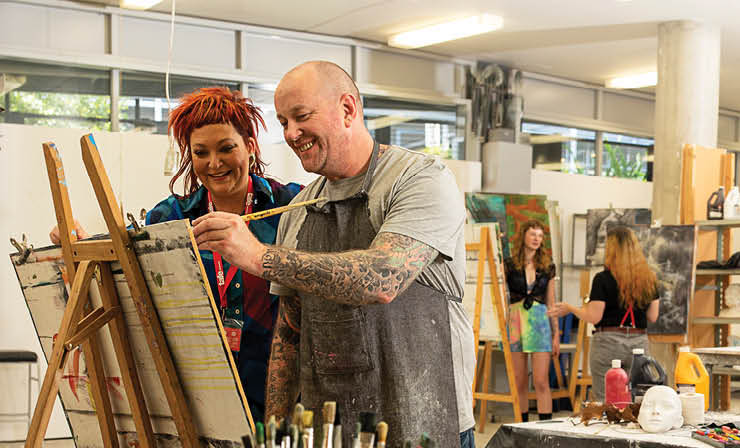
The Diploma of Visual Arts (nationally coded CUA51125) is a nationally accredited AQF Level 5 qualification delivered by TAFEs, specialist art schools, and university pathway programs across Australia. The course reflects the role of visual artists who combine specialised technical, creative and conceptual skills to plan and realise a body of work in one or more art forms. Students immerse themselves in studio-based disciplines including painting, sculpture, printmaking, drawing, photography, and digital imaging — developing both technical mastery and a sophisticated understanding of contemporary art theory and history. Typically completed in one to two years full-time, the diploma is structured around practical studio learning supported by art theory, professional practice, and critical analysis, culminating in a cohesive folio of resolved original work.
The course is designed for aspiring visual artists, creative practitioners, recent school leavers with a passion for art, career changers seeking formal arts qualifications, and those looking to transition into a bachelor degree program. Graduates may work independently in their own practice or across the arts, government, community, or commercial sectors — including galleries, schools, councils, digital studios, and community arts organisations. Australia's cultural and creative industries contribute approximately $63.7 billion to the national economy and employ over 282,000 people, making this a dynamic and growing field with genuine career opportunities.
Australia's creative sector is experiencing strong and sustained demand for skilled visual arts practitioners, particularly as digital transformation, gaming, public art, and content creation industries expand rapidly. The emergence of new technologies — from digital illustration tools to 3D modelling software — means visual artists with both traditional foundations and contemporary digital capabilities are highly sought after. The Diploma of Visual Arts provides the perfect entry point into this exciting landscape, equipping graduates with a professional folio and the practical skills to launch their career or progress into a bachelor degree with recognised credit transfer.
Beyond direct creative practice, visual arts skills are increasingly valued across a wide range of industries including advertising, media, education, government, and community services. There is a growing skills gap in areas such as concept art for gaming, digital illustration, public art project management, and community arts facilitation. Studying a Diploma of Visual Arts gives students a nationally recognised, industry-aligned qualification that opens doors to freelance practice, employed roles, and further academic study — all while building the professional networks, exhibition experience, and creative confidence needed to thrive.
Most Australian providers require applicants to have completed Year 12 or equivalent, with some institutions specifically requesting a unit of study in art, media, studio art, or visual communication design. However, applicants without formal academic qualifications are generally encouraged to apply if they have relevant creative experience — skills and knowledge acquired through creative practice or self-directed study are widely recognised and assessed at the time of application. Some providers may also require applicants to complete a basic literacy, numeracy, and digital literacy assessment prior to enrolment.
A portfolio submission is a common and often essential entry requirement. Applicants are typically asked to present a folio demonstrating use of a range of materials and techniques — this may include illustrations, paintings, freehand observational drawings, photography, digital artwork, and other creative work. Some institutions also require a written response or short interview, such as describing a recent exhibition the applicant has attended or articulating their creative intentions. Non-school leavers may need to demonstrate relevant work experience or prior qualifications that indicate likely success in the course.
For international students, an Academic IELTS score of 6.0 overall (with no individual band lower than 5.5) or equivalent is a standard English language proficiency requirement across most Australian providers. Applicants must be at least 17 years of age and turning 18 during the first year of study at some institutions. Recognition of Prior Learning (RPL) and credit transfer are available at most providers, allowing students to gain advanced standing based on previous study or professional experience.
This course may be offered in different study modes depending on the university, campus location, course structure and student type. Students should check the available delivery mode before applying, as not every study option is available at every institution.
On-campus study is the traditional mode of delivery where students attend classes, lectures, tutorials, workshops or seminars at the university campus. This option may suit students who prefer face-to-face learning, access to campus facilities, networking with classmates, practical workshops, group projects and direct engagement with academic staff.
Some universities may offer programs fully online or with online subject options. Online study can be attractive for students who need flexibility due to work, family, location or other commitments. Online study may suit domestic students, working professionals or students who want to study from outside Australia.
Hybrid or blended study usually combines online learning with some on-campus classes, workshops, intensive sessions or practical components. This mode may suit students who want flexibility but still want some face-to-face interaction. The exact structure varies between institutions.
Programs in Australia may have different intake structures depending on the university. The most common intake systems are semester, trimester and block mode.
Many Australian universities follow a two-semester academic calendar. The main intakes are commonly Semester 1 (around February or March) and Semester 2 (around July). Semester-based study usually allows students to complete a set number of subjects over approximately 12 to 14 weeks.
Some universities use a trimester system, which generally provides three study periods a year — around February/March, June/July and October/November. Trimester study may provide more flexibility and may help some students complete their course faster.
Some institutions may offer selected subjects or programs in block mode, where students focus on one subject at a time over a shorter, more intensive teaching period. Block mode may suit students who prefer concentrated learning or working professionals managing study around employment.
Some online or professionally focused programs may offer more frequent start dates or flexible entry points throughout the year. Students should not assume that every course has monthly or multiple intakes — availability depends on the institution, course structure and student type.
Graduates of the Diploma of Visual Arts enter a broad and diverse creative job market with opportunities spanning independent practice, commercial creative industries, education, government, and community arts sectors. Visual artists may establish their own practice as a freelance artist, exhibitor, or commissioned creator, or gain employment in studios, galleries, schools, councils, advertising agencies, gaming companies, publishing houses, and digital media organisations. The qualification also serves as a strong pathway into bachelor degrees in fine arts, visual arts, or creative industries, enabling graduates to advance into higher-level specialist or managerial roles over time.
Entry Level
Graduate Artist / Assistant
Studio Assistant, Gallery Assistant, Junior Illustrator, Art Technician, Junior Graphic Designer, Printmaking Assistant
Early Career
Practitioner / Coordinator
Graphic Designer, Community Arts Facilitator, Digital Artist, Arts Administration Officer, Exhibition Coordinator, Illustrator
Mid-Level
Senior Artist / Specialist
Senior Graphic Designer, Public Art Officer, Gallery Curator, Visual Arts Educator, Concept Artist, Senior Illustrator, Studio Manager
Senior Level
Manager / Art Director
Art Director, Arts Program Manager, Gallery Manager, Senior Public Art Advisor, Head of Design, Creative Lead
Leadership
Director / Principal / Creative Director
Creative Director, Director of a Gallery or Arts Organisation, Principal Artist, Director of Cultural Programs, Studio Director
Salaries for visual arts graduates in Australia vary widely depending on the career path chosen, specialisation, location, and whether work is employed or freelance.
Melbourne
Melbourne is Australia's undisputed cultural capital, home to one of the world's most vibrant street art scenes, major institutions including the NGV (National Gallery of Victoria), and a thriving network of independent galleries and artist-run spaces. The city offers an exceptionally dense cluster of TAFE providers, specialist art schools, and creative studios, with strong employer demand across commercial design, community arts, and public art sectors.
Sydney
Sydney boasts a world-class arts infrastructure including the Art Gallery of NSW, White Rabbit Gallery, Carriageworks, and a booming commercial art market, making it an ideal city for aspiring visual artists and gallery professionals. The city's strong advertising, publishing, gaming, and digital media industries create significant career demand for graduates with both traditional and contemporary visual arts skills.
Brisbane
Brisbane has experienced rapid growth in its arts and cultural sector, particularly following significant investment in creative infrastructure and precincts such as South Bank and Fortitude Valley's creative hub. The city offers accessible pathway options from diploma programs into bachelor degrees at numerous institutions, and a growing public art and community arts sector underpinned by Queensland Government cultural investment.
Perth
Perth has a distinctive and growing arts scene supported by institutions such as AGWA (Art Gallery of Western Australia), Perth Cultural Centre, and a strong community arts and public art programme backed by local and state government. The city's relative isolation has fostered a unique creative culture with strong demand for locally-based artists in public, community, and commercial sectors.
Adelaide
Adelaide is renowned for its arts festivals — including the Adelaide Festival and Fringe — and punches well above its weight as a hub for visual arts, community arts, and creative education. Its affordable cost of living makes it an attractive city for emerging artists, and the concentration of government arts funding and cultural institutions provides solid employment pathways for diploma graduates.
Canberra
As Australia's national capital, Canberra is home to flagship cultural institutions including the National Gallery of Australia, the National Portrait Gallery, and a high concentration of government arts and cultural bodies — creating strong and stable employment opportunities for arts administration, curatorial, and public art roles. Salary data also suggests Canberra offers some of the most competitive pay rates for creative and design professionals in Australia.
Before choosing a course, students should compare:
International students who want to study in Australia should also consider additional requirements before applying.
Join successful graduates
Students Helped
Application Processed
Listed Universities
Listed Courses