Start building today!
Experience the Find the courses and unlock the true potential
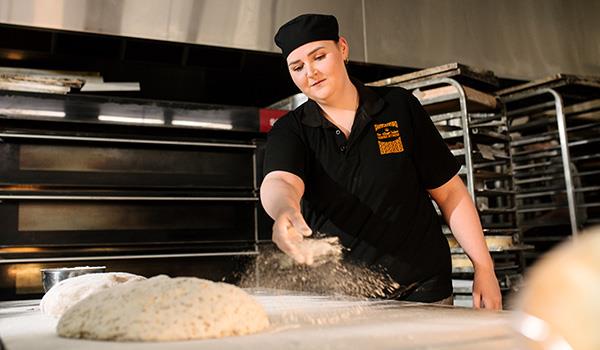
The Certificate III in Baking (FBP30521) is a nationally recognised, trade-level vocational qualification under the FBP Food, Beverage and Pharmaceutical Training Package. It describes the skills and knowledge of a baker who bakes bread, cake, pastry and biscuit products in a commercial baking environment. The course covers the full retail baking spectrum — from artisan bread and savoury loaves through to laminated pastries, sponge cakes, biscuits, cake decorating, and puddings — giving graduates a broad and versatile skill set. All work completed as part of this qualification must comply with workplace procedures, State and Territory food safety regulations, and work health and safety legislation.
The qualification is made up of 19 units of competency — 15 core units and 4 elective units — and carries a nominal training load of approximately 1,620 hours. It is primarily delivered as a trade apprenticeship, meaning students learn on the job with a registered employer while also attending scheduled training sessions at a TAFE or registered training organisation (RTO). Some providers also offer blended delivery combining classroom, online and practical components. The course typically takes 12 to 36 months to complete depending on delivery mode and prior experience.
Graduates are prepared to work in a wide range of commercial baking settings, including retail bakeries, in-store supermarket bakeries, hotels, restaurants, pastry shops, catering companies, and specialty cake and patisserie businesses. Employers range from large national chains such as Bakers Delight and Brumby's to boutique artisan bakeries, five-star hotels, airline caterers, and independent patisseries. A qualification in baking also opens up international opportunities to work in leading hotels, restaurants and boutique bakeries worldwide.
Australia's baking and pastry sector is experiencing steady growth, driven by rising consumer demand for premium, handcrafted and health-conscious baked goods. As customer preferences shift away from mass-produced white bread toward artisan sourdoughs, specialty pastries and innovative baked creations, employers are increasingly seeking qualified, skilled bakers who can meet these expectations. This shift has prompted major manufacturers and independent operators alike to invest in innovation and new product development, creating more diverse and rewarding roles for trained bakers. The sector is also listed as experiencing skills shortages in key regions, meaning qualified graduates can expect strong employment prospects upon completion.
Studying a Certificate III in Baking gives students a competitive edge in a hands-on trade that rewards creativity, precision and craftsmanship. The qualification is recognised nationally under the Australian Qualifications Framework (AQF), providing portability of skills across all states and territories. It is also an excellent foundation for further study, such as a Certificate IV in Advanced Baking or Certificate IV in Pâtisserie, or for starting your own sole trader bakery business. Whether you dream of working in a heritage-style bakery, a high-end hotel kitchen, or launching your own artisan brand, this qualification gives you the practical and commercial skills to make it happen.
Formally, there are no mandated national entry requirements for the FBP30521 Certificate III in Baking — the qualification is open to students who can demonstrate a basic level of literacy and numeracy. Many providers will ask applicants to complete a Language, Literacy, Numeracy and Digital Literacy (LLND) evaluation before enrolment, which helps identify any support needs and ensures students can meet the academic demands of the course. Some TAFEs recommend that students have completed at least Year 10 of high school, while some private RTOs may request completion of Year 12 or an equivalent qualification for direct entry, particularly for international students. A minimum IELTS score of 6.0 (or equivalent English proficiency test result) is typically required for international applicants.
Because the Certificate III in Baking is primarily delivered as an apprenticeship, the most important requirement in most states is securing a training contract with a registered employer. Students must be employed in an appropriate workplace under a formal apprenticeship or traineeship agreement before they can enrol through most TAFE providers. For direct entry (non-apprenticeship) pathways, some providers accept students who can demonstrate relevant prior work experience in a bakery or food production environment. Entry can also follow completion of a Certificate II in Baking qualification, which provides a preparatory foundation.
Practical requirements include the willingness and ability to work early morning or late-night shifts, as well as weekends and public holidays — conditions that are standard in the baking trade. Students will need access to a bakery uniform and basic personal protective equipment. Recognition of Prior Learning (RPL) and credit transfer options are available at most providers, allowing students with existing baking experience or qualifications from another RTO to reduce their course duration. Some campuses may have additional or location-specific requirements, so prospective students are encouraged to check directly with their preferred provider.
This course may be offered in different study modes depending on the university, campus location, course structure and student type. Students should check the available delivery mode before applying, as not every study option is available at every institution.
On-campus study is the traditional mode of delivery where students attend classes, lectures, tutorials, workshops or seminars at the university campus. This option may suit students who prefer face-to-face learning, access to campus facilities, networking with classmates, practical workshops, group projects and direct engagement with academic staff.
Some universities may offer programs fully online or with online subject options. Online study can be attractive for students who need flexibility due to work, family, location or other commitments. Online study may suit domestic students, working professionals or students who want to study from outside Australia.
Hybrid or blended study usually combines online learning with some on-campus classes, workshops, intensive sessions or practical components. This mode may suit students who want flexibility but still want some face-to-face interaction. The exact structure varies between institutions.
Programs in Australia may have different intake structures depending on the university. The most common intake systems are semester, trimester and block mode.
Many Australian universities follow a two-semester academic calendar. The main intakes are commonly Semester 1 (around February or March) and Semester 2 (around July). Semester-based study usually allows students to complete a set number of subjects over approximately 12 to 14 weeks.
Some universities use a trimester system, which generally provides three study periods a year — around February/March, June/July and October/November. Trimester study may provide more flexibility and may help some students complete their course faster.
Some institutions may offer selected subjects or programs in block mode, where students focus on one subject at a time over a shorter, more intensive teaching period. Block mode may suit students who prefer concentrated learning or working professionals managing study around employment.
Some online or professionally focused programs may offer more frequent start dates or flexible entry points throughout the year. Students should not assume that every course has monthly or multiple intakes — availability depends on the institution, course structure and student type.
Graduates of the Certificate III in Baking are well-positioned to enter a broad range of employment settings across Australia's thriving food service, retail and hospitality sectors. Qualified bakers and pastry cooks can find work in retail bakeries, in-store supermarket bakeries, hotels, restaurants, cafés, patisseries, catering companies, airlines, and food manufacturing facilities. With experience and further study, graduates can progress into supervisory, head baker, or bakery management roles, or choose to establish their own bakery business as a sole trader or small business owner. The qualification also supports skilled migration pathways, as bakers and pastry cooks appear on Australia's skills shortage lists in various states.
Entry Level
Apprentice / Assistant Baker
Baker Apprentice, Bakery Assistant, Production Assistant, Food Preparation Assistant
Early Career
Qualified Baker / Pastry Cook
Baker, Pastry Cook, Retail Baker, Bread Maker, In-Store Bakery Operator, Cake Decorator
Mid-Level
Specialist / Senior Baker
Artisan Baker, Pastry Chef, Patissier, Senior Baker, Catering Baker, Production Baker
Senior Level
Head Baker / Bakery Supervisor
Head Baker, Bakery Supervisor, Pastry Kitchen Supervisor, Team Leader – Baking
Leadership
Bakery Manager / Owner
Bakery Manager, Food Production Manager, Executive Pastry Chef, Bakery Owner / Operator, Food Business Proprietor
Salaries for baking professionals in Australia vary depending on experience, specialisation, employer type and location, with entry-level apprentice wages growing significantly as qualifications and expertise develop.
Melbourne
Melbourne is one of Australia's most vibrant food cities, home to a thriving café culture, world-renowned patisseries, artisan bakeries and a booming hospitality scene that creates strong demand for qualified bakers and pastry cooks. The city offers a high concentration of training providers with specialist on-campus bakehouses, industry connections to leading employers, and a culture that celebrates premium, handcrafted baked goods.
Sydney
Sydney's diverse, cosmopolitan food scene — spanning five-star hotel restaurants, specialty patisseries, large supermarket chains and independent artisan bakeries — provides Certificate III in Baking graduates with a wealth of employment opportunities. The city's strong tourism and hospitality industry ensures consistent demand for skilled baking professionals, and its multicultural population drives appetite for a wide range of specialty baked products.
Brisbane
Brisbane's rapidly growing population and booming food and café culture make it an increasingly attractive destination for baking graduates, with strong demand from retail bakeries, catering companies and hospitality venues across the city and surrounding regions. Queensland's TAFE system offers baking apprenticeships with flexible entry pathways, and the growing South East Queensland corridor provides a wide geographic employment market.
Perth
Perth has a well-established baking industry with a strong emphasis on retail baking, in-store supermarket bakeries and artisan producers, supported by a high standard of living and a community that values quality local food. Western Australia offers some of the most affordable course fees in the country — with low-fee training options available for eligible residents — making Perth an attractive choice for aspiring bakers seeking value and quality training.
Adelaide
Adelaide is recognised as a hub for food and wine culture, with a strong local focus on artisan and specialty food production that creates excellent opportunities for qualified bakers. The city's compact size, lower cost of living and supportive industry networks make it an ideal place to complete a baking apprenticeship and build a professional career in retail baking, patisserie or specialty food production.
Canberra
Canberra's growing and highly educated professional population supports a thriving café and restaurant scene, with increasing demand for quality artisan baked goods and specialty pastry products. With a relatively small but tight-knit hospitality community, baking graduates in Canberra can benefit from strong industry relationships, mentoring opportunities and a clear pathway to senior baking roles in hotels, caterers and boutique bakeries serving the capital's government and corporate sectors.
Before choosing a course, students should compare:
International students who want to study in Australia should also consider additional requirements before applying.
Join successful graduates
Students Helped
Application Processed
Listed Universities
Listed Courses