Start building today!
Experience the Find the courses and unlock the true potential
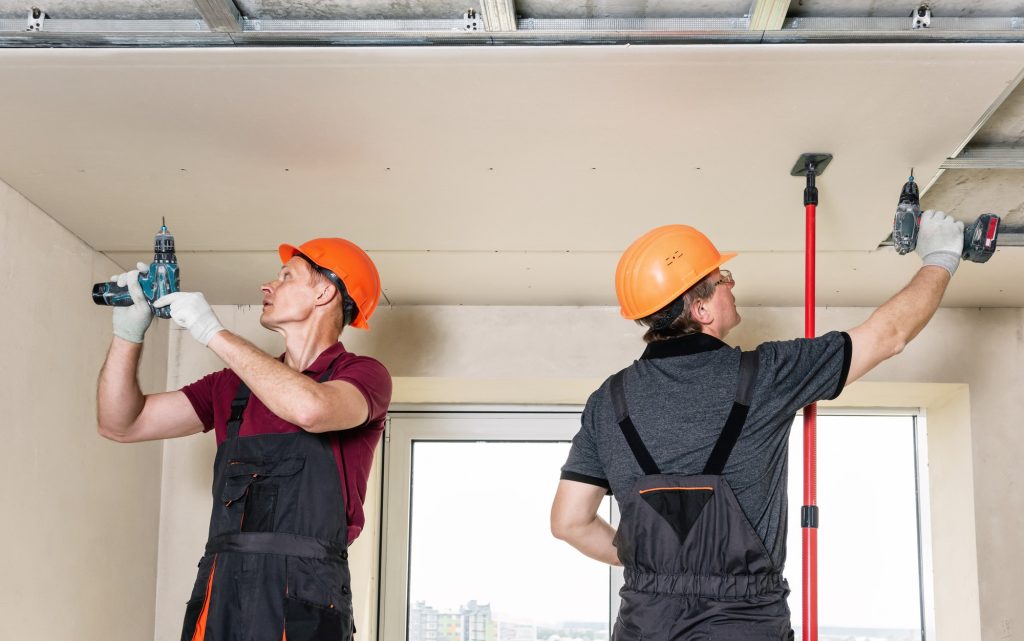
The Certificate III in Wall and Ceiling Lining (CPC31220) is a nationally recognised, trade-level qualification that provides a comprehensive pathway into the building and construction industry. The course equips students with the practical skills and theoretical knowledge required to install and finish plasterboard and fibre cement sheeting on walls and ceilings in both residential and commercial settings. Students learn to construct bulkheads, assemble partitions, install suspended ceilings and cornices, mix and apply plastering compounds, and work safely on construction sites in accordance with the National Construction Code (NCC), Australian Standards, and Work Health and Safety (WHS) requirements. The qualification covers both core competencies common to the construction industry and specialist wall and ceiling lining skills, requiring all training and assessment to be undertaken in a real or closely simulated workplace environment.
This qualification is designed for anyone looking to enter the construction trades as a wall and ceiling liner, fibrous plasterer, or drywaller, and is suitable for school leavers, career changers, and those already working in the building industry. The course is typically delivered as an apprenticeship, with training taking place on-site under the guidance of a qualified supervisor, supplemented by formal classroom or blended learning sessions at a registered training organisation (RTO) or TAFE. Employers across Australia in residential construction, commercial fit-out, renovation, and building maintenance actively seek qualified graduates. Once completed, students may be eligible to apply for relevant trade licensing with their state or territory authority — for example, NSW Fair Trading or the QBCC — making it an essential stepping stone to a fully licensed trade career.
Australia's plastering and ceiling services industry generates approximately $7.5 billion in revenue and employs nearly 31,000 workers nationally, with market size projected to grow over the next five years. Rising residential building activity, mounting population pressures, and easing mortgage interest rates are set to drive an upswing in housing construction — directly increasing demand for skilled wall and ceiling liners to install plasterboard walls, ceiling linings, and cornices. The Australian Government's Job Outlook service has reported strong growth in the plasterer occupation, with around 19,000 new jobs expected to be created over a five-year period. With the construction market forecast to expand at a CAGR of 5.6% from 2025 to 2029, and dwelling starts projected to rise 30% cumulatively to FY2030, there has never been a better time to enter this trade.
Beyond job security, this qualification opens the door to genuine earning potential — with experienced, trade-qualified wall and ceiling liners earning well above the national average wage. Unlike many white-collar careers, this trade offers early entry into the workforce, the ability to work across Australia (as the qualification is nationally recognised), and diverse opportunities spanning residential builds, high-end commercial fit-outs, heritage restoration, acoustic and fire-rated systems, and green building projects. For those who enjoy hands-on, physical work with visible, tangible results, a career in wall and ceiling lining offers daily satisfaction alongside strong long-term career prospects.
There are no formal academic prerequisites to enrol in the Certificate III in Wall and Ceiling Lining (CPC31220). The qualification is open-entry, making it accessible to school leavers and adults at any stage of their career. In practice, most providers recommend that applicants have basic numeracy and literacy skills, as the course involves reading plans, measuring materials, and completing written assessments. Some registered training organisations (RTOs) ask applicants to complete a skills check or learning suitability quiz prior to enrolment to ensure the course is the right fit, and applicants may need to be at least 15–18 years of age depending on the provider and state regulations. Because the qualification is primarily delivered as an apprenticeship, students generally need to have a signed training contract with an employer before commencing formal training.
For international students, English language proficiency is typically required. Common requirements include a minimum IELTS score of 6.0 (or equivalent in PTE Academic, TOEFL iBT, or Cambridge English), or evidence of at least five years of study in an English-speaking country. Prior to beginning any on-site construction work, all students must complete the General Construction Induction Training (commonly known as the 'White Card'), as specified in the Safe Work Australia model Code of Practice for Construction Work. Achievement of unit CPCCWHS1001 'Prepare to Work Safely in the Construction Industry' satisfies this requirement. Students undertaking Recognition of Prior Learning (RPL) may have existing skills assessed against the qualification's units through competency conversations and practical demonstrations.
This course may be offered in different study modes depending on the university, campus location, course structure and student type. Students should check the available delivery mode before applying, as not every study option is available at every institution.
On-campus study is the traditional mode of delivery where students attend classes, lectures, tutorials, workshops or seminars at the university campus. This option may suit students who prefer face-to-face learning, access to campus facilities, networking with classmates, practical workshops, group projects and direct engagement with academic staff.
Some universities may offer programs fully online or with online subject options. Online study can be attractive for students who need flexibility due to work, family, location or other commitments. Online study may suit domestic students, working professionals or students who want to study from outside Australia.
Hybrid or blended study usually combines online learning with some on-campus classes, workshops, intensive sessions or practical components. This mode may suit students who want flexibility but still want some face-to-face interaction. The exact structure varies between institutions.
Programs in Australia may have different intake structures depending on the university. The most common intake systems are semester, trimester and block mode.
Many Australian universities follow a two-semester academic calendar. The main intakes are commonly Semester 1 (around February or March) and Semester 2 (around July). Semester-based study usually allows students to complete a set number of subjects over approximately 12 to 14 weeks.
Some universities use a trimester system, which generally provides three study periods a year — around February/March, June/July and October/November. Trimester study may provide more flexibility and may help some students complete their course faster.
Some institutions may offer selected subjects or programs in block mode, where students focus on one subject at a time over a shorter, more intensive teaching period. Block mode may suit students who prefer concentrated learning or working professionals managing study around employment.
Some online or professionally focused programs may offer more frequent start dates or flexible entry points throughout the year. Students should not assume that every course has monthly or multiple intakes — availability depends on the institution, course structure and student type.
Graduates of the Certificate III in Wall and Ceiling Lining are well-positioned to enter a broad range of roles across Australia's active building and construction sector. Employment opportunities span residential new builds, commercial construction and fit-out, renovation and refurbishment projects, heritage restoration, and specialised sectors such as acoustic, fire-rated and green building systems. Graduates typically work as employees for plastering and lining companies, building contractors, or fit-out firms, or may choose to establish their own business as a self-employed trade contractor once licensed. The nationally recognised nature of this qualification means graduates can work across any Australian state or territory, and the ongoing demand for housing and infrastructure ensures strong, sustained employment prospects in both urban and regional areas.
Entry Level
Apprentice / Trade Assistant
Apprentice Wall and Ceiling Liner, Plastering Trade Assistant, Junior Plasterboard Installer, Construction Labourer (Lining)
Early Career
Trade Qualified Liner / Installer
Wall and Ceiling Liner, Drywaller, Fibrous Plasterer, Plasterboard Installer, Partition Installer
Mid-Level
Specialist / Leading Hand
Acoustic Lining Specialist, Fire-Rated Systems Installer, Leading Hand Plasterer, Commercial Fit-Out Liner, Self-Employed Plastering Contractor
Senior Level
Supervisor / Contractor
Site Supervisor (Plastering), Construction Estimator (Plastering), Lining Subcontractor, Plastering Business Owner
Leadership
Manager / Trainer / Director
Plastering Project Manager, Construction Project Coordinator, Plastering Trainer and Assessor, Building Construction Manager, Trade Business Director
Salaries for wall and ceiling liners and plasterers in Australia vary according to experience level, location, and whether graduates are employed or self-employed contractors.
Melbourne
Melbourne's large-scale residential apartment boom and ongoing commercial construction pipeline provide consistent demand for qualified wall and ceiling liners, with Oxford Economics noting the Melbourne market is forecast to outperform near-term as it catches up on suppressed housing activity. The city's concentration of large plastering and fit-out companies offers excellent apprenticeship and graduate employment opportunities.
Sydney
As Australia's largest city, Sydney supports a massive and diverse construction industry spanning high-rise residential developments, commercial fit-out, government infrastructure, and heritage renovation projects — all requiring skilled wall and ceiling liners. The city offers some of the highest wage rates in the country for qualified plasterers, particularly in the CBD and inner suburbs.
Brisbane
Brisbane and South-East Queensland are experiencing some of the strongest construction growth in the country, with Queensland and Western Australia identified as leading states for construction activity, and infrastructure investment linked to major events and population growth creating sustained demand for trade-qualified wall and ceiling liners.
Perth
Perth offers exceptional opportunities for wall and ceiling liners, with Western Australia forecast to become a powerhouse for engineering and construction activity by the end of the decade. The state's fee-free training initiative makes this qualification accessible at no cost for eligible WA residents, and mining-driven prosperity continues to fuel strong residential and commercial building activity.
Adelaide
Adelaide's growing construction sector, supported by federal defence and infrastructure investment, provides a steady stream of work for qualified wall and ceiling liners. South Australia's fee-free TAFE initiative means eligible students can access this qualification at no cost, and the city's lower cost of living compared to the eastern states makes it an attractive base for tradespeople starting their careers.
Canberra
Canberra's construction market is underpinned by consistent government investment in public buildings, residential developments, and commercial fit-out projects, creating reliable demand for skilled wall and ceiling liners. The ACT's strong economy, high average wages, and proximity to major defence and health infrastructure projects make it an attractive city for qualified trade professionals in this field.
Before choosing a course, students should compare:
International students who want to study in Australia should also consider additional requirements before applying.
Join successful graduates
Students Helped
Application Processed
Listed Universities
Listed Courses